

Choosing the Right Mobile Asphalt Plant for Your Construction Needs
Jan 27, 2026
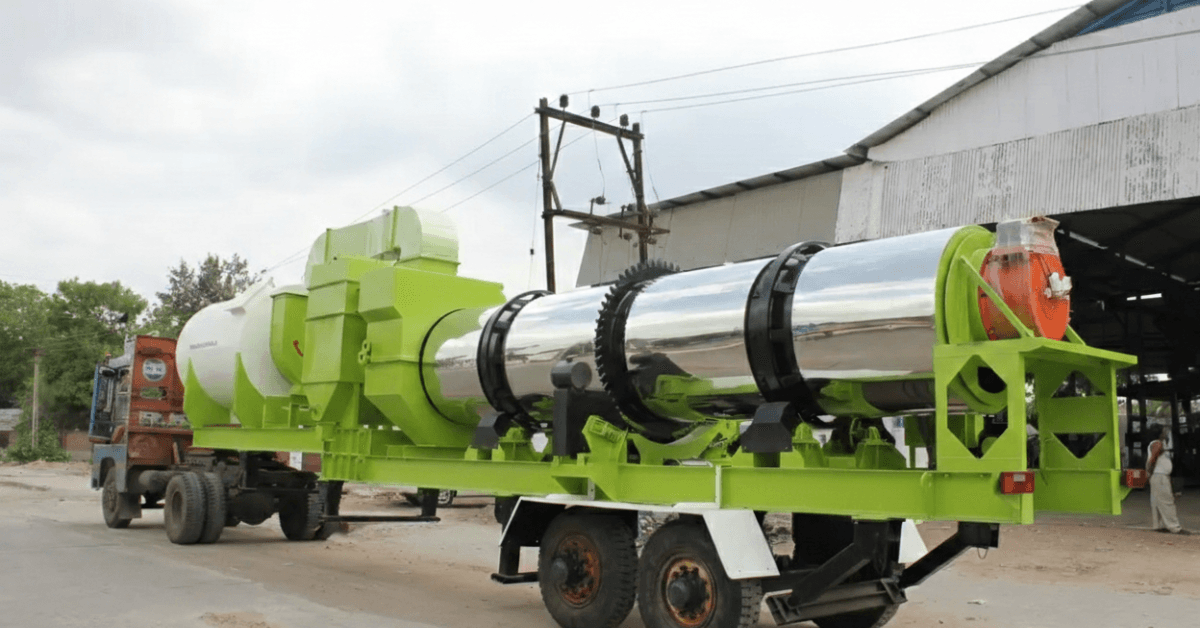
Infrastructure projects today operate under very different conditions than they did even a decade ago. Highway corridors now cut through terrain that once had no paved access. Urban road networks require constant rehabilitation without shutting down traffic. Emergency repairs demand an immediate asphalt supply at locations where no fixed production facility exists.
Choosing the right mobile asphalt plants solves the fundamental problem: getting hot mix to the paver before it cools below usable temperature. An informed decision empowers the infrastructure and road construction companies with quick deployment, relocation flexibility, and consistent output throughout the mixing operation.
On the other hand, wrong choices create expensive problems: undersized capacity that bottlenecks paving schedules, fuel-inefficient designs that drain budgets over time, complicated relocation processes that waste weeks, and poor after-sales support that turns minor breakdowns into major delays.
This is an informational guide to help you choose the right mobile asphalt plant for the specific project needs.
Start with the One Decision That Drives Everything: Plant Capacity
Every mobile asphalt plant decision ultimately traces back to one factor: how much asphalt you need to produce each day.
Your paving schedule drives everything else. Calculate your actual daily asphalt demand based on lane-kilometers to be paved per day, layer thickness and width, working hours available per shift, and weather buffer for lost production time.
For example, let's consider a 120 TPH plant running 10 hours that produces approximately 1,000-1,100 tons, accounting for startup, loading delays, and operational stops. That covers roughly 5-7 lane-kilometers depending on layer specifications.
But, if you choose a plant rated at 80 TPH, it cannot reliably supply a project needing 1,000 tons daily, even running extended shifts. Equipment operates under constant stress, maintenance issues multiply, and your paving schedule slips.
The critical mistake: Matching plant capacity to peak theoretical demand rather than sustained daily requirements.
A practical rule is to include a 15–20 percent capacity buffer above calculated needs. This absorbs variations in aggregate moisture, short maintenance interruptions, and site-level inefficiencies without pushing equipment beyond stable operating limits.
Batch Mix vs Drum Mix: Match Technology to Your Mix Requirements
Once capacity is clear, the next decision is choosing the right mixing technology. This choice affects flexibility, operating cost, and long-term efficiency.
Choose Mobile Asphalt Batch Mix when:
The project requires multiple asphalt grades, mix designs change frequently between sections, precise control over individual batch composition is contractually required, or specialty mixes or modified binders are involved.
Batch plants operate in cycles, typically producing a batch every 45 to 60 seconds. Each batch can have different aggregate proportions and binder content, allowing high flexibility and accuracy. This capability comes with a higher capital cost and greater mechanical complexity due to weighing systems and gates.
Batch mix plants are commonly used for urban roads, municipal works, and high-spec pavement applications where mix control is non-negotiable.
Choose Mobile Asphalt Drum Mix when:
Mix specifications remain consistent for long production runs, daily volume matters more than mix flexibility, simpler mechanics and lower maintenance complexity are preferred, or budget discipline is important.
Drum mix plants operate continuously, drying and mixing aggregates in a single rotating drum. Changing specifications requires stopping production and stabilizing the system again, but for highway projects with uniform specifications over long stretches, this limitation rarely affects productivity.
Reality check: Don't pay for batch mix flexibility you won't use. If 90% of your production uses identical specifications, drum mix delivers better economics.
Comparing Atlas Mobile Asphalt Plant Configurations
Rather than choosing equipment by name alone, it is more effective to compare configurations aligned to production scale and project type.
Mobile Asphalt Batch Plant (MABP) configurations
| Model | Rated Capacity | Mixer Size | Typical Project Fit |
|---|---|---|---|
| MABP 80 | 80 TPH | 1,000 kg twin shaft | Urban road projects, Municipal resurfacing works, Moderate daily asphalt demand, Sites with space or access constraints |
| MABP 120 | 120 TPH | 1,500 kg twin shaft | Medium-scale highway packages, State road development projects, Contractors executing multiple stretches sequentially |
| MABP 160 | 160 TPH | 2,000 kg twin shaft | High-volume highway and expressway projects, Longer daily paving windows, Applications where higher throughput shortens project duration |
Mobile Asphalt Drum Mix Plant (MDM) Configurations
| Model | Output Range | Typical Project Fit |
|---|---|---|
| MDM 25 | 20–30 TPH | Suitable for rural roads and small-scale projects |
| MDM 35 | 30–40 TPH | Suitable for district road works and local infrastructure |
| MDM 45 | 40–60 TPH | Suitable for medium road stretches with steady demand |
| MDM 50 | 60–90 TPH | Suitable for state highways and long road packages |
| MDM 60 | 90–120 TPH | Suitable for large highway projects with higher daily targets |
| MDM 65 | 120–150 TPH | Suitable for high-volume highway and expressway construction |
Discuss your prototype challenges with our CNC and CMM experts.
CONTACT USRelocation Frequency Determines Design Priorities
Mobility is not a binary feature. How often the plant moves determines what matters most in its design.
For frequent relocation (every 30-45 days):
Prioritize modular construction with quick-coupling systems, verify setup time is genuinely 7-10 days, not marketing claims, check dismantling process doesn't require specialized tools or crews, confirm transport requires standard equipment, not custom heavy haul, and calculate relocation costs at 3-5% of plant value per move.
Relocation costs typically fall in the range of 3–5 percent of plant value per move. Plants that require several weeks to relocate quickly erase the productivity advantage mobility is meant to provide.
For infrequent relocation (2-3 times over project life):
Focus on production efficiency and fuel economy over relocation speed, consider semi-permanent installations with enhanced automation, invest in features that reduce operating costs over long campaigns, and relocation complexity matters less when moves are rare.
Verification step: Ask for documented setup times from recent deployments, not laboratory test conditions, to your construction plants and machinery providers.
Global And Export Perspective
Mobile asphalt plants are widely used in international projects due to their transportability and fast installation.
Key considerations include modular design for shipping and handling, adaptability to different climates, and installation planning and aftermarket support availability.
Mobility simplifies deployment in unfamiliar locations and supports phased infrastructure development.
Fuel Strategy: Think in Terms of Consumption per Ton
Fuel choice has a direct impact on operating cost, plant stability, and maintenance effort. Over the life of a project, fuel expenses often exceed the initial equipment investment. For mobile asphalt plants, fuel selection should be based on availability, consistency, and total consumption per ton, not just fuel price per unit.
Diesel and Furnace Oil Systems
Liquid fuels remain the most widely used option for mobile asphalt plants due to logistics simplicity.
They make sense for remote and temporary sites, projects with frequent relocation, off-grid locations, and applications where consistent fuel quality matters.
Cleaner combustion and easier temperature control support stable operation across varying aggregate conditions.
Electric-Supported Systems
Electric power typically drives motors, feeders, and control systems, while thermal energy still comes from liquid fuel burners.
They are well suited for urban and industrial zones with reliable grid power, projects with long daily operating hours, and sites with noise or space constraints.
Electric-driven systems offer smoother operation and improved control accuracy when power supply is stable.
Why Burner Efficiency Matters More Than Fuel Type Alone
Fuel efficiency depends heavily on burner design. Modern high-efficiency burners can reduce consumption by 10–15 percent by improving flame stability, heat transfer, and air control.
Across large project volumes, these efficiency gains translate into significant cost savings.
Automation Level: Balance Efficiency Against Complexity
Mobile asphalt plants range from basic manual systems to fully automated PLC-controlled setups.
Higher automation makes sense when:
You're running multiple plants across different sites (standardized interfaces reduce training), project duration justifies investment in efficiency features, skilled operators may be difficult to source locally, or remote monitoring and diagnostic support matter for isolated locations.
Simpler controls work better when:
Experienced operators are readily available, projects are short-duration, local technical support for complex electronics is limited, or budget constraints are tight.
Features worth paying for: automated aggregate moisture compensation, mix temperature optimization, recipe storage and recall, production reporting, and remote diagnostics for troubleshooting.
Features often not worth premium costs: excessive data logging beyond actual quality control needs, overly complex interfaces that slow down rather than speed up operation.
Next Steps
Choosing the right mobile asphalt plant is an engineering decision shaped by capacity needs, mobility requirements, site infrastructure, and operational support. When these factors align, mobile plants deliver consistent output, controlled costs, and reliable performance across diverse project conditions.
For projects involving frequent movement, limited infrastructure, or phased execution, reviewing plant configuration early helps avoid costly adjustments later.
Ready to evaluate which mobile asphalt plant configuration fits your project? Our technical team can assess your production targets, site logistics, and operational constraints to recommend solutions designed for your specific needs.
Request a project-specific plant specification reviewFrequently asked questions.
What are the advantages of a mobile hot mix asphalt plant over a stationary one?
+What factors should be considered when selecting a portable hot mix plant?
+How does Atlas Technologies support customers after the purchase of a mobile plant?
+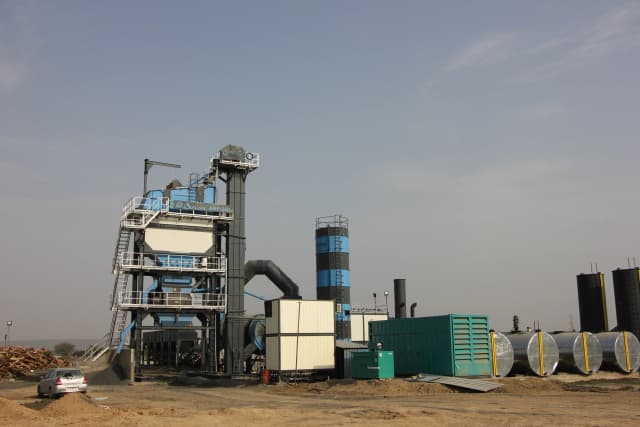
CPCB Compliance for Asphalt Plants...
CPCB compliance for asphalt plants in India is now directly...
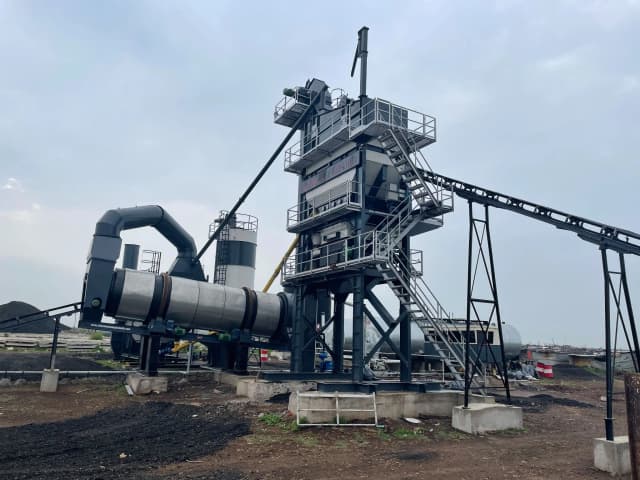
Hot Mix Plant: Batch Mix,...
Compare hot mix plant configurations — batch mix, drum mix,...

Mobile Asphalt Plant Price in...
Understand what determines mobile asphalt plant price in India, including...
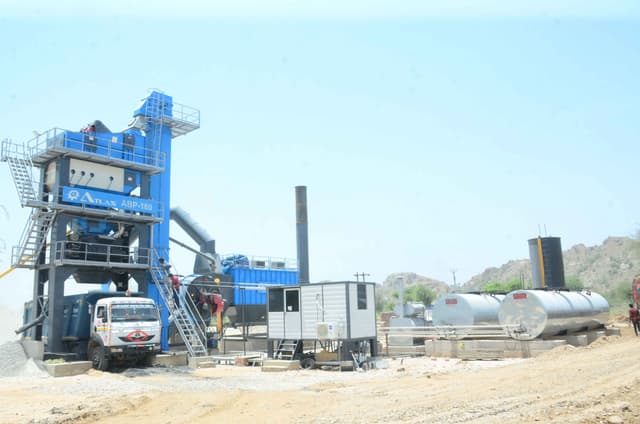
160 TPH Asphalt Batch Mix...
Atlas delivered and commissioned a 160 TPH asphalt batch mix...