

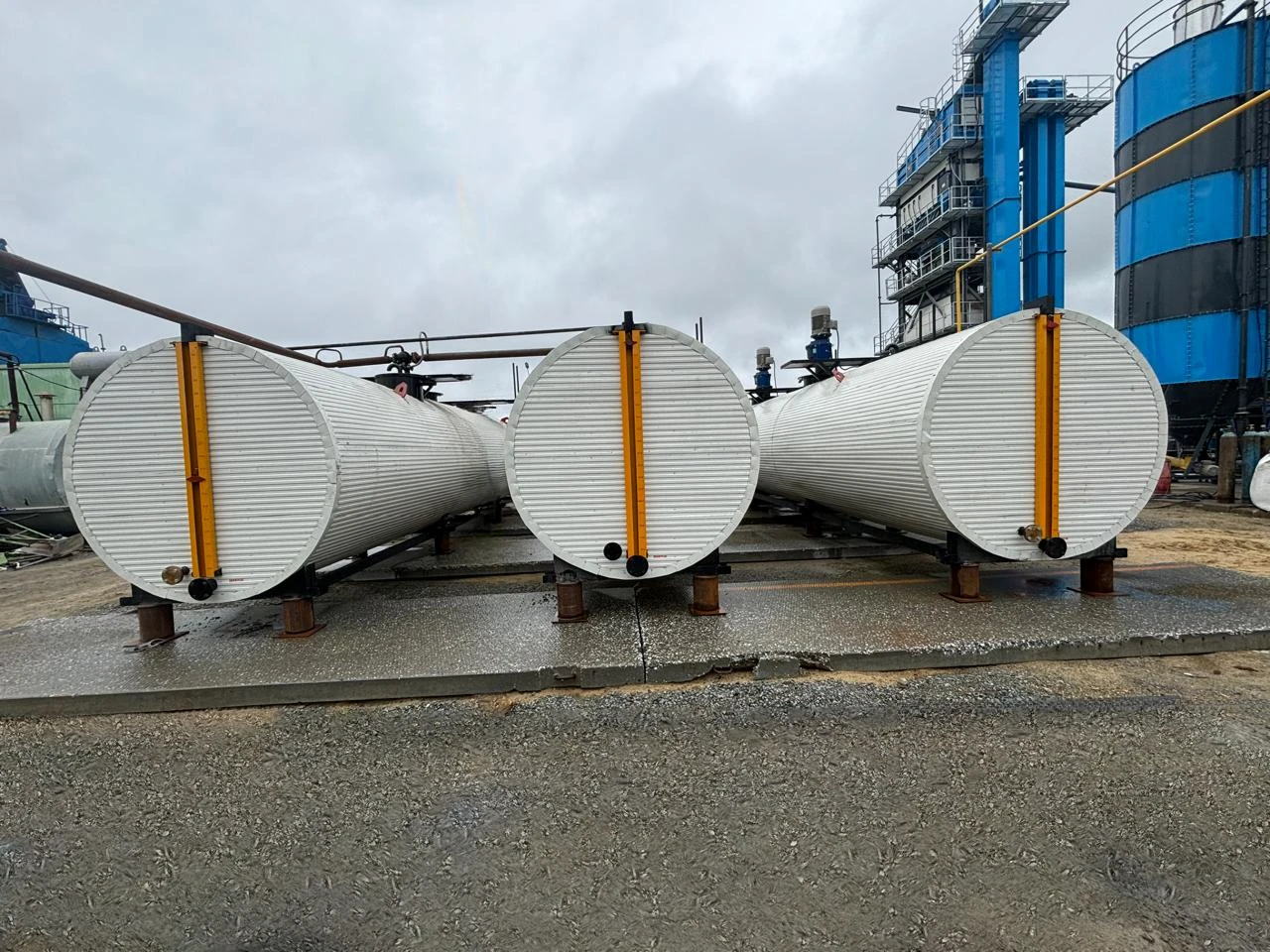
An asphalt plant can have enough aggregate, labour and production capacity on site and still lose time when bitumen is not available at the required temperature and flow condition.
The problem is not always a shortage of binder. A bitumen tank that is too small can create supply gaps between deliveries. A larger tank with inadequate heating capacity can leave enough bitumen on site but not enough ready for pumping and mixing when production starts.
That is why a bitumen storage tank should be planned as part of the asphalt plant’s binder handling system, not as an isolated storage vessel.
This guide explains how to size a bitumen tank, what to consider during installation and heating, how to maintain the system and what affects the final investment.
What Is a Bitumen Tank?
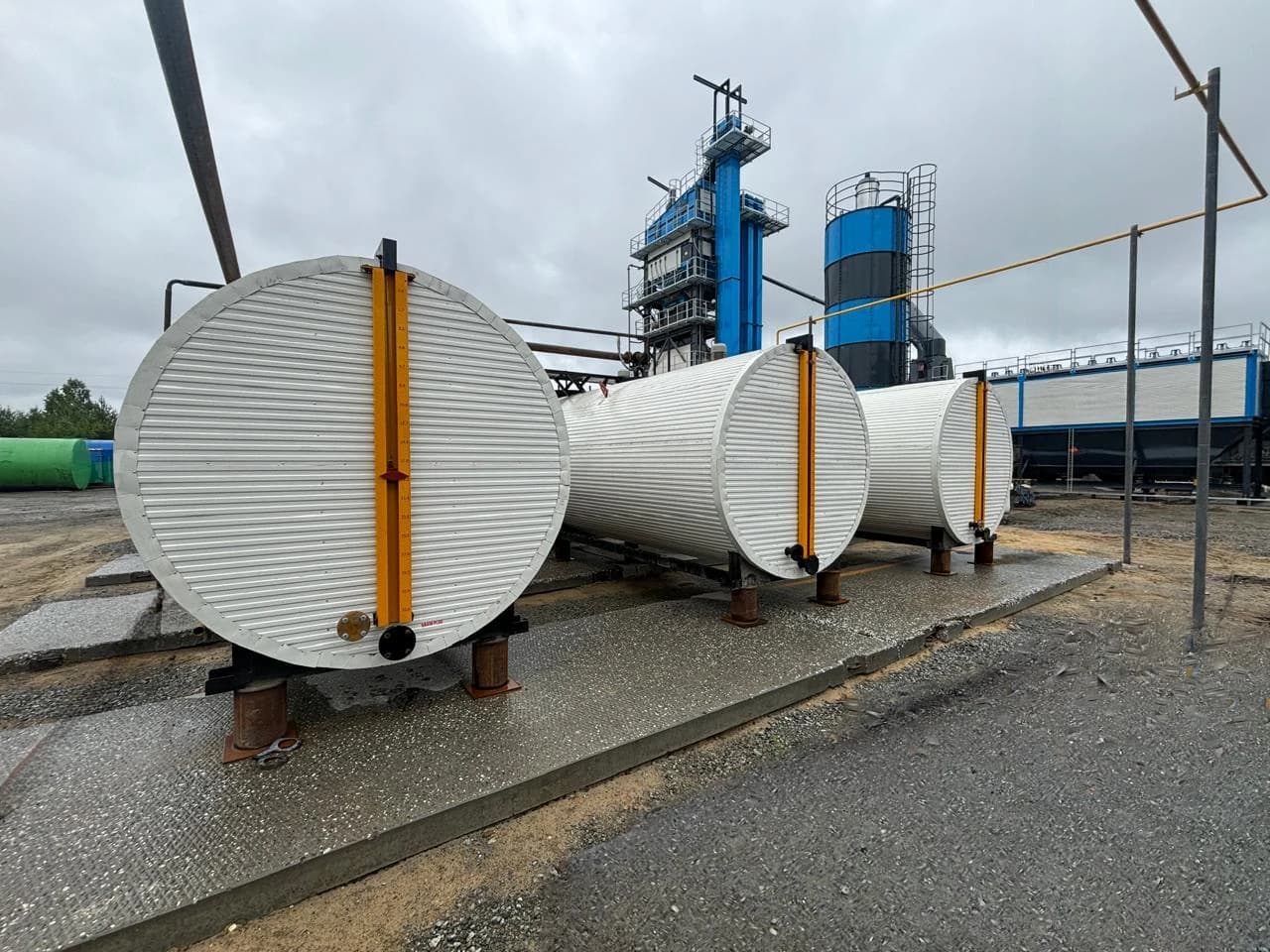
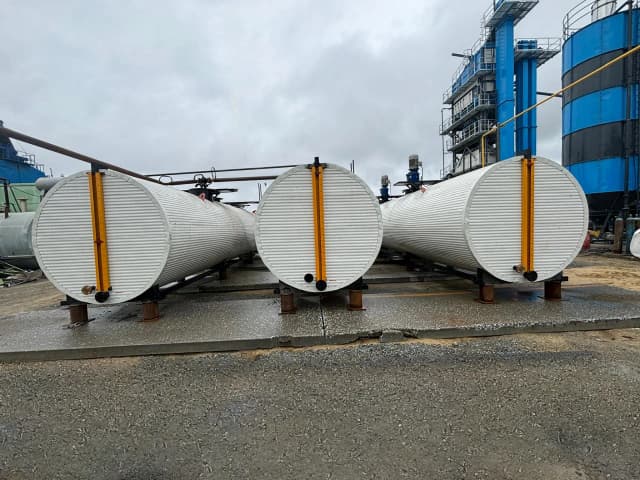
A bitumen tank stores asphalt binder and keeps it at a condition suitable for transfer and use in the asphalt mixing process.
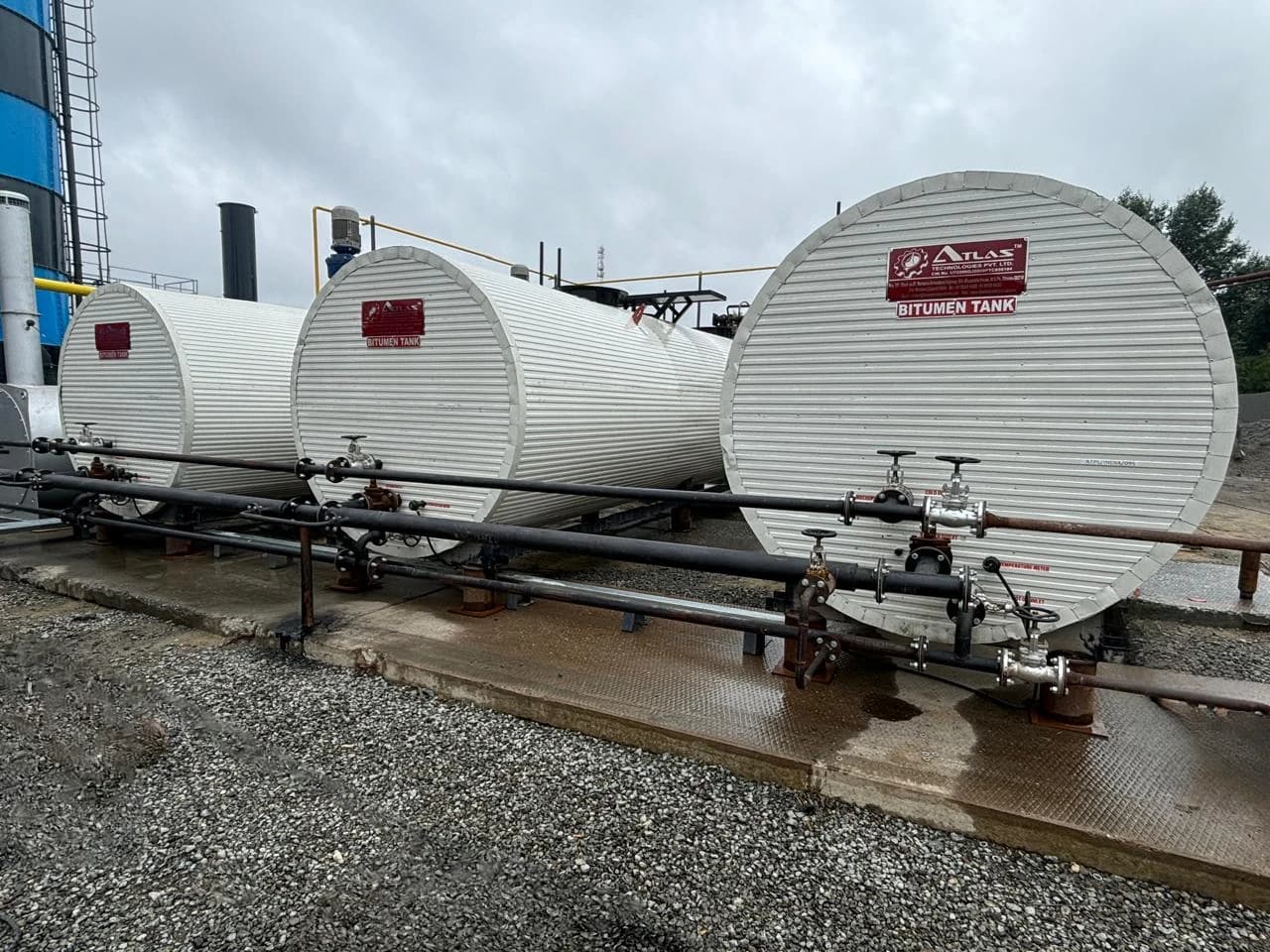
In a typical asphalt plant setup, the binder storage system includes the storage tank along with the heating, pumping and metering arrangements required to move bitumen from storage to the mixing plant. Asphalt binder storage tanks are generally insulated and heated so the binder remains fluid enough for pumping and mixing.
The arrangement is similar whether bitumen feeds a drum mix plant or batch mix plant .
Depending on the plant configuration, a bitumen heating tank may include:
- Insulated storage tank
- The bitumen is heated indirectly by thermic oil passing through a coil-shaped pipeline.
- Temperature monitoring and control
- Bitumen transfer pump
- Circulation and return lines
- Valves and piping connections
- Level monitoring arrangements
At Atlas Technologies, standard bitumen tanks are available with an Indirect Heating system, with thermic oil used to transfer heat to the bitumen through the Thermic oil heater. The tanks are insulated and can be configured according to project requirements.
How to Size a Bitumen Tank for Your Asphalt Plant
The starting point for selecting a bitumen storage tank is the plant’s actual binder consumption.
A useful calculation is:
Daily Bitumen Requirement = Daily Asphalt Production × Average Bitumen Content
For example, if an asphalt plant produces 800 tonnes of mix per day and the average bitumen content is 5%:
800 tonnes × 5% = 40 tonnes of bitumen per day
This calculation gives an estimate of daily consumption. It does not automatically determine the required tank size.
The final storage requirement also depends on how frequently bitumen can be delivered and how much operating reserve the plant needs.
Factors That Affect Bitumen Tank Capacity
| Factor | What It Means for Tank Sizing |
|---|---|
| Asphalt plant output | Higher production requires more binder availability |
| Average binder content | Different mix designs consume different quantities of bitumen |
| Daily production schedule | Actual operating hours affect total daily consumption |
| Delivery frequency | Longer intervals between tanker deliveries may require more storage |
| Delivery quantity | Tanker load size influences how storage is planned |
| Operating reserve | Additional storage may be required to manage supply delays |
| Number of binder grades | Different binders may require separate storage arrangements |
| Modified binder requirements | Some modified binders may require circulation or agitation during storage |
The most practical approach is to size the storage system around the plant’s expected consumption between deliveries, with an appropriate reserve based on supply reliability and project operations.
If the plant handles modified binders, storage requirements may also change. Industry guidance notes that modified binders can require agitation or circulation, and operators should follow the binder supplier’s requirements for storage and temperature control.
One Large Tank Is Not Always the Best Answer
Increasing tank capacity can provide more storage, but capacity alone does not solve every operational requirement.
A plant handling different grades of bitumen may need separate tanks. A project using modified binder may also require a storage arrangement that supports the supplier’s circulation or agitation requirements.
The storage decision should therefore begin with a simple question:
How much bitumen does the plant need to keep production running between deliveries, and what type of binder will be stored?
That gives a more useful basis for tank selection than choosing capacity from a standard list.
Size Your Bitumen Storage Around Actual Production
Tell Atlas Technologies about your asphalt plant output and expected production schedule. We can help you assess the bitumen tank capacity and heating arrangement required for your operation.
Plan Your Storage →Heating: Keeping Bitumen Ready for Asphalt Production
Storage capacity is only one part of the system.
The bitumen also needs to remain at a suitable temperature and viscosity for pumping, metering and mixing. Asphalt industry guidance describes heated and insulated storage as part of maintaining binder in a condition suitable for plant operation.
The required temperature depends on the binder type and supplier recommendations. For this reason, a fixed temperature should not be treated as suitable for every grade of bitumen.
The heating system needs to be assessed according to:
- Tank capacity
- Quantity of bitumen being stored
- Incoming bitumen condition
- Required operating temperature
- Time available for heating
- Ambient conditions
- Tank insulation
- Plant production schedule
Direct Heating Bitumen Tank
In a direct heating system, a burner fires into a fire tube mounted inside the bitumen tank. The flame and hot gases stay inside the tube, and heat passes through the tube wall into the surrounding bitumen.
Because the heat source sits inside the tank, a direct heating tank does not need a separate thermic oil heater or oil circulation system. This keeps the arrangement simpler, and it is generally associated with smaller asphalt plants and lower storage capacities.
The trade-off is that heat is concentrated at the fire tube surface rather than spread through a coil network. Temperature recovery can be slower in larger volumes, and the system heats only the tank, not the transfer lines or other binder handling components.
For safe operation, the fire tube must stay fully covered by bitumen. Direct-fired tanks typically use low-level controls that stop heating if the bitumen level falls below the fire tube.
Indirect Heating with Thermic Oil
An indirect heating system uses a separate heater to heat thermic oil, which circulates through coils or pipelines associated with the bitumen tank.
Heat is transferred from the circulating oil to the bitumen without direct flame contact with the binder.
Atlas Technologies uses oil heating systems for its standard bitumen tank configurations, with thermic oil circulating through the heating arrangement. Bitumen pipelines can also be jacketed to reduce heat loss during transfer.
Temperature Control Is Part of Product Control
The objective is not simply to heat bitumen as quickly as possible.
Excessive or prolonged heating can affect binder properties and increase operational and safety concerns. Guidance for asphalt binder storage recommends following the binder supplier’s temperature requirements, while modified binder guidance also stresses monitoring storage temperature and avoiding unnecessary heating and cooling cycles.
The heating system should therefore provide enough capacity to support plant operations while allowing controlled temperature management.
Installing a Bitumen Storage Tank
A bitumen storage tank should be installed as part of the complete material flow between bitumen delivery and the asphalt plant.
Before installation, the site layout should be reviewed around the following requirements.
Tank Location
The tank location should allow practical movement of bitumen from the delivery point to storage and then from storage to the asphalt plant.
The layout should also provide sufficient access for:
- Bitumen tanker unloading
- Operation of pumps and valves
- Routine inspection
- Maintenance work
- Safe movement around the equipment
Foundation and Tank Support
The tank and supporting arrangement must be installed on a properly prepared and level base suitable for the weight of the tank and the stored bitumen.
The exact foundation requirement depends on the tank design, capacity and site conditions.
Bitumen Delivery Access
Tanker movement and unloading should be considered before the tank is positioned.
A poorly planned delivery arrangement can create operational difficulties even when the storage capacity itself is adequate.
Where bitumen arrives in drums rather than tankers, a bitumen decanter melts the drums and transfers the binder into the storage tank.
The transfer route should also be designed to minimise unnecessary handling and heat loss.
Piping and Transfer Lines
The bitumen handling system must connect the storage tank to the asphalt plant through a suitable pumping and piping arrangement.
Industry guidance notes that transfer lines and pumps need to maintain binder fluidity during movement through the system. Where hot oil heating is used, associated transfer arrangements may require heating or jacketing as part of the overall system design.
Heating and Control Connections
The heating system, temperature monitoring and pumping arrangement should be checked during commissioning before regular plant production begins.
This is particularly important because a tank may be correctly installed mechanically while still requiring adjustments to its heating or transfer system before it can support normal production.
Maintaining a Bitumen Heating Tank
A bitumen heating tank requires routine attention because storage, heating and pumping systems work together continuously during asphalt production.
Maintenance should focus on keeping bitumen available and ensuring that the system continues to operate as intended.
Monitor Temperature and Bitumen Level
Temperature readings should be checked to confirm that the binder is being maintained within the required operating range.
The storage level should also be monitored to prevent production from reaching a point where insufficient bitumen is available or where the heating arrangement is exposed to unsuitable operating conditions.
The Asphalt Institute recommends maintaining appropriate control of heated asphalt storage tank temperature and using suitable level monitoring to help prevent overheating and overfilling.
Inspect Pumps, Valves and Pipelines
The bitumen transfer system should be inspected for:
- Leaks
- Restricted flow
- Pump performance
- Valve operation
- Condition of transfer lines
- Heating or jacketing performance where applicable
A problem in the pumping or transfer system can interrupt production even when sufficient bitumen remains in the tank.
Check Insulation and Heating Performance
Damaged insulation increases heat loss and can increase the energy required to maintain bitumen temperature.
The heating system should also be inspected according to the manufacturer’s maintenance requirements. Where thermic oil heating is used, the heater, circulation system and related components should be maintained as part of the complete heating arrangement.
Clean the Tank When Operating Conditions Require It
Heated asphalt storage tanks can accumulate deposits over time. The appropriate cleaning interval depends on operating conditions, stored material and actual tank use rather than one universal maintenance schedule.
Maintenance work involving heated bitumen tanks should also follow applicable site safety procedures and manufacturer guidance.
What Affects Bitumen Tank Price?
The bitumen tank price depends on more than storage capacity.
Two tanks with the same volume can have different costs depending on the heating and handling systems included.
Key factors include:
- Storage capacity
- Tank design and configuration
- Heating system type and capacity
- Thermic oil heater requirements
- Insulation
- Bitumen pumps
- Transfer and circulation arrangements
- Temperature and level controls
- Piping and accessories
- Number of tanks required
- Project-specific customisation
Tank design also affects heating performance. For example, on the 2 × 200 TPH double drum plants for Zanzibar , Atlas supplied square bitumen tanks, which heat more efficiently than standard round tanks.
For this reason, the right question is not simply: What is the price of a 50-ton or 100-ton tank?
It is: What storage and heating configuration does the asphalt plant actually require?
Atlas Technologies can customise bitumen tank sizing according to customer requirements, with heating arrangements forming part of the complete system configuration.
Author’s Note
Atlas Technologies Pvt. Ltd. is a road construction equipment manufacturer based in Mehsana, Gujarat, India. Founded in 1986, the company designs and manufactures asphalt batch mix plants, drum mix plants, counter flow plants, wet mix macadam plants, concrete batching plants and road machinery for highway contractors, infrastructure developers and export buyers worldwide.
With over 2,500 installations across 50+ countries and 38 years of manufacturing experience, Atlas Technologies serves projects ranging from national highway construction in India to remote island deployments and large-scale export contracts across Africa, Southeast Asia, the Middle East, East Europe and Oceania Countries.
www.atlastechnologiesindia.com

Mr. Nilesh Patel
Managing Director
Build a Bitumen System That Supports Your Plant
We can help you assess the right bitumen storage tank, heating system and transfer setup for your bitumen consumption and asphalt plant capacity.
Configure Your Tank →Frequently asked
questions.
Asphalt Plant for Caribbean and...
Buying an asphalt plant for the Caribbean or Latin America?...
Bitumen Storage Tank: How to...
How to size a bitumen tank for your asphalt plant,...

Pan Mixer vs Twin Shaft...
Pan mixer vs twin shaft mixer: how each works, typical...
Concrete Paver for Kerb Laying:...
How a concrete kerb laying machine works, compact vs higher-capacity...