

Hydraulic Broomer vs Mechanical Broomer: Which One Is Right for Your Road Project?
Mar 15, 2026
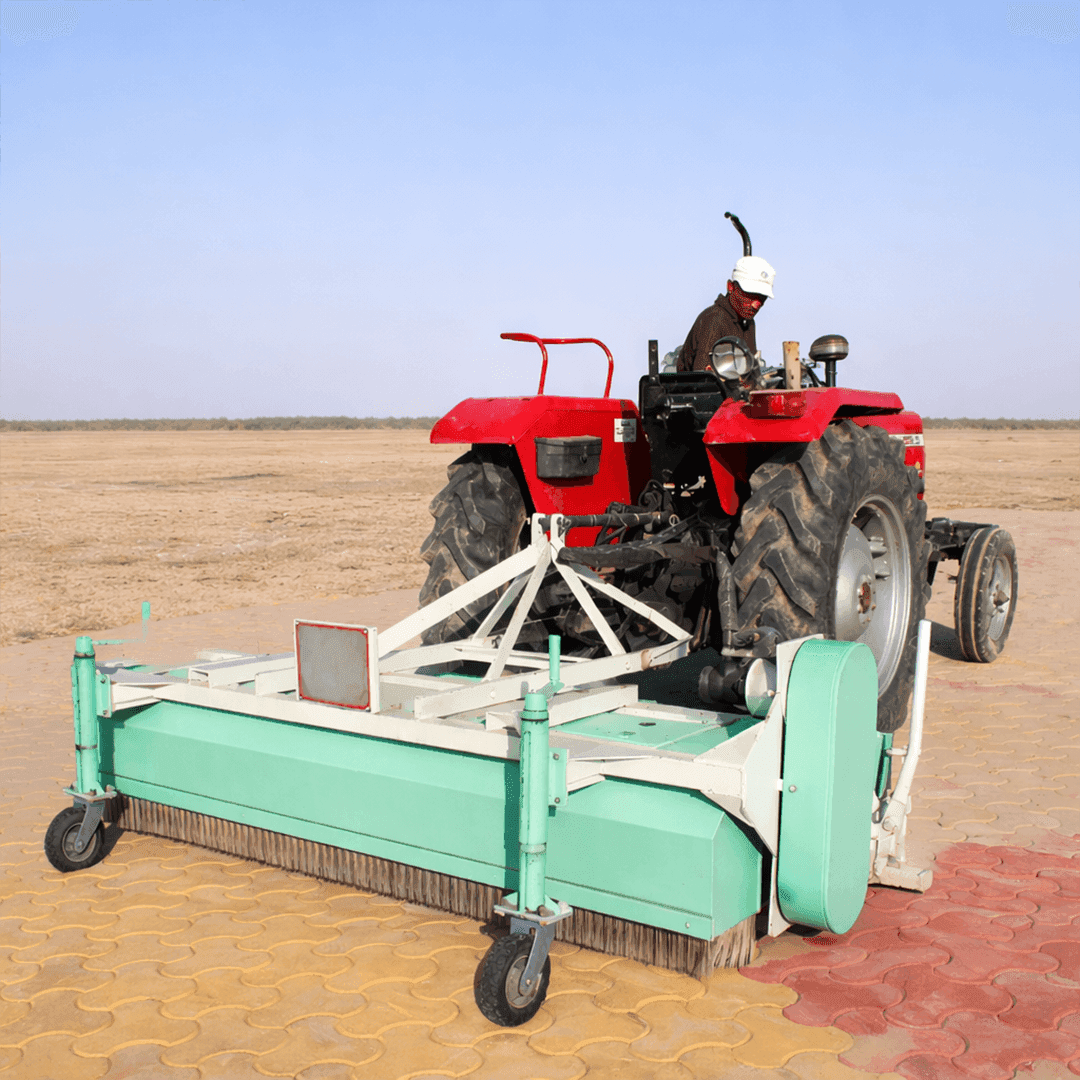
A hydraulic broomer uses the tractor's hydraulic system to power the brush through a hydro motor. A mechanical broomer uses the tractor's PTO shaft through a chain or gear drive. Both clean roads. The difference is which site conditions each one handles best — and getting that choice wrong costs you in operational efficiency before the first week is out.
How Each Machine Works
A hydraulic broomer draws power from the tractor's hydraulic circuit and routes it through a hydro motor mounted on the brush assembly. Brush speed is variable and controllable from the operator's cab without stopping the machine. The sweep width on Atlas's hydraulic broom is 2.1 metres, designed for highways, urban roads, airport aprons, and industrial areas where surface sensitivity and debris variation are both factors within a single cleaning run.
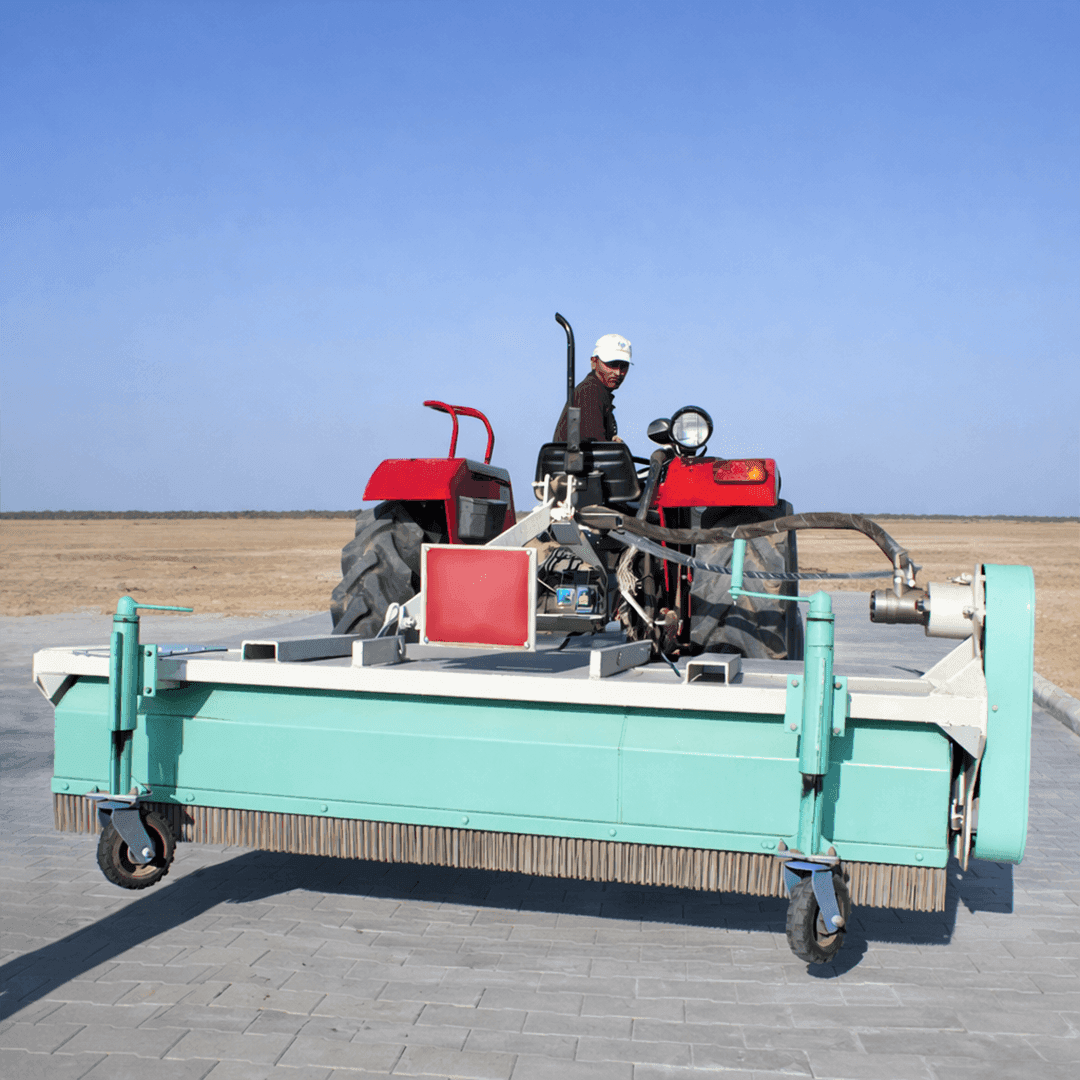
A mechanical broomer takes power directly from the tractor's PTO shaft through a chain or gear drive. Brush speed is fixed at engagement, determined by tractor RPM and gear ratio. The sweep width on Atlas's mechanical broom is 2.5 metres — 400 mm more per pass — making it the higher-output option for large open sites and long highway stretches where coverage rate drives the operational economics.
Both are tractor-mounted. Neither requires a dedicated vehicle, which keeps acquisition and operating costs manageable for contractors already running tractor fleets on site.
Key Components That Drive Performance
Brush system: The mechanical broomer runs rotating brushes in a cylindrical or disc configuration, with nylon or polypropylene bristles for most urban and highway applications and wire bristles for heavy industrial debris. The PTO-driven gear system delivers consistent high-torque brush rotation under heavy debris load. The hydraulic broomer powers its brush assembly through the hydro motor, with brush pressure continuously adjustable from the cab — allowing the operator to modulate contact force across different surface types and debris densities without stopping.
Dust management: The hydraulic broomer includes a dust collection bucket, capturing loose material at the source rather than redistributing it into the air. On Indian roads, where road dust contributes 20 to 60 percent of PM10 concentrations in cities under the National Clean Air Programme, source-capture matters. The mechanical broomer includes an optional water sprinkling system, which suppresses dust at the brush contact point during sweeping. Advanced water systems on modern road sweeping machines reduce water consumption by 40 to 60 percent compared to older single-pass designs through recirculation — relevant for contractors managing water supply on remote construction sites.
Drive reliability: The hydraulic system eliminates chain-drive wear that accumulates as a recurring maintenance cost in mechanical broom operation. Fewer mechanical linkages mean fewer wear points and faster on-site servicing. The mechanical system's PTO drive is simpler to field-repair on remote highway sites where hydraulic servicing is not immediately available — a practical advantage on long-distance national highway packages.
Side-by-Side Comparison
| Parameter | Hydraulic Broomer | Mechanical Broomer |
|---|---|---|
| Drive System | Tractor hydraulic circuit, hydro motor | Tractor PTO shaft, chain/gear drive |
| Sweep Width | 2.1 m | 2.5 m |
| Brush Speed Control | Variable, adjustable from cab | Fixed by tractor RPM |
| Brush Types | Nylon or polypropylene via hydro motor | Nylon, polypropylene, or wire bristles |
| Dust Management | Dust collection bucket | Optional water sprinkling system |
| Hydraulic Demand | Uses tractor hydraulic capacity | No hydraulic demand |
| Best Application | Highways, city roads, airports, industrial areas | National highways, heavy construction sites |
| Maintenance Focus | Hydraulic lines, motor seals | Chain, gear drive, PTO coupling |
Where the Hydraulic Broomer Performs Better
The hydraulic broomer's variable brush speed is its core operational advantage. On freshly paved national highway surfaces, where the bituminous layer needs careful cleaning without abrasion risk, the operator adjusts hydraulic pressure in real time to reduce brush contact force. The same machine cleans airport aprons, urban city roads, and industrial campuses where debris type changes frequently within a single pass.
The dust collection bucket is particularly relevant for municipal and urban work. Rather than redistributing fine particles into the air, it captures material at the source — directly addressing the road dust PM10 contribution that urban air quality programs in India are specifically targeting under NCAP mandates. For municipalities working under CPCB air quality compliance requirements, dust capture at the sweep point is an operational requirement, not an optional feature.
Hydraulic road sweepers also provide more consistent brush pressure across varying terrain. This maintains cleaning quality regardless of surface condition changes — an advantage on urban roads where kerb lines, junctions, and surface transitions are frequent.
Where the Mechanical Broomer Performs Better
The mechanical broomer's 2.5-metre sweep width is the deciding factor on large-scale highway projects. More width per pass means fewer total passes to cover full road width, reducing both fuel burn and operating time on long national highway stretches where cleaning efficiency directly affects project schedules.
On active construction sites generating coarse debris — aggregate spillage, construction waste, concrete fragments — the PTO-driven system delivers stable, high-torque brush rotation under heavy load. It draws nothing from the tractor's hydraulic capacity, which matters on complex sites where other hydraulic attachments are running simultaneously.
The optional water sprinkling system keeps airborne particulate down on dry open-terrain sites during peak summer months in North and Central India, where ambient dust levels at active construction zones are extreme. Water suppression during the sweep maintains acceptable visibility and working conditions for operators and surrounding crews.
From a capital cost perspective, the mechanical broomer's simpler drive architecture means a lower upfront price and straightforward field maintenance — the practical priority for contractors managing large tractor fleets where standardisation and ease of repair outweigh variable-speed control.
Which One Suits Your Project
Neither machine is the universal default. Match the machine to the site conditions.
Specify a hydraulic broomer when:
- The project covers highways, city roads, airports, or industrial areas
- Debris type and surface conditions vary within a single cleaning run
- Dust containment is a project compliance or municipal requirement
- Mid-sweep brush speed and pressure adjustment add operational value
Specify a mechanical broomer when:
- The project covers long national highway stretches where maximum sweep width reduces total passes
- The site generates heavy coarse debris from active construction activity
- The tractor's hydraulic capacity is already committed to other attachments
- Capital cost and field serviceability are the primary equipment priorities
For contractors running both highway construction and urban road maintenance simultaneously, one of each type in the fleet covers the full operational range without compromise.
Tractor Compatibility: Confirm Before You Commit
Both machines are tractor-mounted. Before finalising either, confirm two things.
For a hydraulic broomer: verify the tractor's hydraulic output capacity matches the hydro motor's flow rate requirement. Insufficient hydraulic flow reduces brush torque and cleaning performance directly.
For a mechanical broomer: confirm PTO shaft compatibility — specifically shaft speed (540 RPM or 1000 RPM), spline count, and coupling type — between the tractor and the broom's gear drive input.
Mismatched tractor specifications are the most common cause of underperformance on both machine types once deployed in the field. Atlas Technologies has manufactured hydraulic road sweepers and road broomer machines for over 35 years, and tractor compatibility is the first thing the engineering team checks before recommending any configuration.
Still Unsure Which Machine Suits Your Tractor And Site Conditions?
Atlas Technologies' engineering team assesses your project type, tractor model, and operational requirements and recommends the exact configuration before you commit to a purchase.
Frequently asked questions.
What distinguishes mechanical sweepers from vacuum sweepers in practical operation?
+How frequently should roads receive sweeping for effective maintenance results?
+Do electric road sweepers provide adequate performance for highway applications?
+How does regular road sweeping measurably extend pavement lifespan?
+
CPCB Compliance for Asphalt Plants...
CPCB compliance for asphalt plants in India is now directly...
Hot Mix Plant: Batch Mix,...
Compare hot mix plant configurations — batch mix, drum mix,...

Mobile Asphalt Plant Price in...
Understand what determines mobile asphalt plant price in India, including...
160 TPH Asphalt Batch Mix...
Atlas delivered and commissioned a 160 TPH asphalt batch mix...