

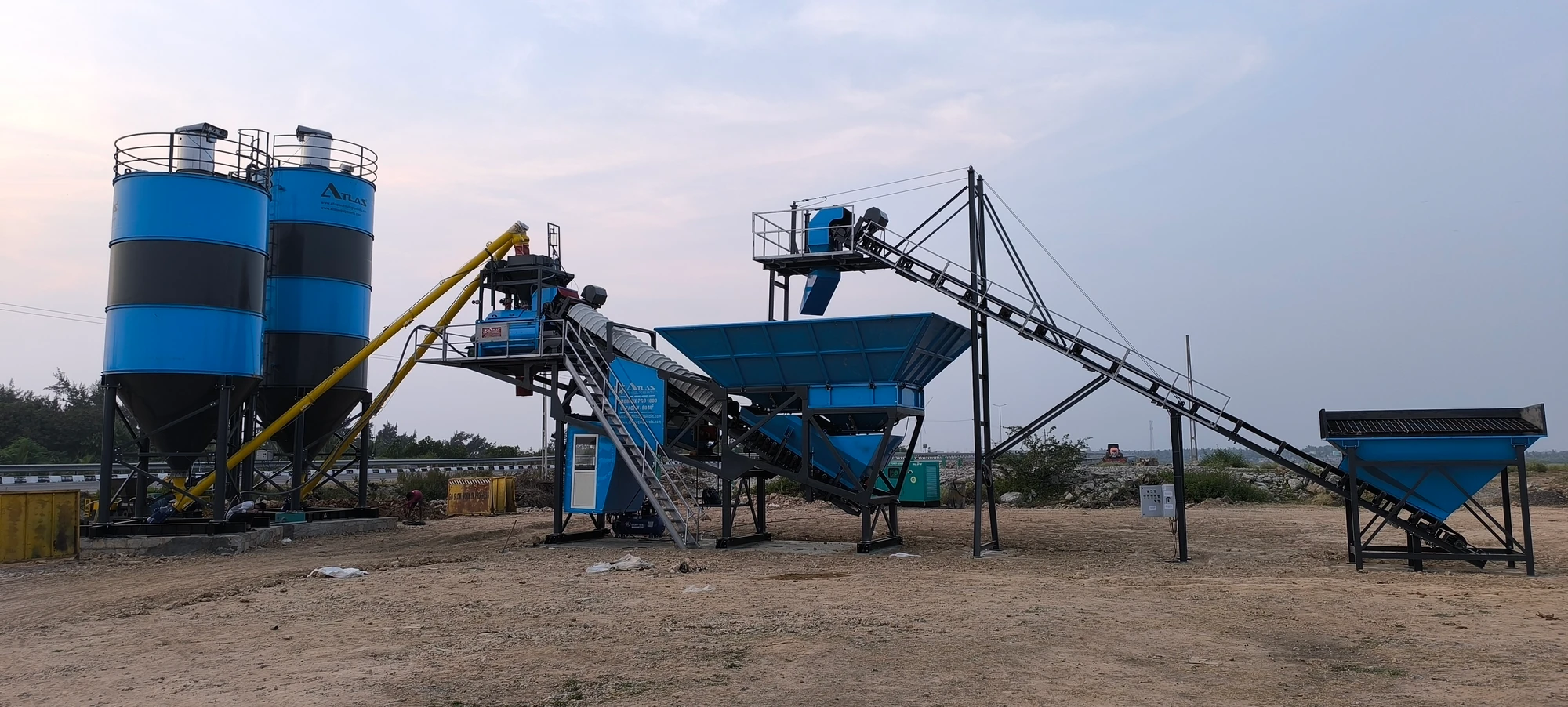
Buying a concrete batching plant is one decision. Getting it installed, commissioned, and ready to produce on schedule is another.
For contractors, RMC producers, and project teams, installation delays can affect the entire project plan. The plant may arrive on site while foundations are still incomplete, power connections are pending, or aggregate handling arrangements are not ready for trial production.
Understanding the concrete batch plant installation process before delivery helps avoid these issues.
This guide explains what a typical concrete plant installation in India project involves, how the process differs by plant type, what the buyer needs to prepare, and what happens before the plant is handed over for production.
What Does Concrete Batch Plant Installation Involve?
A concrete batching plant is not simply unloaded and switched on. Installation moves through a sequence of mechanical, electrical and commissioning activities before the plant is ready for regular production.
A typical installation includes:
- Site inspection and preparation
- Foundation or base preparation where required
- Delivery and unloading of plant components
- Mechanical assembly of the plant structure and equipment
- Installation of conveyors, bins, silos and other components
- Electrical connections and control panel setup
- Calibration of weighing and dosing systems
- Testing of individual equipment functions
- Trial batch production and mix verification
- Operator familiarisation and training
The exact scope depends on the plant type and configuration.
A compact or mobile plant may require limited on-site assembly. A larger stationary concrete batching plant setup generally involves more civil work, structural assembly and site preparation before commissioning can begin.
Installation Process: From Site Preparation to First Batch
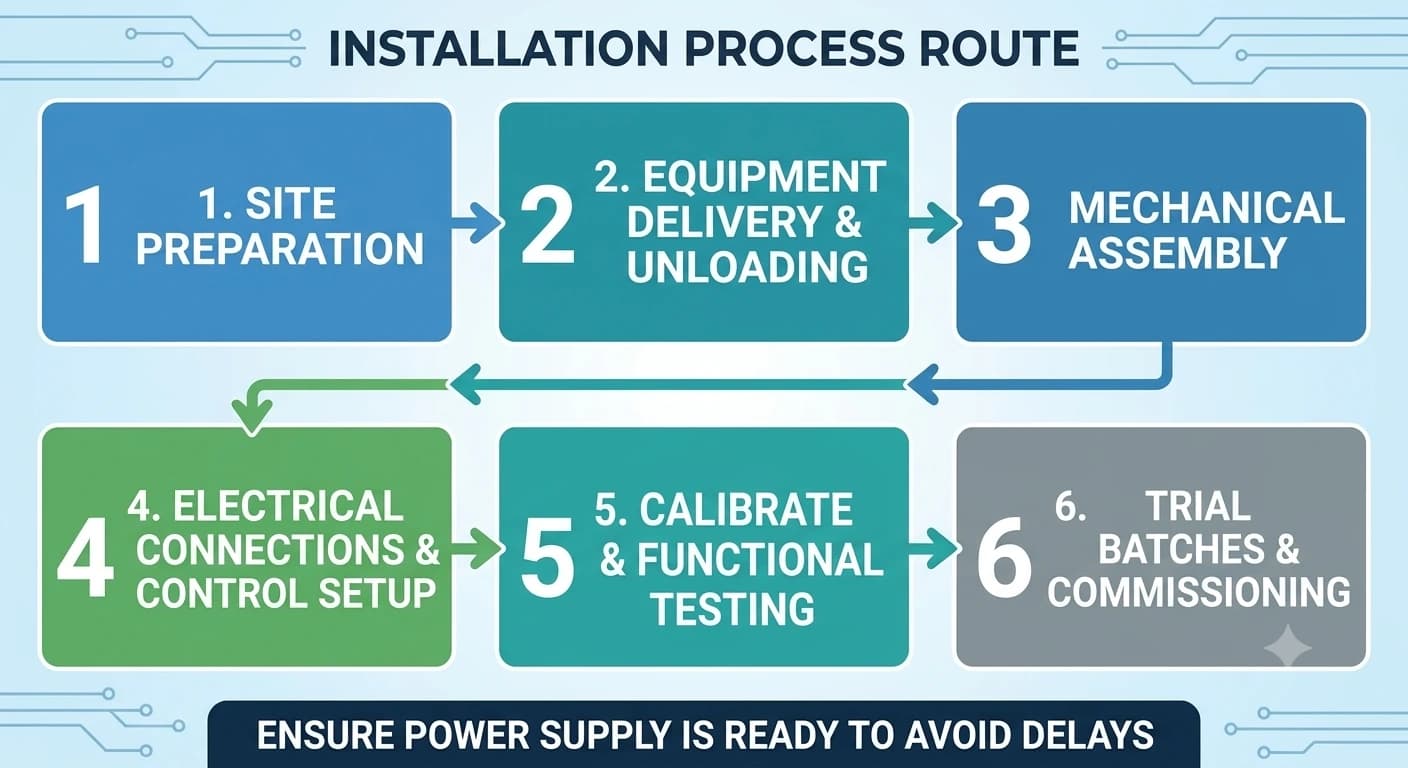
A successful installation usually starts before the equipment reaches the site.
1. Site Preparation
The installation area must be ready to receive the plant and the vehicles carrying its components.
Depending on the plant configuration, this may involve:
- Levelling and preparing the installation area
- Completing civil foundations
- Preparing access for transport vehicles and cranes
- Arranging aggregate storage
- Providing water and power connections
For stationary plants, foundation work is particularly important. Assemble the plant only after the required civil work is complete and meets the equipment and foundation requirements.
2. Equipment Delivery and Unloading
Once the site is ready, the plant components are delivered and unloaded in the planned sequence.
This may include:
- Aggregate bins
- Mixer assembly
- Conveyor systems
- Weighing units
- Cement silos
- Control cabin and electrical panels
- Water and admixture systems
Plan site access in advance, particularly where heavy transport vehicles or lifting equipment are required.
3. Mechanical Assembly
The mechanical installation stage brings the individual plant components together.
Depending on the configuration, this can involve assembling:
- The main plant structure
- Aggregate feeding systems
- Conveyor belts or skip arrangements
- Mixing units
- Cement and fly ash handling systems
- Storage silos
- Weighing hoppers
The sequence should follow the plant layout and installation plan so that each system can be connected and tested correctly.
4. Electrical Connections and Control Setup
Once the mechanical systems are in place, electrical work and control integration can begin.
This typically includes:
- Main power connections
- Motor and equipment connections
- Control panel setup
- Sensor and load cell connections
- Automation system testing
- Safety and interlock checks
The required power supply should be available before this stage begins. Delays in electrical readiness can hold up concrete plant commissioning in India projects.
5. Calibration and Functional Testing
Before the plant produces concrete, its material handling and weighing systems need to be checked.
This can include calibration and testing of:
- Aggregate weighing systems
- Cement weighing systems
- Water dosing
- Admixture dosing
- Load cells
- Mixer operation
The objective is to confirm that the systems are functioning as intended before trial production begins.
6. Trial Batches and Commissioning
The final stage is the transition from installation to production.
Trial batches are produced to test plant operation and verify that the required materials are measured and discharged correctly. The commissioning process also gives operators an opportunity to become familiar with the controls and production sequence.
Once the plant has been tested and the required checks are completed, it can move into regular operation.
How Long Does Concrete Plant Installation Take?
The timeline for a concrete batch plant installation depends on the plant type, capacity, site readiness and the amount of assembly required.
Use the following timelines as a general planning guide.
| Plant Type | Site Preparation | Mechanical Installation | Electrical & Commissioning | Indicative Timeline |
|---|---|---|---|---|
| Portable Concrete Plant | Around 1 day | 1–2 days | Around 1 day | 3–4 days |
| Mobile Batching Plant | 1–2 days | 2–3 days | 1–2 days | 4–7 days |
| Stationary Concrete Plant | 7–14 days* | 5–7 days | 3–5 days | 15–26 days |
*The actual civil preparation period can vary depending on foundation requirements, site conditions and concrete curing requirements.
These timelines assume that the site, utilities, equipment access and installation arrangements are ready. If the plant reaches the site before these requirements are completed, the schedule can extend quickly.
Get Your Site Ready Before Delivery
Atlas Technologies can help buyers understand the site, utility and installation requirements for their selected concrete batching plant before dispatch.
Check Site Requirements →What the Buyer Needs to Prepare Before Installation
The manufacturer and buyer both have a role in a successful installation.
Before the plant is delivered, the buyer should confirm that the following are ready.
Site Access
The site should be accessible to the vehicles delivering the plant components.
Consider:
- Road access to the project site
- Turning space for transport vehicles
- Ground conditions
- Access for cranes or other lifting equipment
- Restrictions caused by terrain or site layout
Foundations or Prepared Ground
Prepare the installation area according to the plant configuration.
Stationary plants may require completed civil foundations before structural assembly can begin. Mobile and compact plants generally require less civil work, but the installation area still needs a suitable, level operating base.
Electrical Supply
The required three-phase electrical connection should be available and ready for plant installation and testing.
Confirm the electrical configuration before delivery so the site power arrangement matches the plant’s requirements.
Water Supply
The plant requires a suitable water supply for concrete production.
Depending on the configuration and site requirements, water arrangements may also support cleaning and dust control operations.
Aggregate Storage and Handling
Aggregate should be available and accessible to the plant before trial production.
If aggregate storage or feeding arrangements are incomplete, the commissioning team may not be able to carry out full production trials.
Common Reasons Concrete Plant Installation Gets Delayed
Most installation delays are not caused by the mechanical assembly itself. They often start with site requirements expected to be completed before delivery.
Common issues include:
Power Is Not Available When the Plant Is Ready for Testing
Mechanical assembly may be complete, but commissioning cannot move forward until the electrical supply and control systems can be tested.
Civil Work Is Still Incomplete
For stationary plants, incomplete foundations can delay the entire installation sequence.
Site Access Creates Delivery Problems
Restricted roads, poor ground conditions or inadequate space for unloading can delay equipment delivery and assembly.
Aggregate or Water Arrangements Are Not Ready
The plant may be mechanically complete but unable to proceed with meaningful trial batches until the required materials and utilities are available.
Installation Planning Starts Too Late
Installation is easier to manage when the site requirements are reviewed before dispatch rather than after the equipment has arrived.
What Atlas Technologies Provides During Installation
Atlas Technologies supports the installation and commissioning of its concrete batching plants as part of the project handover process.
Depending on the project and scope of supply, support can include:
- Installation guidance and supervision
- Mechanical and electrical commissioning
- Calibration and functional checks
- Trial batch production
- Operator familiarisation and training
- Support during plant startup
For buyers, the important step is to discuss the installation scope before the order is finalised. This clarifies what the manufacturer will provide and what the customer must arrange for site preparation and local resources.
How to Plan a Smooth Concrete Plant Installation
The simplest way to avoid installation delays is to work backwards from the planned production date.
Before dispatch, confirm:
- The installation site is ready.
- Foundations or the operating base are complete.
- Power and water arrangements are available.
- Site access has been checked for equipment delivery.
- Lifting and unloading equipment is arranged.
- Aggregate storage and handling are ready.
- The installation and commissioning schedule is agreed.
When these are in place, the plant arrives at a site that is ready to receive it, and installation moves straight into assembly and testing.
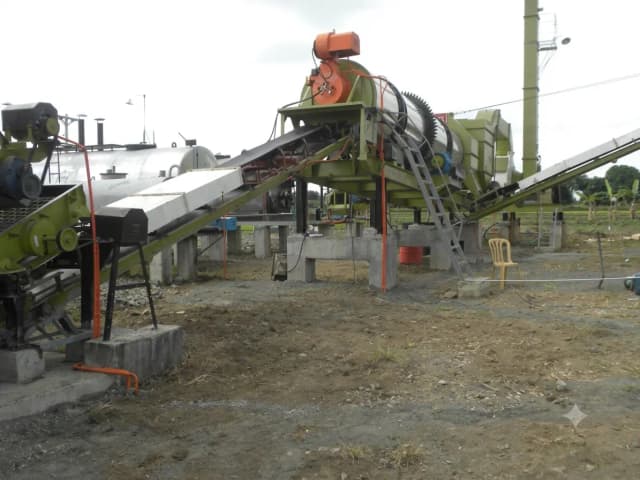
In practice: On a 45 m³/hr mobile concrete batching plant in the Philippines , two Atlas technicians supervised installation, testing and commissioning, and the plant was handed over fully operational.
Author’s Note
Atlas Technologies Pvt. Ltd. is a road construction equipment manufacturer based in Mehsana, Gujarat, India. Founded in 1986, the company designs and manufactures asphalt batch mix plants, drum mix plants, counter flow plants, wet mix macadam plants, concrete batching plants and road machinery for highway contractors, infrastructure developers and export buyers worldwide.
With over 2,500 installations across 50+ countries and 38 years of manufacturing experience, Atlas Technologies serves projects ranging from national highway construction in India to remote island deployments and large-scale export contracts across Africa, Southeast Asia, the Middle East, East Europe and Oceania Countries.
www.atlastechnologiesindia.com

Mr. Bhavesh Patel
Managing Director
Start Concrete Production on Schedule with the Right Equipment
Atlas Technologies can help you understand the plant configuration, site requirements and installation scope for your project.
Plan Your Installation →Frequently asked
questions.
Concrete Batch Plant Installation in...
Plan your concrete batch plant installation in India: site preparation,...
Asphalt Plant Equipment for Australian...
A practical guide for Australian road contractors on specifying, comparing...
Dambar Plant vs Drum Mix...
A dambar plant is the commonly used Indian term for...

India Asphalt Pavers Market: Growth,...
India's asphalt pavers market is growing, but equipment decisions shouldn't...