

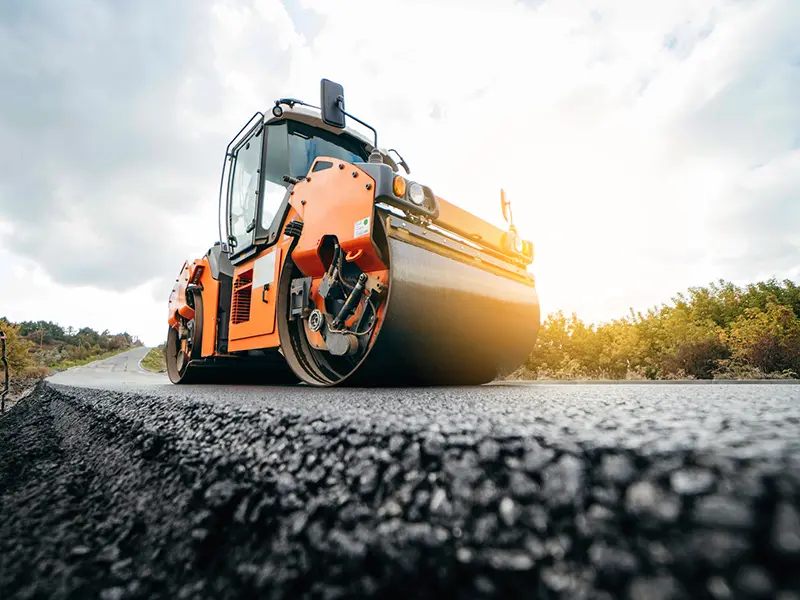
A contractor will find it difficult to make a decision regarding an improved road construction pipeline: should they increase their capacity, replace their outdated equipment or continue to use their present setup for another project cycle?
The extent to which this is the case is less a matter of how rapidly the equipment market is growing and more a matter of the work entering your pipeline.
A contractor bidding for long highway contracts has different paving requirements from one carrying out urban resurfacing, rehabilitation work, or projects across multiple locations.
In 2026 remember this distinction. While India's road development programme is still driving demand for paving and road construction equipment , no one equipment configuration is suitable for every contractor or every type of road project.
The article looks at the market for asphalt pavers in India, the road infrastructure activity which is causing demand, and the practical considerations that contractors should take into account before making an investment in paving or asphalt production equipment.
India's Road Pipeline Continues to Support Equipment Demand
The need for paving and associated equipment in India is still largely due to road construction work.
In financial year 2025–26, NHAI built 5,313 km of national highways , about 15% more than its annual target of 4,640 km. NHAI's capital expenditure on national highway infrastructure in that financial year was ₹2,44,362 crore.
The extensive infrastructure activities are the basis for the ongoing demand in India's asphalt paver market.
To a contractor, the figure in the market is of less importance than the factors that underlie it, namely a consistent amount of road work and a variety of projects which may call for different paving and production capabilities.
The Equipment Decision Starts With the Projects You Expect to Execute
One should not choose an asphalt paver in India as a result of the market being growing or because a certain type of machine is widely used.
Start with the project pipeline.
The questions are straightforward:
- What type of roads are you likely to build or rehabilitate?
- How much paving work do you expect over the next few years?
- Will projects involve long highway stretches, urban roads or multiple smaller sites?
- How frequently will equipment need to move between locations?
- What daily paving output will the project schedule demand?
The answers have a more direct influence on the equipment configuration than a general market forecast.
A long highway package may justify a setup designed for sustained output and continuous material supply. Urban or rehabilitation work can involve shorter working windows, restricted site access and more frequent changes in paving conditions.
Contractors involved in projects that are spread out over different geographical areas may also place more emphasis on the mobility of equipment and the time it takes to install it.
What matters is that a single project type doesn't require a particular machine; instead, the expected project mix should guide the purchase.
Don't Select the Paver Without Looking at the Asphalt Supply Chain
The asphalt paver is part of a bigger operation, and its output is based on a continuous supply of asphalt; this supply, in turn, depends on plant production, the movement of the trucks and the distance between the plant and the paving site.
A paver with a high output will not be able to keep up that rate if material deliveries are irregular.
The same issue can arise in the opposite direction: increasing asphalt production capacity does not necessarily increase paving output if the paver, the crew, or the transport fleet becomes the bottleneck.
Contractors should look over the entire operation before adding or upgrading any equipment.
| Part of the Operation | What to Review | Why It Matters |
|---|---|---|
| Asphalt production | Plant capacity, mix requirements and expected production cycles | Determines how much mix can be supplied during the paving operation |
| Material transport | Truck availability, travel distance and turnaround time | Delays in supply can interrupt paving |
| Asphalt paver | Required paving width, output and suitability for the project | Determines how efficiently asphalt can be placed |
| Surface preparation | Milling, cleaning and tack coat operations | Determines whether the surface is ready for the next pavement layer |
| Compaction | Roller availability and coordination with paving output | Compaction operations need to keep pace with asphalt placement |
| Project logistics | Site access, working hours and equipment movement | Affects how the entire operation performs in practice |
For a contractor, coordinating the operation matters more than comparing machines based on stated capacity.
What Road Contractors Should Prioritise in 2026
Market growth doesn't change the basic considerations when selecting equipment.
Contractors still have to evaluate how a machine will perform on the kinds of projects they plan to do and what it will cost them to operate over time.
Match Capacity to the Work Pipeline
Do not base your capacity selections on a single very large contract unless that project is the kind of work your business intends to carry out regularly.
Look at:
- Expected annual workload
- Average project size
- Peak production requirements
- Project duration
- Likely equipment utilisation
- Geographic spread of future projects
The more pertinent question is not just how much output this machine can achieve?
The question is this: how frequently shall we need that level of output, and will the rest of the operation be able to support it?
Look Beyond the Purchase Price
The equipment decision consists of more than just the purchase price.
For road contractors, the current situation can cover fuel usage, maintenance, parts wear, spare-part availability, and the impact of idle time on an ongoing project schedule.
For instance, fuel costs should be assessed in relation to the expected production volume rather than being considered on their own
A contractor producing large amounts of asphalt across multiple projects must understand how plant design and operating conditions influence fuel consumption over the equipment's working life.
The same is true for maintenance; a machine that can be supported with available spare parts and technical service will cause less disruption from unexpected failures during a project.
Plan for the Work You May Take On Next
Not all road contracts have the same production or operating requirements.
Depending on the work, contractors may need to accommodate:
- Different asphalt mix designs
- Different production volumes
- Varying project locations
- Changing installation and relocation requirements
- Recycled material requirements where specified
This is where equipment flexibility matters.
The aim is not to buy every available feature. It is to avoid investing in a setup that only suits one narrow type of project when the contractor’s future workload is likely to be broader.
Where the Asphalt Plant Fits Into the Decision
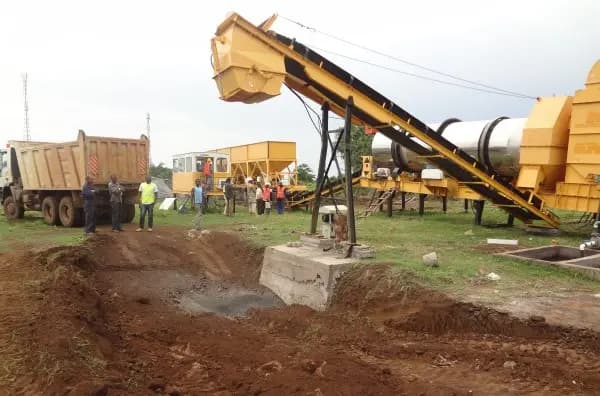
When contractors run their own asphalt production plants they should plan the plant and the paver at the same time.
The plant must produce the required amount of mixture at a rate that matches the paving schedule, and the paver and transport fleet must receive and spread the material without unnecessary interruptions.
Plant selection should therefore consider:
- Required production capacity
- Mix requirements
- Expected project duration
- Distance from the production site to the paving location
- Need for relocation between projects
- Future production requirements
Different plant setups suit different operating models; for example, a contractor that carries out long-duration, high-volume work will have different needs when moving from one project site to another or when working on smaller contracts.
What to Look for in an Equipment Manufacturer
The purchase involves more than just machine specifications.
Contractors should also assess the manufacturer's capacity to support the equipment after delivery.
Key considerations include:
- Available equipment configurations
- Engineering and customisation capability
- Pre-delivery testing
- Installation and commissioning support
- Spare parts availability
- Technical support
This is especially important when the equipment must be installed and commissioned within the project schedule.
What the 2026 Market Outlook Means for Contractors
The market for asphalt pavers in India is expected to grow as a result of ongoing investment in road and transport infrastructure, and government data also indicates that much work on the National Highways and high-speed corridors is still under construction.
For contractors, however, market growth is not a requirement for equipment.
The best starting point is the project pipeline.
Consider the kind of roads you plan to construct, the amount of output those projects will need, and whether your asphalt production, transportation and paving activities can keep up with that pace.
Base decisions about capacity, mobility, operating costs, and equipment configuration on that assessment.
The contractors best prepared for the next stage of road construction won't necessarily be the ones with the most equipment; rather, they will be the ones who have added equipment suited to the work they'll carry out.
Author’s Note
Atlas Technologies Pvt. Ltd. is a road construction equipment manufacturer based in Mehsana, Gujarat, India. Founded in 1986, the company designs and manufactures asphalt batch mix plants, drum mix plants, counter flow plants, wet mix macadam plants, concrete batching plants and road machinery for highway contractors, infrastructure developers and export buyers worldwide.
With over 2,500 installations across 50+ countries and 38 years of manufacturing experience, Atlas Technologies serves projects ranging from national highway construction in India to remote island deployments and large-scale export contracts across Africa, Southeast Asia, the Middle East, East Europe and Oceania Countries.
www.atlastechnologiesindia.com

Mr. Nilesh Patel
Managing Director
Equip for the Projects Ahead
Atlas Technologies helps road contractors choose asphalt production equipment based on expected project size, output needs, mobility, and site conditions.
Plan Your Setup →Frequently asked
questions.
Dambar Plant vs Drum Mix...
A dambar plant is the commonly used Indian term for...
India Asphalt Pavers Market: Growth,...
India's asphalt pavers market is growing, but equipment decisions shouldn't...
Road Sweeper Machine vs Hydraulic...
Learn the difference between mechanical road sweepers and hydraulic broomers...
Batching Plant: What It Is,...
A batching plant measures, proportions, and processes raw materials according...