

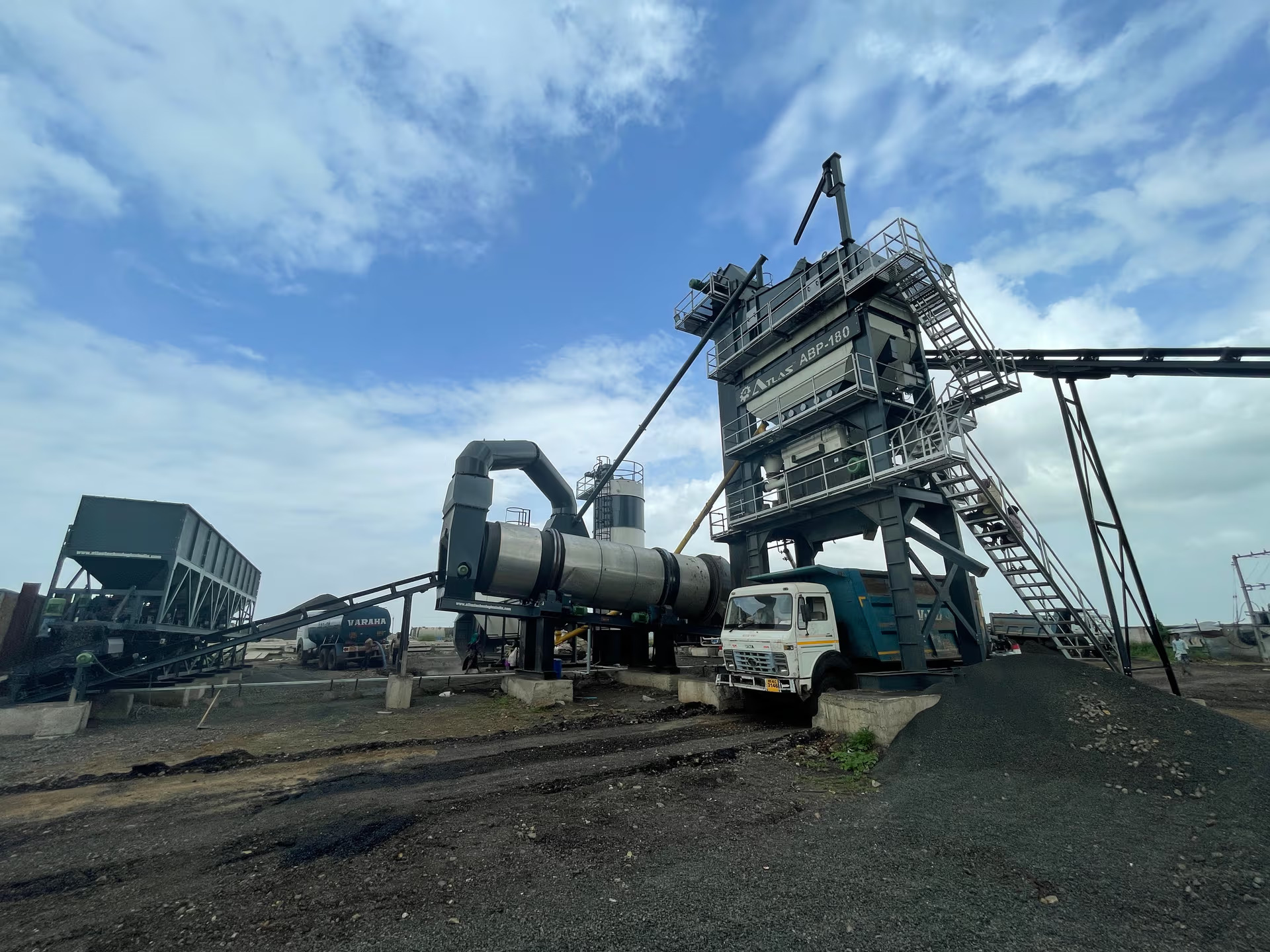
Road construction today demands durable pavements that resist harsh conditions and rising costs. Yet, from Indian highways to African runways and Middle Eastern roads, a common, often-overlooked threat quietly reduces pavement performance: bitumen aging.
Bitumen aging happens gradually. At first, the bitumen loses some flexibility and bonding strength. By the time you notice surface cracking, rutting, or layer separation, the damage is already significant.
This is why preventing bitumen oxidation is now an operational priority.
Today, contractors are under more pressure to deliver roads that perform consistently over time, especially in government and large infrastructure projects. Mix consistency, controlled bitumen temperatures, and reliable production systems are becoming important factors in winning and executing high-value road contracts successfully.
Leading asphalt manufacturers in India, like Atlas Technologies, no longer treat it as an afterthought. Instead, they are making targeted operational changes.
For example, many mixing plants now adopt indirect thermal oil heating systems to ensure even, controlled temperatures and avoid overheating the bitumen. They also install automated dosing systems that measure and inject precise quantities of bitumen, eliminating human error.
In addition, strict protocols for bitumen storage and transfer are implemented to minimize exposure to air.
Let's explore ways through which contractors can limit oxidation, get improved mix consistency, and deliver pavements that last longer under real-world conditions.
What Actually Happens When Bitumen Ages
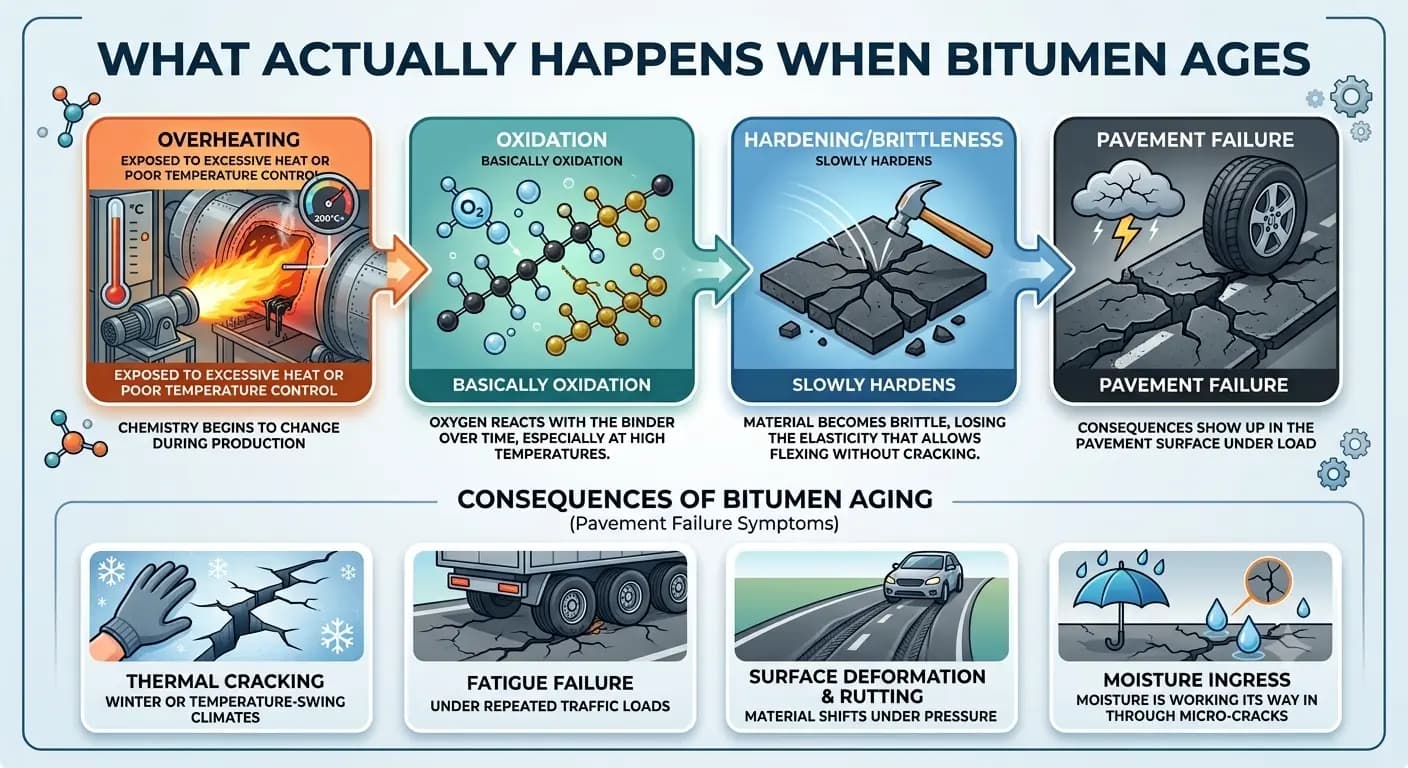
Bitumen acts like a high-performance adhesive. It works best when it is flexible, tacky, and consistent. But if it is exposed to too much heat or poor temperature control, its chemistry begins to change.
Bitumen aging is basically oxidation. When oxygen reacts with the binder over time, especially at high temperatures, the bitumen slowly hardens. It becomes brittle and loses the elasticity that lets a road surface flex under load without cracking.
The consequence shows up in the pavement:
- Thermal cracking in winter or temperature-swing climates
- Fatigue failure under repeated traffic loads
- Surface deformation and rutting
- Moisture is working its way in through micro-cracks
Ironically, in traditional plants, much of this damage happens during production, before the mix even reaches the road.
Using the Right Bitumen Grade Improves Mix Quality
Bitumen grade directly affects asphalt mix performance. VG30 is commonly used for standard road projects, while VG40 is preferred for heavy traffic and high-temperature conditions due to its higher stiffness. Many modern road projects also use PMB (Polymer Modified Bitumen) because it improves flexibility, adhesion, rut resistance, and overall pavement life.
The Problem With Direct Heating (And Why It's Quietly Ruining Mixes)
Older bitumen storage systems heat the bitumen with a direct flame. The goal is simple: raise the temperature to keep the bitumen usable. But in reality, direct heating makes the tank's environment less predictable than many operators think.
Heat spreads unevenly in these tanks. Some spots get too hot while others stay cool. Hot spots near the heater cause lighter oils in the bitumen to evaporate, leading to aging and hardening. At the same time, changing temperatures mean the binder going into the mixer isn't always at the right thickness, which leads to uneven coating and weaker mixes.
Fuel waste is also a problem. Direct heating systems often burn more fuel just to keep an average temperature, rather than maintaining a steady, even one. Contractors say switching to indirect thermic oil heating can cut fuel use by 25-35%, depending on the plant. For many, these savings mean the upgrade pays for itself in just 12 to 18 months.
Indirect Thermic Oil Heating: A Smarter Way to Hold Temperature
Indirect thermic oil heating takes a different approach. Instead of igniting the bitumen, heated oil runs through coils inside the tank. This way, heat moves slowly, is easy to control, and stays even throughout.
A well-designed bitumen storage tank with thermic oil heating completely removes the hot-spot problem. Every part of the tank stays at a consistent temperature. The bitumen is not stressed by sudden temperature changes; it is kept at a gentle, optimal working temperature.
The practical benefits compound quickly:
- Oxidation slows significantly because there's no localized overheating.
- Fuel consumption drops because you're not fighting uneven heat loss.
- Binder quality stays consistent across batches.
- The bitumen going into your mixer behaves predictably every time.
For large projects where mix consistency directly affects pavement lifespan, this level of thermal control is not a luxury; it is the standard.
Fuel Quality Also Matters in Asphalt Production
Fuel quality affects burner efficiency, aggregate heating, and asphalt mix consistency. Poor-quality fuel can cause unstable combustion, uneven heating, and higher fuel consumption. Using clean fuel with proper burner tuning helps maintain consistent drying temperatures, better fuel efficiency, and stable asphalt mix quality.
Getting the Dosing Right: Why Automation Matters More Than You'd Think
Even if the bitumen is perfect, the mix still depends on getting the proportions right. Asphalt mixes have strict limits on bitumen content. Too little bitumen makes the mix dry and brittle, while too much makes the surface soft and easy to deform.
An automated bitumen dosing system takes out human error. Using PLC and SCADA controls, it measures and adds the exact amount of bitumen to each batch, every time, something manual methods can't do. For those who don't know, a PLC is an industrial computer that runs equipment automatically, and SCADA is software that lets operators watch and control production in real time. Together, they keep dosing precisely and quality reliable on every shift.
The knock-on effects across production are significant:
- Batching accuracy is tightened to ≤0.5% in well-engineered systems.
- Material wastage drops.
- Production cycles get faster because you're not compensating for variation.
- Mix records become traceable, which matters enormously in government or international contracts.
This upgrade pays off not with one big change, but with lots of small savings that add up over time.
Drum Bitumen? Don't Let the Melting Process Undo the Quality
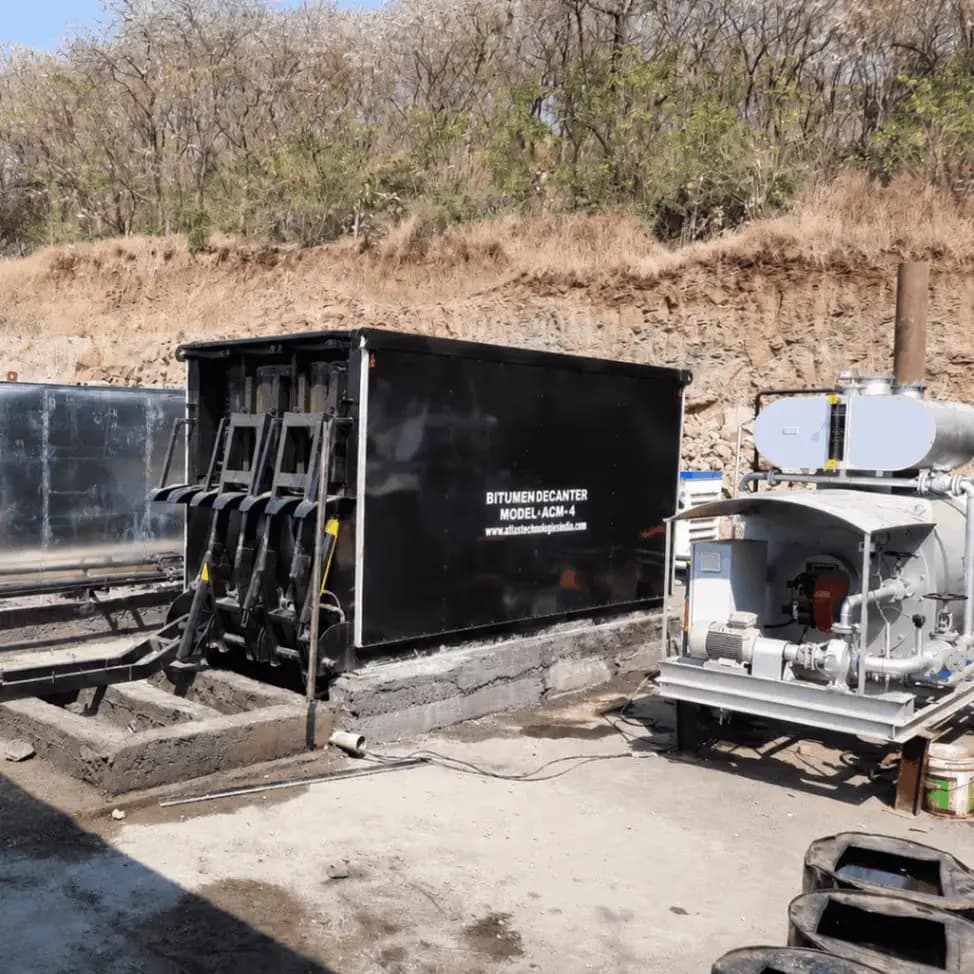
On many project sites, especially in remote areas, bitumen arrives in drums rather than in bulk tankers. How these drums are handled, especially how the bitumen is melted out, can either keep the binder's quality or quietly damage it before it reaches the plant.
A high-efficiency bitumen decanter is made for this job. It uses thermal oil heating rather than a direct flame, so the bitumen melts slowly and evenly, preserving its original properties.
When choosing a decanter, contractors should look for even heating, the right capacity for their project, automation for safe and easy use, and features that reduce leftover bitumen in drums.
A good decanter maintains high binder quality and ensures every drop is used.
In practice, this means drums are emptied faster, less fuel is used per drum, and, most importantly, the bitumen reaches the mixer in the same condition as when it left the refinery.
For high-volume jobs, keeping the feed material consistent results in a more consistent final mix.
Importance of Bitumen Sprayers in Pavement Bonding
Here's something that doesn't get enough attention: even a perfectly produced asphalt mix can underperform if the pavement layers beneath it aren't bonded properly.
The tack coat and prime coat applications (applied by a bitumen sprayer before laying begins) are what create adhesion between layers. If the application is uneven or the spray rate is incorrect, you end up with planes of weakness running through the pavement structure. Slippage cracks. Layer separation. Moisture is finding its way in at the interfaces.
A high-quality bitumen sprayer with precise spray bar control and even distribution solves this problem. The right amount of bitumen, applied evenly, ensures the layers bond as they should, so the road acts as a single structure instead of separate layers that could come apart.
How Wet Mix Plants Support Better Pavement Performance
Asphalt pavement is only as strong as its foundation. Load stress does not stop at the surface; it moves through every layer. A weak sub-base puts more stress on the asphalt above, causing fatigue cracking and deformation even in well-made mixes.
Well-made mixes play a key but often overlooked role in asphalt quality. Wet mix macadam layers from these plants form the base for the asphalt. If you get this foundation right, with the right gradation, moisture, and compaction, the asphalt on top will last much longer.
Contractors who want long-lasting pavements should give sub-base quality as much attention as mix design.
There's also a commercial reason behind this shift. Many contractors now focus on building a stronger and more consistent "grey base" layer because it helps reduce stress on the far more expensive asphalt surface above.
In a market affected by bitumen price volatility and tighter project margins, better wet mix quality helps protect pavement life while reducing the risk of premature black-top failures and costly maintenance.
Get Asphalt Plants with Better Binder Consistency and Lower Fuel Use
From thermic oil heating audits to automated dosing system assessments, our engineers will tell you exactly where your production chain is losing binder quality, and what to do about it.
Talk to Our Engineer →Where the Industry Is Heading
The broader trend among asphalt manufacturers in India and around the world is toward more reliable production systems. In India, recent industry surveys suggest that more than 60 percent of major plants have already adopted SCADA automation and indirect thermic oil heating for improved production control and binder consistency.
RAP integration for material efficiency , fuel-efficient burners to lower costs, SCADA automation for production traceability, and indirect thermic oil heating for consistent binder quality are becoming standard features rather than premium options.
For example, contractors upgrading to fully automated plants have reported measurable improvements in mix uniformity and fuel savings within the first year. These examples reassure contractors and decision-makers that these solutions are not just theoretical but are being used with measurable results across the industry.
The main reason for these changes is simple: clients and governments want roads that last, and they are getting better at setting the right production standards to achieve that.
Closing Thoughts
Bitumen aging is a problem that begins in the plant, not on the road. The cracking and deformation observed years later are the result of choices made during production, such as temperature spikes, poor dosing accuracy, inadequate sub-base preparation, and uneven tack coat application.
Solving these root causes with the right technology, such as indirect thermic oil heating, bitumen storage tanks with thermic oil heating, automated bitumen dosing systems, high-efficiency bitumen decanters, precision bitumen sprayers, and reliable wet mix plants , is what separates pavements that last from those that do not.
Bitumen oxidation prevention isn't just a technical specification. It's the difference between a road that serves its full design life and one that starts failing before its design life is over. For contractors who care about their work and their reputation, it's worth getting right.
Author’s Note
Atlas Technologies Pvt. Ltd. is a road construction equipment manufacturer based in Mehsana, Gujarat, India. Founded in 1986, the company designs and manufactures asphalt batch mix plants, drum mix plants, counter flow plants, wet mix macadam plants, concrete batching plants and road machinery for highway contractors, infrastructure developers and export buyers worldwide.
With over 2,500 installations across 50+ countries and 38 years of manufacturing experience, Atlas Technologies serves projects ranging from national highway construction in India to remote island deployments and large-scale export contracts across Africa, Southeast Asia, the Middle East, East Europe and Oceania Countries.
www.atlastechnologiesindia.com

Mr. Nilesh Patel
Managing Director
Maximize Binder Consistency & Plant Efficiency
From thermic oil heating audits to automated dosing assessments, our engineers can help you identify exactly where your production chain is losing binder quality—and show you how to fix it.
Schedule a Plant Audit & Consultation →Frequently asked
questions.
Dambar Plant vs Drum Mix...
A dambar plant is the commonly used Indian term for...

India Asphalt Pavers Market: Growth,...
India's asphalt pavers market is growing, but equipment decisions shouldn't...

Road Sweeper Machine vs Hydraulic...
Learn the difference between mechanical road sweepers and hydraulic broomers...
Batching Plant: What It Is,...
A batching plant measures, proportions, and processes raw materials according...