

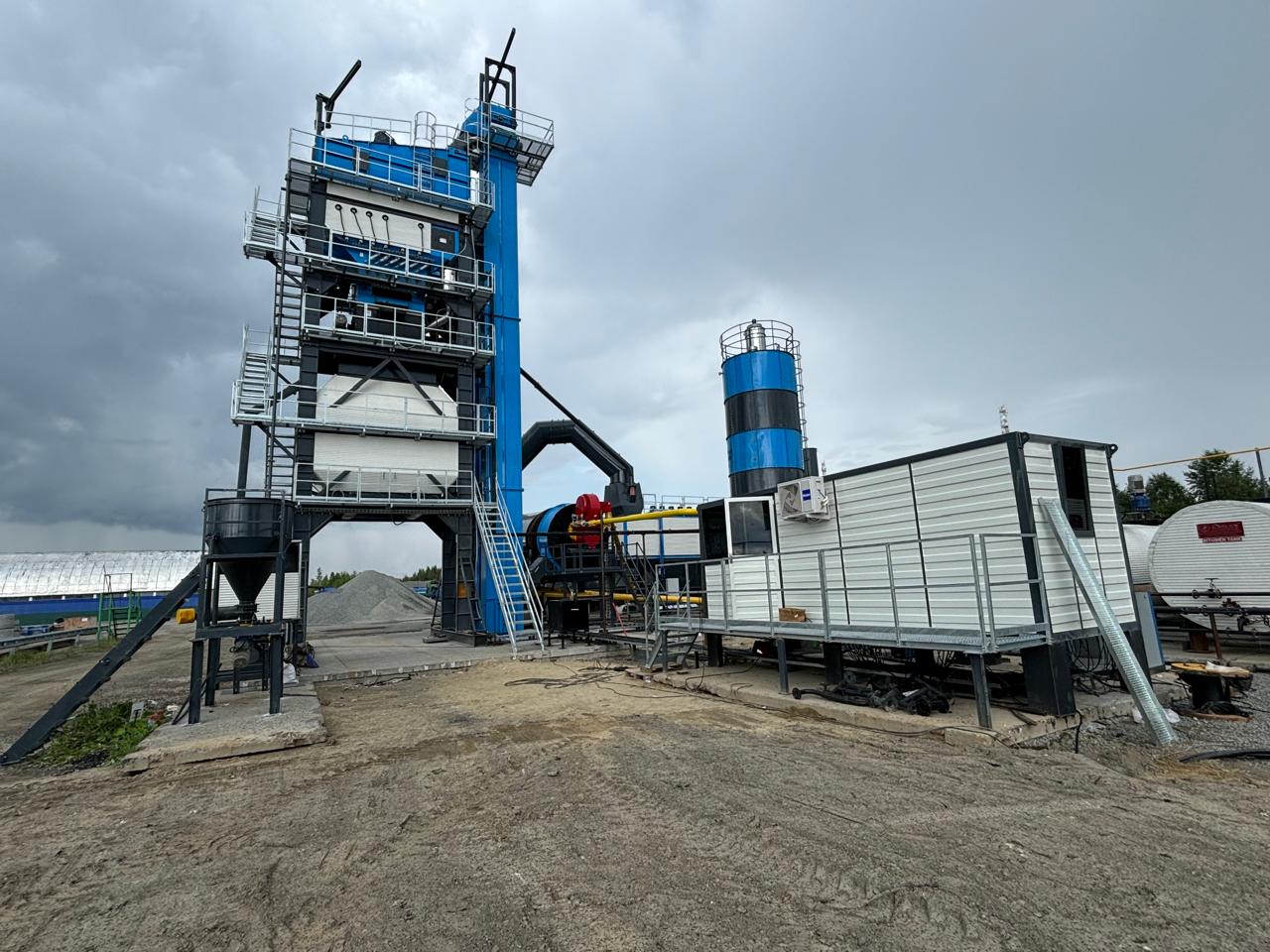
For rehabilitation work or multi-location corridors, readily available asphalt hot mix is critical for good road quality. A mobile hot mix asphalt plant helps to produce asphalt closer to where it is needed. In fact, asphalt production strategy fundamentally shapes project execution, influencing sequencing, manpower deployment, and daily progress.
Sourcing material from an external plant introduces significant constraints, as the project must adapt to the supplier's schedule. Deliveries become subject to traffic delays, production depends on the supplier's queue, and the mix temperature degrades over distance. These factors lie outside the contractor's direct control.
The mobile hot mix plant is designed to relocate as work moves from one site to the next. This design eliminates transportation delays and minimizes material loss.
This mobility is particularly advantageous for projects spanning multiple locations, as it allows precise control over timing and mixing conditions. Such control is essential for meeting project deadlines and guaranteeing the quality of construction.
Why Asphalt Production Strategy Matters in Project Planning
A mobile hot mix asphalt plant addresses the primary variable of material timing. It allows paving crews to work within predictable windows, eliminating delays from late deliveries or thermally compromised mix.
This control is most critical under tight constraints:
- Night paving in congested urban corridors
- Work during limited weather windows, such as monsoons
- Patch repairs on active highways with dispersed work zones
These constraints show up on site quickly. Equipment waits. Laying rates change. Work gets pushed to the next window.
In these scenarios, guaranteed access to hot mix is essential. Furthermore, mobile production can be adjusted in real time to match site progress. If work slows, plant output can be scaled down, conserving fuel and eliminating material waste from unused and cooled asphalt.
What a Mobile Hot Mix Asphalt Plant Actually Solves
A hot mix mobile plant allows the paving team to work within predictable windows, as they don't have to wait for material that arrives late or get disrupted by the mix that arrives colder than the required temperature.
This matters most when conditions are tight:
- Road paving at night in congested cities
- Working during monsoons
- Patching work on active expressways where patches are often far from each other
In all the aforementioned cases, hot asphalt availability is required.
A mobile hot mix asphalt plant also allows production to adjust to site conditions. If work slows, then the team can also slow down the production output, saving fuel and effort. In other words, the contractor has fewer instances of good material wastage and also saves time that goes into unnecessary rework.
In short, the contractor gets back control over the one variable that constantly derails highway work: material timing.
Explore Atlas Technologies' Mobile Asphalt Plant Solutions
Discuss your asphalt production requirements with our team for better project outcomes.
GET IN TOUCH →Benefits of Mobile Hot Asphalt Plants in Infrastructure Projects
| Benefit | Impact |
|---|---|
| Better Asphalt Temperature Control | Proximity to the work area minimizes heat loss during transport, ensuring the hot mix is placed within optimal temperature specifications for proper compaction. |
| Reduced Dependence on External Suppliers | Asphalt availability no longer depends entirely on third-party batching schedules. A mobile hot mix plant brings production under direct project control. |
| More Predictable Daily Paving Output | Production can be precisely aligned with crew readiness and permitted work hours, eliminating the disruption of uncertain deliveries. |
| Effective for Linear and Dispersed Projects | The plant can relocate with the work front, proving advantageous for long highway corridors or projects with multiple scattered sites. |
| Lower Material Wastage | Output can be matched to real-time consumption, virtually eliminating waste from cooled, rejected loads. |
| Consistent Mix Condition Across Sites | Localized production ensures uniform mix conditions across different project sites, leading to consistent laying and compaction results. |
| Better Schedule Control for Time-Bound Works | Material availability can be synchronized with fixed traffic closures and inspection windows, a key factor for time-bound projects. |
Mobile vs Portable Hot Mix Plants: Difference in Practical Use
While often used interchangeably, the terms typically denote a difference in setup agility. A portable plant may require a longer installation period (up to a week) but offers high stability, suiting long-term project phases. A mobile plant prioritizes rapid redeployment (often within days), catering to projects requiring frequent relocation between smaller work zones.
| Feature | Portable Plant | Mobile Plant |
|---|---|---|
| Setup Time | Longer (up to a week) | Quicker (days) |
| Best For | Long-term projects (months to years) | Frequent relocation between smaller projects |
| Production Stability | Higher once installed | Good for phased work |
| Relocation Frequency | Only when the project phase changes | More frequent between work zones |
The contractor's choice is pragmatic, based on project duration and geography. A multi-year highway project may justify a longer setup for months of stable production. While a series of urban overlay contracts would necessitate a plant capable of moving every few days.
Watch Mobile Asphalt Batch Mix Plant in Action
Mobile asphalt batch plant - Mixing plant
Use Cases of Mobile Hot Mix Asphalt Plants
Certain project types consistently benefit from on-site production.
1. Highway packages and regional corridors, especially in areas far from existing batch plants, rely on mobile or portable plants to avoid long distances.
2. Urban night paving and traffic-restricted zones present another common case. Cities impose narrow working windows to minimize disruption, which is often from midnight to 5 AM. For city road paving work, relying on external suppliers risks delay. A hot mix mobile plant staged near the work zone means material is available in the hours of low-to-no traffic.
3. Rehabilitation and overlay projects, especially with multiple small work zones, benefit from the flexibility of producing hot asphalt in portable mobile plants. This allows the construction crew to move between locations, preparing the sections, and a movable hot asphalt production setup can follow the work. Additionally, this arrangement also cuts fuel costs and lowers emissions.
4. Remote sites create another case. In such locations, plants from a portable hot mix asphalt plant manufacturer often become essential to meeting quality and schedule targets.
Quality, Compliance, and Operational Expectations
Mobile plants have to meet the same quality standards as stationary facilities. From the very first production run, the site inspectors will expect the required mix consistency.
Key compliance areas include:
- Aggregate gradation within specified limits
- Asphalt content meeting government specs and EPC contracts
- Mix temperature control throughout production
- Dust capturing or suppression and control of emissions
- Low-NOx burners and opacity monitoring
- Material containment to prevent spillage
Environmental compliance follows the same logic.
There is no exemption for temporary plants in terms of following environmental regulations. Verifying that mobile equipment meets local emission standards before mobilization is crucial to avoid expensive mid-project retrofits.
Operationally, well-engineered plants minimize waste through integrated dust collection, stable process controls, and proper material containment.
Indian Manufacturers in Global Mobile Asphalt Supply
India has emerged as a competitive source for mobile and portable asphalt plants internationally.
And no, this is NOT through subsidized pricing alone.
The position of Indian asphalt plant manufacturers has come from their plants working reliably across diverse materials, climates, and project scales. The plant designs tend to prioritise durability and adaptability (over affordability) and still manage to deliver them at a competitive price.
A portable hot mix asphalt plant manufacturer in India today competes on quality execution and export readiness.
Indian manufacturers like Atlas Technologies understand that equipment exported to diverse climates and regulatory environments has to perform reliably without constant manufacturer intervention. The focus on durability and cost discipline comes from serving a domestic market with demanding conditions and price sensitivity.
Plants that survive Indian summers, monsoons, and infrastructure project schedules? They are bound to perform well elsewhere.
In other words, years of experience in exporting across markets teach manufacturers what works beyond home ground. A portable hot mix plant manufacturer in India shipping to Africa, Southeast Asia, and Latin America learns to anticipate fuel quality variations, operator skill levels, and parts availability constraints. This experience translates into equipment design that doesn't assume perfect conditions.
Closing Perspective
Mobile and portable hot mix asphalt plants are strategic execution tools for projects where a centralized stationary plant is impractically owing to the vast stretch of land that needs to be covered. These plants significantly reduce logistics risk, restore schedule control, and ensure consistent mix quality.
Selecting the right asphalt mix plant configuration and design requires understanding project demands, manufacturer capability, and operational support networks. At Atlas Technologies, we discuss asphalt production requirements much earlier in project planning for better outcomes.
Author’s Note
Atlas Technologies Pvt. Ltd. is a road construction equipment manufacturer based in Mehsana, Gujarat, India. Founded in 1986, the company designs and manufactures asphalt batch mix plants, drum mix plants, counter flow plants, wet mix macadam plants, concrete batching plants and road machinery for highway contractors, infrastructure developers and export buyers worldwide.
With over 2,500 installations across 50+ countries and 38 years of manufacturing experience, Atlas Technologies serves projects ranging from national highway construction in India to remote island deployments and large-scale export contracts across Africa, Southeast Asia, the Middle East, East Europe and Oceania Countries.
www.atlastechnologiesindia.com

Mr. Nilesh Patel
Managing Director
Let's Plan Your Next Infrastructure Project Together
Contact Atlas Technologies for project-based guidance on mobile and portable hot mix asphalt plants. We configure capacity and design as per your requirements.
CONTACT US →Frequently asked
questions.
Dambar Plant vs Drum Mix...
A dambar plant is the commonly used Indian term for...
India Asphalt Pavers Market: Growth,...
India's asphalt pavers market is growing, but equipment decisions shouldn't...

Road Sweeper Machine vs Hydraulic...
Learn the difference between mechanical road sweepers and hydraulic broomers...
Batching Plant: What It Is,...
A batching plant measures, proportions, and processes raw materials according...