

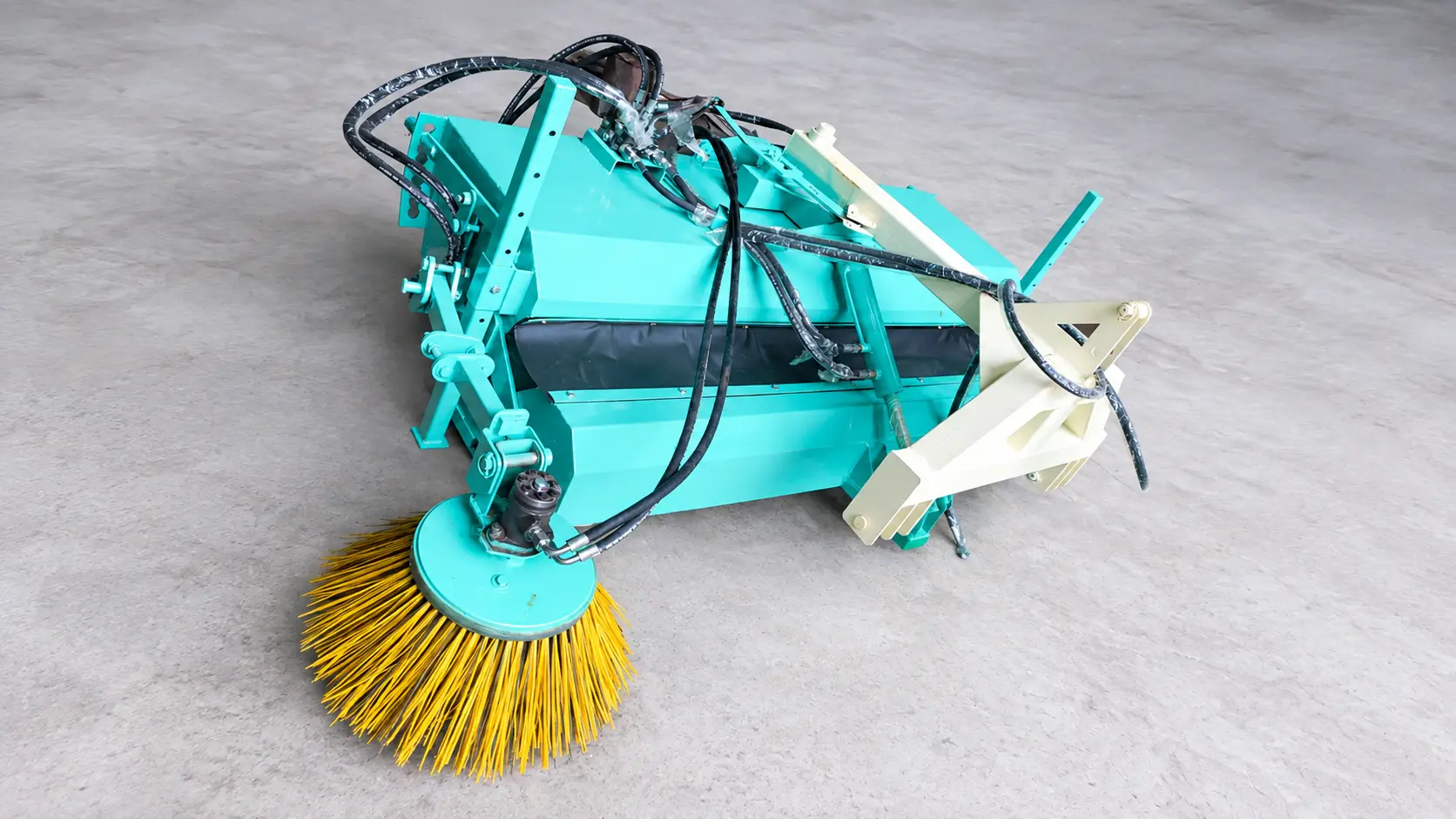
Before spraying tack coat or laying a new asphalt layer, you need to properly clean the surface. Dust, loose aggregate, and construction debris can interfere with the bond between pavement layers and affect the quality of the finished road.
Two machines are commonly used for this work: a road sweeper machine and a hydraulic broomer.
Both use rotating brushes to clean road surfaces, but they differ in brush drive, operator control, and the surfaces they are best suited to clean.
Your choice depends largely on the construction stage and surface condition.
This article explains how each machine works, the key differences between them, and which one may be better suited to your project.
What Is a Road Sweeper Machine?
A road sweeper machine, often called a mechanical broomer, removes dust, loose aggregate, and debris from road surfaces and construction sites.
Depending on the configuration, the machine can be tractor-mounted or vehicle-mounted. A rotating brush assembly sweeps material away from the working surface, helping prepare the area for the next stage of construction or maintenance.
Mechanical road sweepers are generally used where more aggressive cleaning action is required, particularly on:
- Unpaved road surfaces
- Road bases
- Construction sites
- Areas containing loose aggregate or coarse debris
The brush assembly can use steel or nylon wire brushes depending on the application and surface requirements.
Some road cleaning machine India configurations may also include optional features such as:
- Dust collection arrangements
- Water sprinkling systems
- Different brush materials
- Different sweeping widths
You can select these features based on site conditions and cleaning requirements.
What Is a Hydraulic Broomer?
A hydraulic broomer uses a hydraulically driven brush assembly to sweep and clean road surfaces.
The hydraulic drive gives the operator greater control over the brushing operation. Depending on the machine configuration, operators can adjust brush speed, angle, and working pressure to suit the surface being cleaned.
This makes hydraulic broomers particularly useful where controlled surface preparation is required.
Common applications include:
- Cleaning prepared road surfaces before tack coat application
- Sweeping after milling operations
- Road surface maintenance
- Urban road cleaning
- Removing loose material before the next construction layer is applied
Compared with a mechanical sweeping system, a hydraulic broomer offers greater control when road conditions call for a more measured cleaning approach.
Mechanical or Hydraulic Broomer: Which Machine Should You Choose for Your Project?
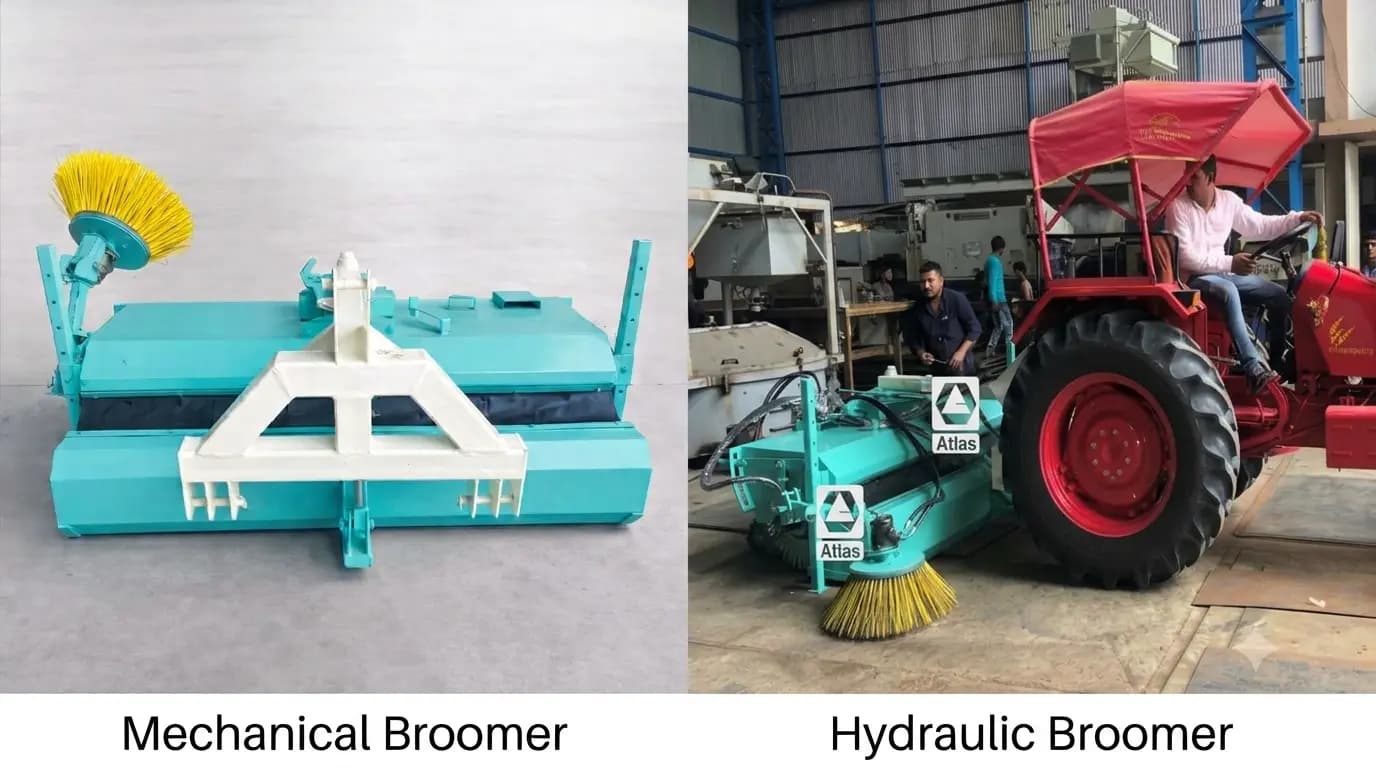
The choice depends on the surface being cleaned and where that cleaning fits into the road construction process.
A mechanical road sweeper machine is better suited to heavier cleaning on road bases, rough surfaces, and construction areas where loose aggregate and debris need to be cleared.
A hydraulic broomer is better suited to prepared or paved surfaces where controlled brushing is needed. It is commonly used after milling, before tack coat application, and during other stages where the surface needs cleaning without overly aggressive brush action.
On larger projects, both machines can be used at different stages: a mechanical sweeper for heavier initial cleaning and a hydraulic broomer for final surface preparation.
| Selection Factor | Road Sweeper Machine / Mechanical Broomer | Hydraulic Broomer |
|---|---|---|
| Best suited for | Heavy-duty cleaning and debris removal | Controlled surface preparation |
| Surface condition | Rough, unpaved and debris-heavy surfaces | Paved and prepared surfaces |
| Typical applications | Road base cleaning, construction sites and loose aggregate removal | Post-milling cleanup, pre-tack coat cleaning and road maintenance |
| Material being removed | Loose aggregate, coarse debris, soil and construction material | Fine dust, milling residue and loose surface material |
| Brush action | Stronger and more aggressive | More controlled and adjustable |
| Drive system | Mechanical or PTO-driven | Hydraulic |
| Operator control | More limited adjustment during operation | Greater control over brush operation |
| Surface sensitivity | Suitable where stronger cleaning action is required | Better suited where controlled cleaning is important |
| Dust control options | Can include water sprinkling or dust collection systems | Can include water spray or dust suppression systems |
| Best stage of construction | Initial site cleaning and road base preparation | Surface preparation before the next pavement operation |
| Cleaning width | Atlas variants available in 2.1 m and 2.5 m widths | Selected according to the machine configuration and application |
The key is to match the machine to the cleaning operation. Rough surfaces and heavier debris call for stronger sweeping action, while prepared road surfaces usually require greater brush control.
What Specifications Should You Check Before Buying?
When comparing a road sweeper or hydraulic broomer, look beyond the machine's basic sweeping width.
Important considerations include:
Brush Type
The brush material affects the type of cleaning action the machine can provide.
Base your selection on the surface condition and the material being removed.
Cleaning Width
A wider brush covers more area in one pass, but the right width depends on the project and the equipment carrying or mounting the broom.
Drive System
Understand whether the machine uses a mechanical or hydraulic drive system and how that affects operation and control.
Mounting Compatibility
For tractor-mounted equipment, confirm compatibility with the available tractor and power or hydraulic system before purchase.
Dust Control Options
If dust generation is a concern, check whether the machine can be supplied with:
- Water sprinkling
- Dust suppression
- Collection arrangements
Maintenance Requirements
Brush wear, hydraulic components and mechanical drive systems all require periodic inspection and maintenance.
You should also consider the availability of replacement parts and technical support.
Which Machine Is Better for Road Construction?
There is no single answer because the two machines serve different cleaning requirements.
A mechanical broomer may be better suited to:
- Road base cleaning
- Rough and unpaved surfaces
- Construction sites
- Loose aggregate and heavier debris
A hydraulic broomer may be better suited to:
- Prepared paved surfaces
- Cleaning before tack coat application
- Post-milling cleaning
- Applications requiring greater brush control
For contractors handling multiple stages of road construction, both machines can have a role depending on the surface and cleaning requirement.
Atlas Technologies Road Cleaning Equipment
Atlas Technologies manufactures road construction and maintenance equipment, including mechanical road sweepers and hydraulic broomers.
The machines are available in different configurations to suit varying project requirements, with options for different cleaning widths and additional systems such as water sprinkling or dust collection where required.
Choosing the right configuration starts with understanding the surface, the type of material being removed and the role the equipment will play in the overall road construction process.
Final Thoughts
The choice between a road sweeper machine and a hydraulic broomer comes down to the surface type and the cleaning job in front of you.
For heavier cleaning on rough surfaces and road bases, a mechanical broomer can provide the required sweeping action. For prepared surfaces, milling cleanup and pre-tack coat applications, a hydraulic broomer offers a more controlled approach.
The best choice fits your road construction process, not simply the machine with the most features. Match the machine to the surface, the cleaning stage, and the job at hand.
Author’s Note
Atlas Technologies Pvt. Ltd. is a road construction equipment manufacturer based in Mehsana, Gujarat, India. Founded in 1986, the company designs and manufactures asphalt batch mix plants, drum mix plants, counter flow plants, wet mix macadam plants, concrete batching plants and road machinery for highway contractors, infrastructure developers and export buyers worldwide.
With over 2,500 installations across 50+ countries and 38 years of manufacturing experience, Atlas Technologies serves projects ranging from national highway construction in India to remote island deployments and large-scale export contracts across Africa, Southeast Asia, the Middle East, East Europe and Oceania Countries.
www.atlastechnologiesindia.com

Mr. Nilesh Patel
Managing Director
Match Your Road Cleaning Equipment to the Job
Atlas Technologies offers mechanical road sweepers and hydraulic broomers for different surface conditions, cleaning stages, and road construction requirements.
Find Your Machine →Frequently asked
questions.
Road Sweeper Machine vs Hydraulic...
Learn the difference between mechanical road sweepers and hydraulic broomers...
Batching Plant: What It Is,...
A batching plant measures, proportions, and processes raw materials according...
CPCB Compliance for Asphalt Plants...
CPCB compliance for asphalt plants in India is now directly...
Hot Mix Plant: Batch Mix,...
Compare hot mix plant configurations — batch mix, drum mix,...