

India-EU FTA & Road Construction Machinery: Export Opportunities for Indian Manufacturers in 2026
Feb 01, 2026
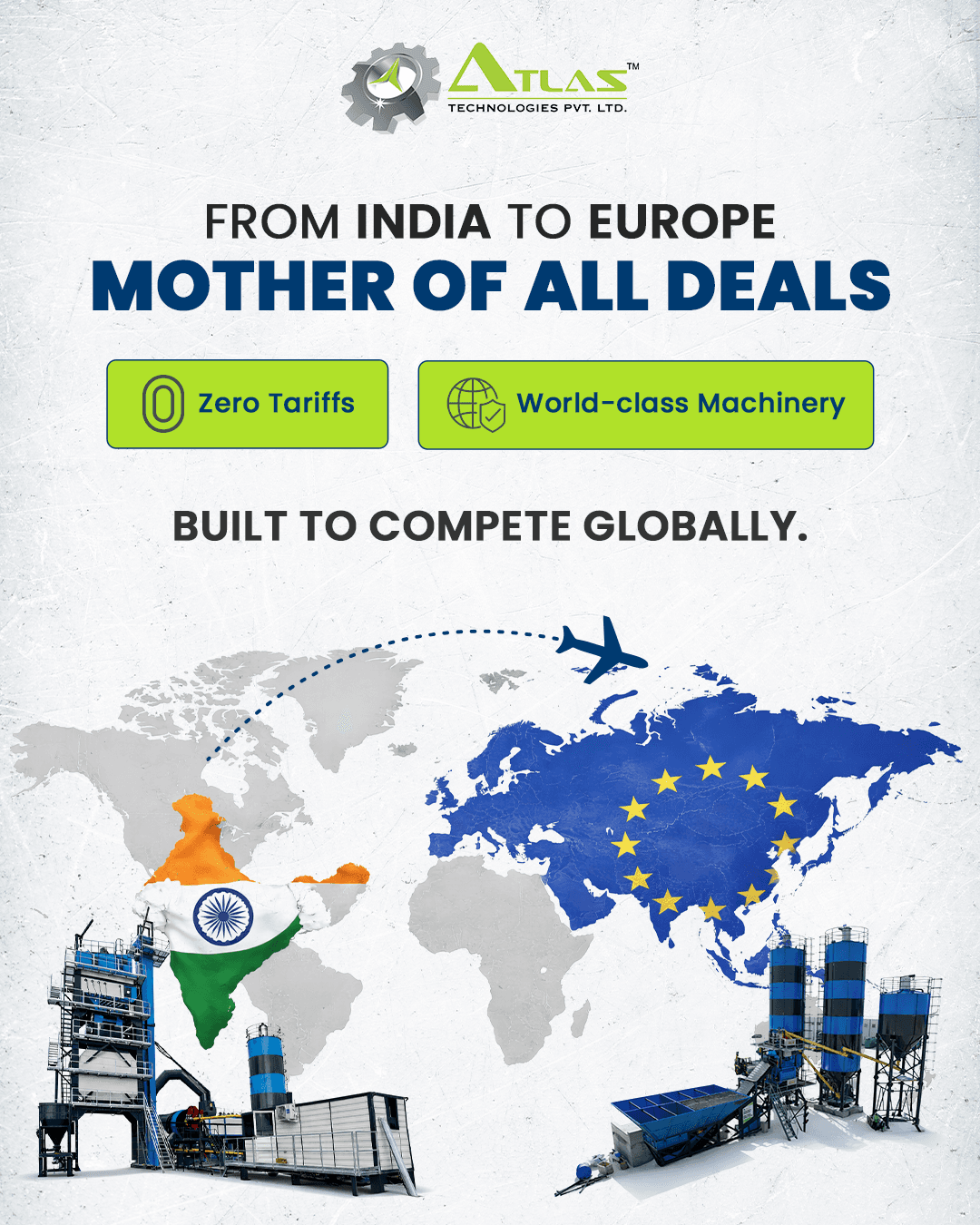
January 27, 2026, changed the game for Indian construction equipment manufacturers. After nearly two decades of negotiations, India and the European Union finalized what both sides call the "mother of all deals." For Indian manufacturers of road construction machinery, this agreement opens access to Europe's construction equipment market, which is valued at around €35 billion in 2026.
The timing could not be better. Europe is facing aging infrastructure that requires large-scale modernization, ambitious green building targets that demand newer and cleaner equipment, and a deliberate strategy to diversify supply chains away from over-dependence on China.
Here's what this means for India-EU FTA road construction machinery exports and how Indian manufacturers can capitalize on unprecedented EU market access for Indian heavy machines.
The India-EU FTA: What Just Changed for Machinery Exports
The agreement eliminates or reduces tariffs on over 90-97% of trade value between both sides, with around 70% of India's tariff lines to the EU receiving immediate duty elimination, covering 90%+ of export value.
For machinery, EU import tariffs (up to 4-10% typically, higher for some categories) drop significantly, making Indian exports more competitive.
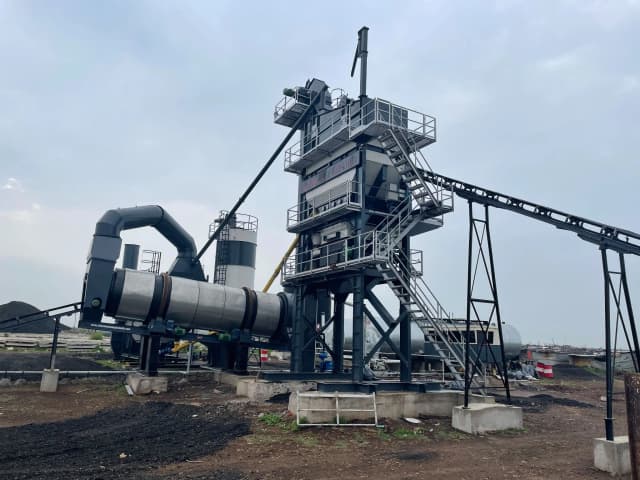
In practical terms, an asphalt plant shipped from India will face substantially lower duties once the FTA enters into force (expected in late 2026 after ratification), improving price competitiveness against European suppliers.
The agreement covers:
- Asphalt mixing plants
- Concrete batching plants
- Road pavers
- Compactors
- Milling machines
- Crushing equipment
Preferential access applies across most relevant tariff lines. India's machinery exports to the EU, currently a small share of total exports, are expected to grow substantially, according to Commerce Minister Piyush Goyal.
European Infrastructure Demand: A €355 Billion Market by 2035
Europe's construction equipment market is projected at €46 billion in 2031, growing at 5.28% CAGR. This growth is driven by EU-funded projects, urban redevelopment, and transport expansion. The broader construction sector is worth trillions.
Germany leads European demand, with a ~€14 billion market, growing at 6.7% CAGR to €27 billion by 2035. This growth is supported by over €52 billion in green infrastructure and rail investments.
France and Italy follow as major equipment markets. Italy's National Recovery and Resilience Plan (PNRR) outlines more than €190 billion in public investments, with a strong focus on digital construction, mobility, and sustainability.
These initiatives drive sustained demand for asphalt plants , concrete batching systems , and road-building machinery.
Nordic countries (Sweden, Norway, Finland) represent premium markets. These nations lead in environmentally responsible construction and have aggressive net-zero targets. They are early adopters of electric machinery, autonomous equipment, and zero-emission job sites, creating opportunities for manufacturers that meet strict environmental specifications.
These demand drivers are structural, not cyclical. Much of Europe's infrastructure was built decades ago and now requires replacement or modernization.
Tariff Elimination Benefits: Real Cost Advantages for Indian Exporters
The FTA's tariff structure creates immediate price competitiveness for India's EU trade deal machinery exports.
Pre-FTA EU duties on certain machinery can reach 10-22%, which will now be significantly reduced or phased out to zero.
For a €350,000 asphalt plant, tariff savings can exceed €50,000, enabling better margins or more competitive pricing. Larger concrete batching plants generate proportionally higher savings.
Capital goods gain preferential EU access from 22% tariff to nil. At the same time, reduced duties on imported European components lower input costs for Indian manufacturers sourcing advanced control systems, sensors, or drive components.
This dual benefit, zero export duty and lower component costs, strengthens overall competitiveness.
Why European Buyers Will Consider Indian Construction Equipment
Tariff-driven price competitiveness opens the door, but European buyers require more than lower upfront costs.
European contractors and rental companies prioritize total cost of ownership, evaluating equipment over 10–15 year lifecycles. Key factors include:
- Fuel efficiency
- Maintenance requirements
- Spare parts availability
- Downtime risk
- Resale value
Indian manufacturers that have invested in engineering reliability and operational efficiency can compete effectively on these criteria.
Supply chain diversification is now a strategic priority for European buyers. The EU is actively reducing reliance on Chinese imports, creating openness to qualified alternative suppliers. Indian manufacturers benefit if they demonstrate consistent quality, reliable delivery, and credible after-sales support.
Sustainability credentials are increasingly critical. Stricter emission regulations are driving demand for electric, hybrid, and low-emission equipment, particularly in Germany, France, and the U.K. Indian manufacturers developing fuel-efficient or emission-controlled systems align well with Europe's green construction mandates.
Export Challenges Indian Manufacturers Must Address
The FTA creates opportunity, but European market entry requires overcoming several hurdles.
CE marking and regulatory compliance are mandatory. Equipment must meet EU machinery directives covering safety, electromagnetic compatibility, and environmental standards. This requires testing, documentation, and, in some cases, design modifications.
Service and spare parts infrastructure are crucial. European buyers will not commit without confidence in local service support. Manufacturers must invest in distributor partnerships, EU-based spare parts warehouses, or regional service centers.
Competition remains intense. European and American brands benefit from decades of market presence, strong dealer networks, and brand recognition. Indian manufacturers enter as challengers and must prove reliability and service consistency.
Logistics and delivery reliability also matter. European infrastructure projects operate on strict timelines, where delivery delays can trigger penalties. Indian exporters must ensure dependable shipping, accurate documentation, and predictable lead times.
Strategic Opportunities for Indian Manufacturers
Despite challenges, the FTA creates specific pathways for market entry.
Exporting asphalt plants to Europe offers a strong opportunity. European infrastructure investment includes extensive highway modernization, urban road rehabilitation, and pavement renewal programs. Concrete and road construction machinery, including mixers, are critical for building durable and eco-friendly infrastructure.
Indian manufacturers producing 120-160 TPH capacity asphalt plants can target mid-sized European contractors and municipal corporations upgrading aging equipment.
Concrete batching plant exports benefit from Europe's housing and urban construction demand. Both stationary and mobile batching plants support residential and infrastructure growth.
Niche specialization offers a strategic advantage. Instead of competing across full product ranges, manufacturers can focus on:
- Compact mobile plants for urban projects
- Fuel-efficient systems for cost-sensitive buyers
- Modular designs enabling fast installation
Specialization lets manufacturers build a reputation in targeted niches before expanding market presence.
Partnership with European distributors accelerates market entry. Established European construction equipment dealers provide customer access, service infrastructure, and regulatory familiarity that Indian manufacturers lack initially.
Eastern Europe presents an accessible entry point. Countries such as Poland and Romania benefit from EU cohesion funds supporting road, energy, and urban infrastructure. These markets often value durable, cost-effective equipment over premium branding.
Atlas Technologies' Position in European Export Opportunity
Atlas Technologies manufactures road construction machinery and concrete production equipment designed for reliable field performance under diverse operating conditions.
Our existing export presence in Nigeria, Angola, the Philippines, Bhutan, Cameroon, Myanmar, and Israel demonstrates the capability to serve international markets with varying infrastructure standards and support requirements.
The India-EU FTA represents an opportunity to extend this international footprint into Europe's substantial construction equipment market. Our product range, which includes asphalt mixing plants , concrete batching systems , and road construction equipment , comprises equipment categories that have sustained European demand driven by infrastructure renewal and green construction initiatives.
Our engineering approach prioritizes operational durability, fuel efficiency, and maintenance accessibility. These design principles align with European buyer priorities around total cost of ownership and equipment reliability over multi-year project lifecycles.
Moreover, modular and containerized equipment designs facilitate international shipping and reduce installation complexity at European project sites.
Atlas Technologies' manufacturing capability flexibility is valuable when addressing European applications requiring equipment specifications adapted to local operating conditions, emission standards, or contractor preferences.
Conclusion: A Generational Export Opportunity
The India-EU FTA represents the single largest market access improvement Indian construction equipment manufacturers have received in decades. The agreement creates a free trade zone of two billion people, accounting for approximately 25% of global GDP.
For road construction machinery manufacturers, the opportunity is tangible. Tariff elimination removes long-standing price barriers that previously limited competitiveness.
But success won't come automatically.
Developing EU market access for Indian heavy machines requires more than tariff elimination. It demands investment in compliance certification, establishment of European service partnerships, and adaptation of equipment specifications to European technical standards.
The India-EU FTA doesn't guarantee success. It guarantees opportunity. What manufacturers do with that opportunity determines whether this becomes a transformative export expansion or a missed generational chance.
If you're looking to explore construction equipment solutions designed for international standards and reliable performance, connect with our team to discuss your requirements.
Frequently asked questions.
When will the India-EU FTA tariff benefits actually take effect for machinery exports?
+What specific tariff reductions apply to road construction machinery and concrete batching plants?
+Do Indian manufacturers need special certifications to export construction equipment to Europe?
+How large is the European market opportunity for Indian construction equipment manufacturers?
+Which European countries offer the best opportunities for Indian construction equipment?
+
Road Sweeper Machine vs Hydraulic...
Learn the difference between mechanical road sweepers and hydraulic broomers...
Batching Plant: What It Is,...
A batching plant measures, proportions, and processes raw materials according...
CPCB Compliance for Asphalt Plants...
CPCB compliance for asphalt plants in India is now directly...
Hot Mix Plant: Batch Mix,...
Compare hot mix plant configurations — batch mix, drum mix,...