

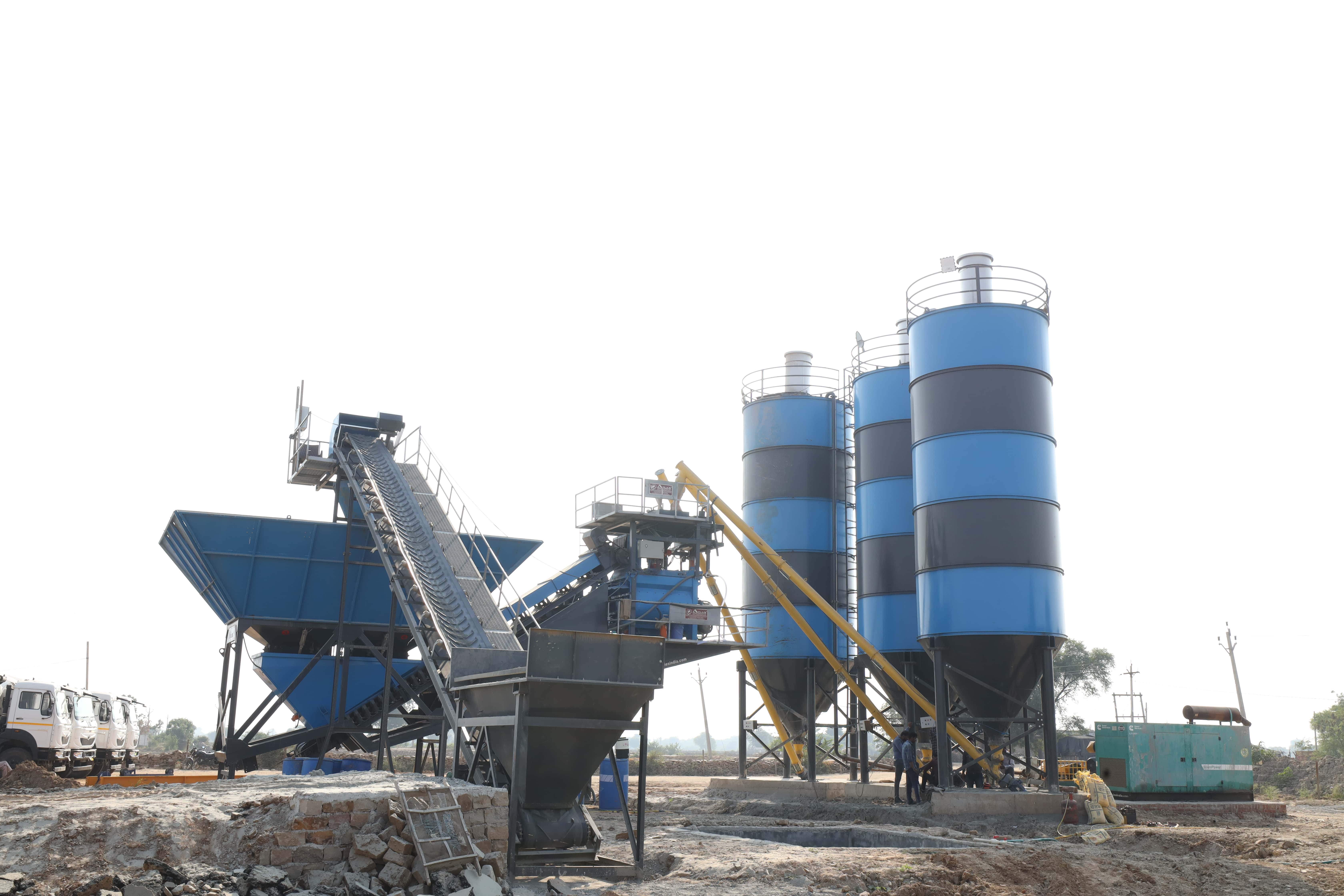
If you're searching for "RMC plants near me" or evaluating RMC plant cost for upcoming projects in Pune, Delhi, Mumbai, or regional markets, you've likely noticed the industry has fundamentally transformed. In 2026, successful contractors invest in a custom-configured concrete batching plant integrated with systems that streamline logistics, ensure regulatory compliance, and protect profit margins against volatile material costs.
This strategic guide examines how to select, configure, and operate ready-mix concrete plants aligned with India's accelerating infrastructure development — addressing practical questions contractors face: how much land is required for an RMC plant, which RMC plant is best for specific applications, and how the RMC plant works to deliver consistent quality.
Understanding Modern RMC Plant Requirements
The landscape of concrete batching plants has evolved dramatically. What worked for projects five years ago often proves inadequate for 2026 requirements driven by stricter environmental regulations, urban space constraints, and demanding project specifications.
Your Choice of Mixer Technology Determines Plant Performance
The heart of any RMC plant is the mixer. While older drum-style plants were the standard for years, 2026 projects in high-growth hubs like Delhi and Pune now demand the precision of Planetary Mixers or Twin-Shaft systems. These advanced mixers ensure that every cubic meter of concrete from the RMC plant is identical. This consistency is your best defense against structural rejections and costly rework. By achieving a perfect mix every time, you reduce cement waste by 5–8%, resulting in massive savings over a year of production.
Rethinking Land and Location
One of the most significant barriers for contractors searching for "RMC plant near me" is finding adequate land in urban markets, where RMC plant Pune operations or Delhi NCR facilities face severe space limitations. Traditional stationary plants require 1.5-2 acres for aggregate storage, batching equipment, plant access roads, and transit mixer parking. In metro markets where industrial land costs ₹3-5 crores per acre, this land requirement alone can make ready-mix operations economically unfeasible.
Understanding how much land is required for an RMC plant depends entirely on configuration choices. Mobile concrete batching plant systems reduce land needs to 0.3-0.5 acres while eliminating expensive foundation work, creating viable operations in space-constrained urban locations.
Technical Specifications: RMC Plant Configurations Compared
| Plant Type | Capacity (m³/hr) | Land Required | Setup Time | Typical Application |
|---|---|---|---|---|
| Stationary – High Capacity | 60–120 | 6000–8000 m² | 45–60 days | Ready-mix suppliers, mega projects |
| Stationary – Medium | 30–60 | 4000–6000 m² | 30–45 days | Regional suppliers, large construction |
| Mobile – Containerized | 25–60 | 1200–2000 m² | 5–7 days | Site-based contractors, urban projects |
| Planetary Mixer | 15–30 | Varies | As per type | Precast, specialized concrete |
| Twin-Shaft | 60–180 | 4000–8000 m² | 45–60 days | High-volume ready-mix, infrastructure |
Note: Costs and timelines are approximate and vary by location, configuration, and site conditions.
This comparison reveals why "which RMC plant is best" depends entirely on operational context. A high-capacity stationary plant proves optimal for established ready-mix suppliers serving metro markets, while mobile configurations suit contractors working across multiple sequential projects.
How RMC Plants Work: From Aggregates to Delivery
Understanding how the RMC plant works helps contractors evaluate equipment capabilities and identify potential bottlenecks that affect production efficiency.
Aggregate Storage and Feeding
Aggregates are stockpiled in multiple bins, segregated by size (typically 10mm, 20mm, and 40mm fractions plus sand). Feeder systems release controlled quantities onto conveyor belts, transferring material to weighing hoppers. Modern installations incorporate load cells with ±0.5% accuracy, ensuring aggregate proportions remain within specification tolerances, preventing "creeping" mix designs that gradually weaken concrete while wasting expensive cement.
Cement and Admixture Addition
Cement transfers pneumatically from storage silos to weigh hoppers. Silo capacities typically range from 50-100 tons for mobile plants to 100-200 tons for large stationary installations. Chemical admixtures (plasticizers, retarders, accelerators) are dosed through automated systems synchronized with batch sequences, adjusting quantities based on real-time concrete temperature and slump requirements.
Mixing and Discharge
Weighed materials are discharged into the mixer, where they blend for 45-90 seconds, depending on mixer type and mix design. Planetary mixers use vertical mixing with multiple blades to ensure complete homogeneity, while twin-shaft mixers employ counter-rotating shafts to create intensive turbulent mixing. The entire batching cycle completes in 90-180 seconds for most plant configurations.
Evaluating RMC Plant Options for Your Next Project?
Atlas Concrete Products manufactures complete concrete batching plant solutions from 15 m³/hr compact units to 180 m³/hr high-capacity installations.
Schedule Plant Selection Consultation →Regulatory Compliance: The 2026 Operating Environment
Environmental regulations governing RMC plant operations have intensified significantly. State pollution control boards in Maharashtra (MPCB for RMC plant Pune operations), Delhi (DPCC), and other jurisdictions enforce strict standards on dust emissions, water discharge, and noise pollution.
Dust Management Systems
Fugitive dust from aggregate handling represents the primary compliance challenge. Modern plants address this through enclosed aggregate bins with mist spray systems, fully enclosed conveyors, and complete weather protection around weighing hoppers and mixer areas. Plants lacking adequate dust control face operational suspensions and fines ranging from ₹25,000 to ₹50,000 per violation.
Water Recycling Requirements
Zero-discharge mandates require capturing and reusing all process water through settling tanks, polymer flocculant clarification systems, and closed-loop circulation. Clarified water is pumped back to the batching system, reducing freshwater consumption by 60-80% while eliminating discharge. Proper water recycling reduces monthly utility costs by ₹40,000-80,000 for medium-capacity plants.
Digital Batch Documentation
Real-time batch reporting systems automatically generate quality records including exact material quantities per batch, mixing time and sequence verification, concrete temperature and slump, and delivery timestamps. These digital records meet client quality requirements and regulatory audit requirements without manual paperwork delays.
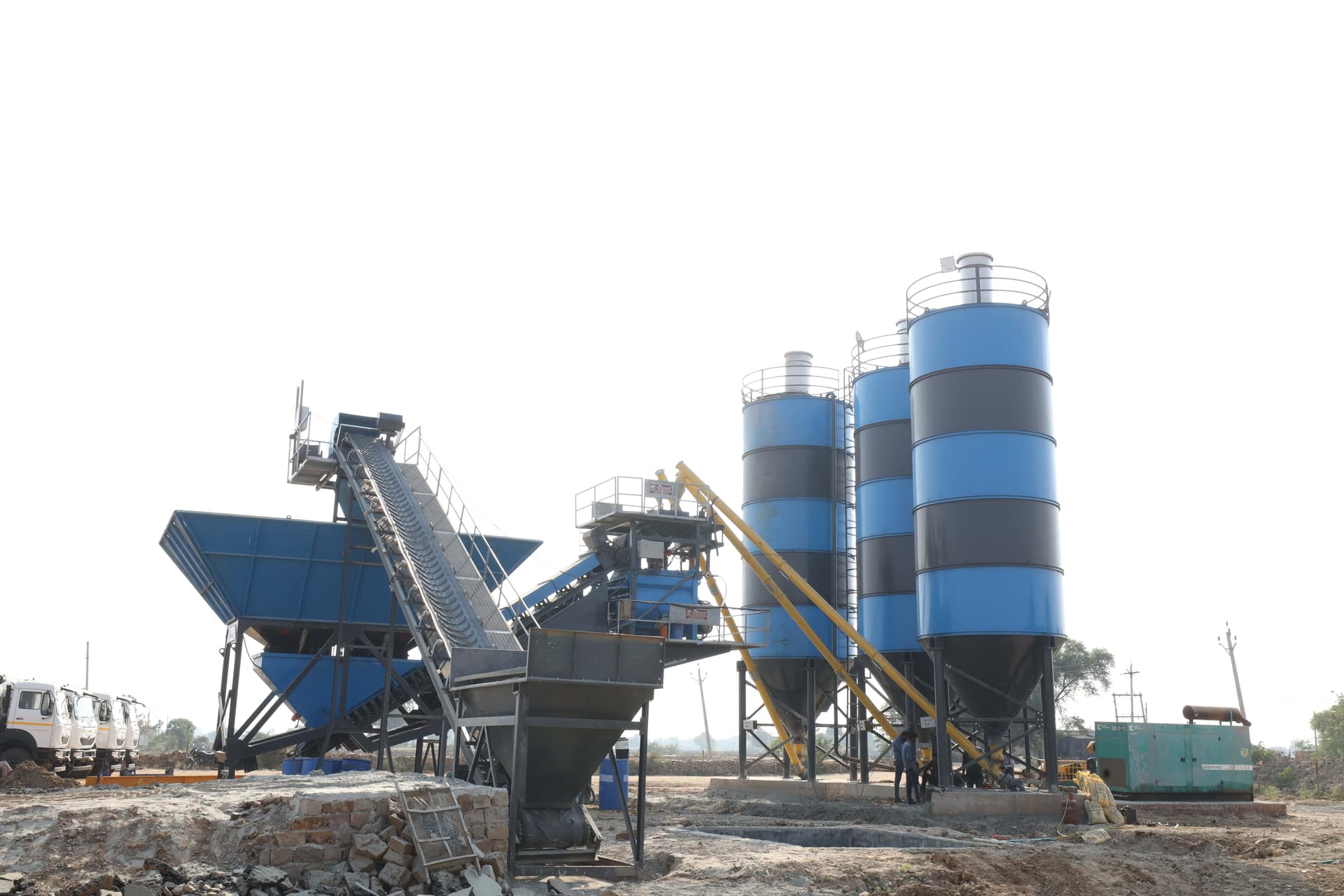
Strategic Plant Selection by Project Type
Urban Ready-Mix Suppliers
Established ready-mix companies serving metro markets prioritize high-capacity stationary concrete batching plant configurations. These operations typically produce 300-500 m³ daily, operate from permanent locations, maintain 100-200 ton cement storage capacity, and run twin-shaft mixers providing rapid batch cycles. Capacities of 75-120 m³/hr prove optimal despite higher initial investment and land requirements.
Project-Based Contractors
Contractors working on sequential projects benefit from mobile concrete batching plant flexibility — relocating between projects without establishing permanent facilities, minimizing transit mixer requirements by producing concrete at the point of use, and achieving faster mobilization with 5-7 day setup versus 20-30 days for stationary plants.
Precast and Specialized Applications
Precast concrete manufacturers producing architectural panels, hollow-core slabs, or prestressed beams require the precision of planetary mixer configurations. These achieve zero segregation for consistent strength across complex geometries, support high-strength mixes (M60-M80 grades), and handle specialty admixtures including superplasticizers. For these applications, a 30-40 m³/hr planetary mixer outperforms a 75 m³/hr drum mixer.
Small to Medium Contractors
Contractors serving local markets or entering the ready-mix business benefit from mini concrete batching plant configurations — starting with minimal capital (₹30-50 lakhs), operating on compact sites (0.2-0.3 acres), and serving local demand without competing against established metro suppliers. Mini plants prove especially viable in Tier 2 and Tier 3 cities where demand exists but doesn't justify large-scale operations.
Cost Considerations: What Does an RMC Plant Cost?
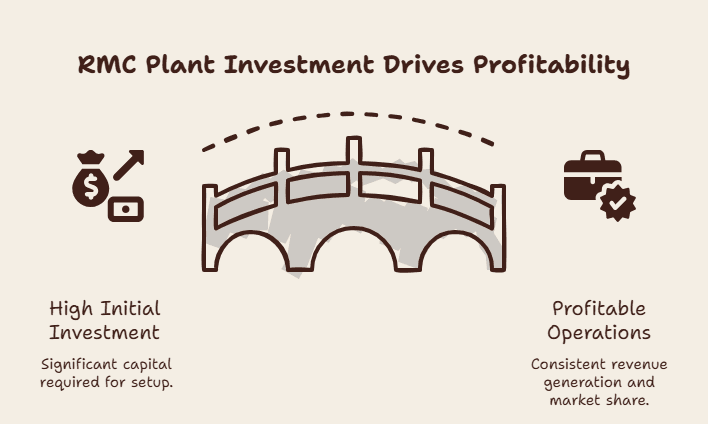
Complete Investment Breakdown
Equipment Costs:
- Batching plant system: ₹35L–₹2.5Cr (capacity and configuration dependent)
- Transit mixers (4-6 units): ₹50L–₹1.2Cr
- Aggregate handling (loader): ₹25–40L
- Total equipment: ₹1.1Cr–₹4Cr
Infrastructure Costs:
- Land acquisition/lease: ₹50L–₹5Cr (location dependent)
- Civil works and foundations: ₹8L–₹25L
- Electrical connections: ₹5–12L
- Water supply and recycling: ₹6–15L
- Total infrastructure: ₹70L–₹5.5Cr
Total Investment Range: ₹2–11 Crores, depending on scale and location.
Return on Investment Factors
| Market | Selling Price (₹/m³) | Production Cost (₹/m³) | Gross Margin (₹/m³) | Monthly Profit |
|---|---|---|---|---|
| Metro Markets (Delhi, Mumbai, Pune, Bangalore) | ₹4,500–₹6,000 | ₹3,200–₹4,200 | ₹1,300–₹1,800 | ₹15–25 lakhs (500 m³/day) |
| Tier 2 Cities | ₹3,800–₹4,800 | ₹2,800–₹3,600 | ₹1,000–₹1,200 | ₹8–12 lakhs (300 m³/day) |
Note: The numbers in this section are average estimations. Actual cost and ROI depend on project and operation conditions.
Atlas Concrete Products: Integrated Manufacturing Solutions
Atlas Concrete Products manufactures complete concrete batching plant systems designed for Indian operating conditions and regulatory requirements.
Our product range addresses diverse market needs:
1. By Mobility & Setup
Stationary Concrete Batching Plants
Designed for massive, multi-year infrastructure projects, these stationary powerhouses offer the highest output available. They feature large storage bins and superior stability, allowing for continuous 24/7 production cycles without interruption.
While requiring a permanent foundation and 1–2 acres of land, they provide the lowest cost per cubic meter for mega-dams and skyscrapers.
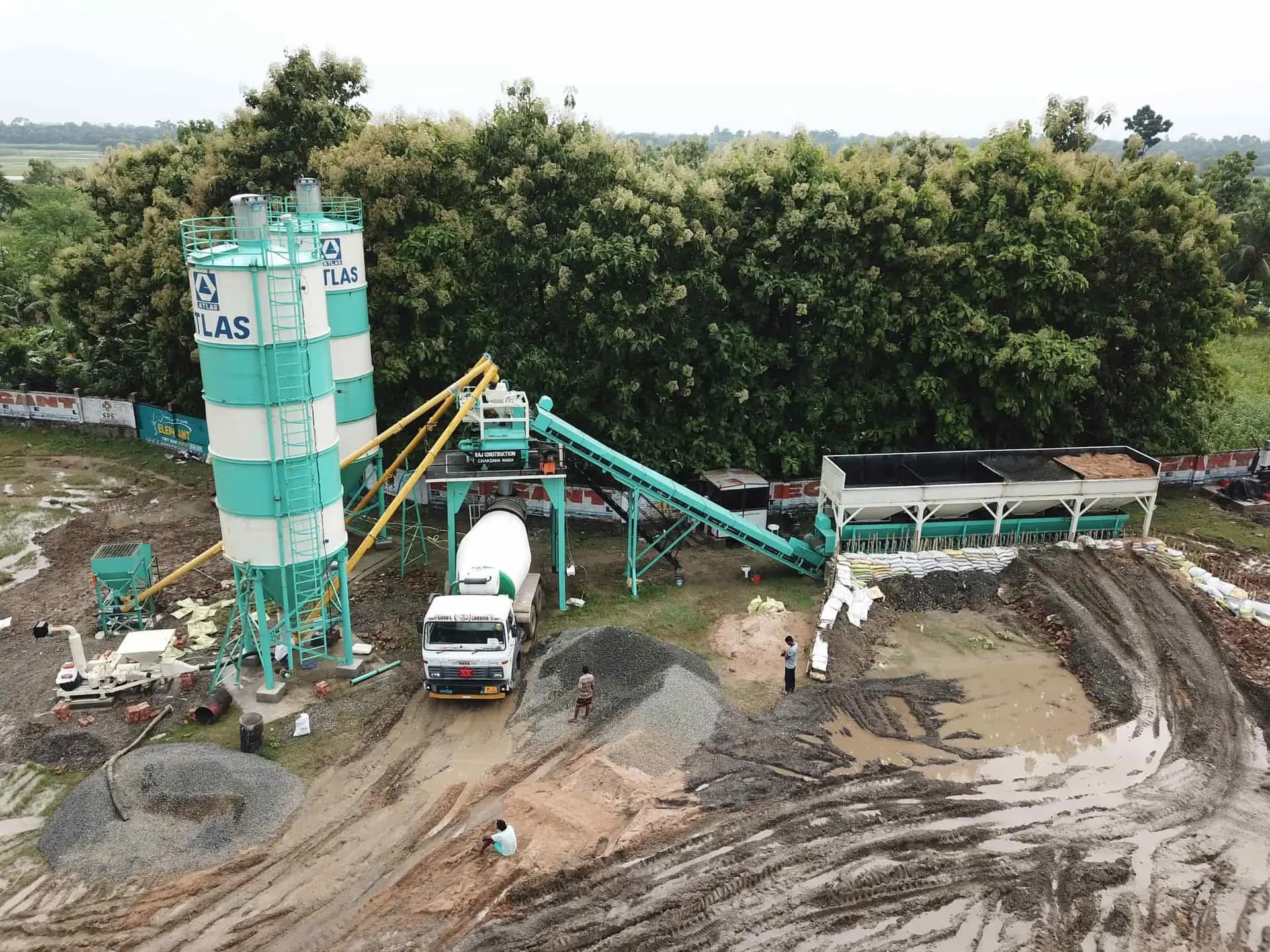
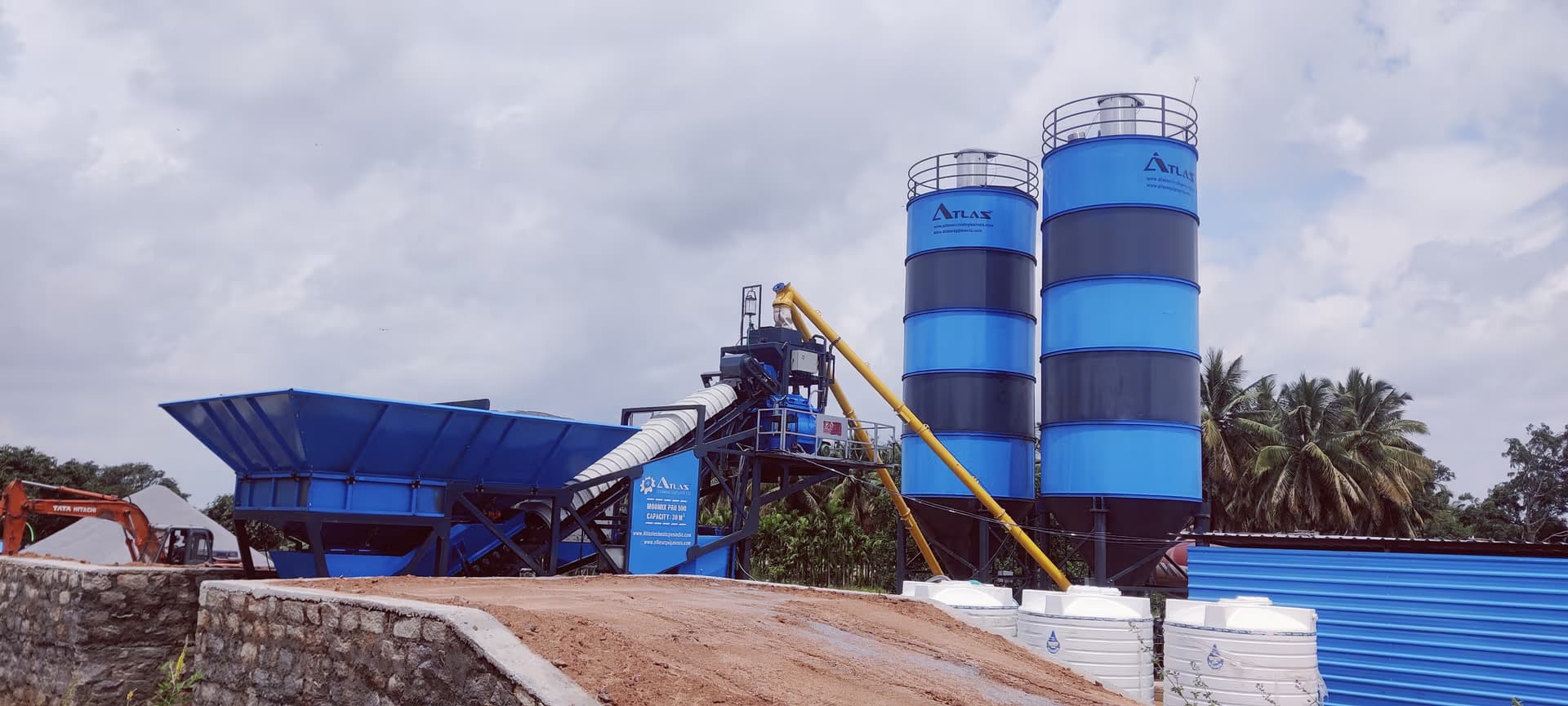
Mobile Concrete Batching Plants
These wheel-mounted units are the top choice for 2026, requiring zero concrete foundations and minimal land. They can be towed directly to the site and made operational within 48 hours, bypassing urban traffic delays.
This "proximity-to-pour" eliminates transit bottlenecks, ensuring your concrete arrives at peak quality for highway and bridge projects.
Mini Concrete Batching Plants
Engineered for "Smart City" projects where the footprint is extremely limited (less than 0.5 acres).
2. By Mixer Configuration
Planetary Mixer Plants
These units use a vertical "stand-mixer" action to ensure 100% homogeneity, leaving no unmixed pockets of cement or aggregate. In 2026, they are the gold standard for specialized "Green Concrete" and high-precision pre-cast products.
Their superior mixing intensity allows for the seamless integration of chemical admixtures required for modern high-strength structures.
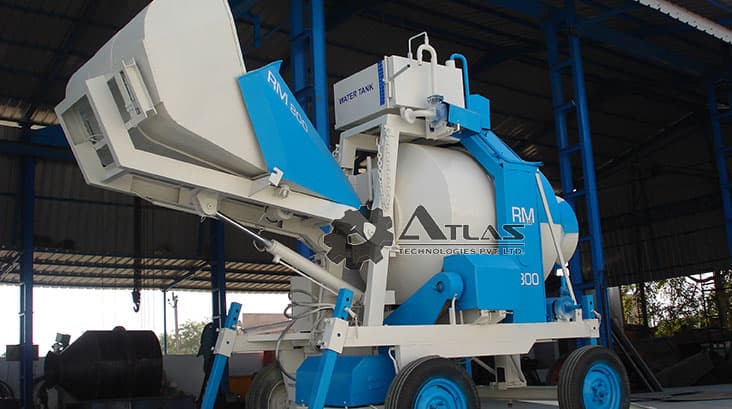
Reversible Mixer Plants
A cost-effective and rugged option, these plants are engineered for medium-scale residential and rural development. They feature a drum that rotates one way for mixing and reverses for discharge, offering a simplified mechanical design that is easy to maintain.
This makes them highly reliable for projects in locations where specialized high-tech repair crews may not be immediately available.
Author’s Note
Atlas Technologies Pvt. Ltd. is a road construction equipment manufacturer based in Mehsana, Gujarat, India. Founded in 1986, the company designs and manufactures asphalt batch mix plants, drum mix plants, counter flow plants, wet mix macadam plants, concrete batching plants and road machinery for highway contractors, infrastructure developers and export buyers worldwide.
With over 2,500 installations across 50+ countries and 38 years of manufacturing experience, Atlas Technologies serves projects ranging from national highway construction in India to remote island deployments and large-scale export contracts across Africa, Southeast Asia, the Middle East, East Europe and Oceania Countries.
www.atlastechnologiesindia.com

Mr. Bhavesh Patel
Managing Director
Need to Evaluate RMC Plant Investment for Your Project?
Atlas Technologies provides detailed feasibility analysis including customized ROI projections based on your actual market conditions.
Schedule Assessment →Frequently asked
questions.
Road Sweeper Machine vs Hydraulic...
Learn the difference between mechanical road sweepers and hydraulic broomers...
Batching Plant: What It Is,...
A batching plant measures, proportions, and processes raw materials according...
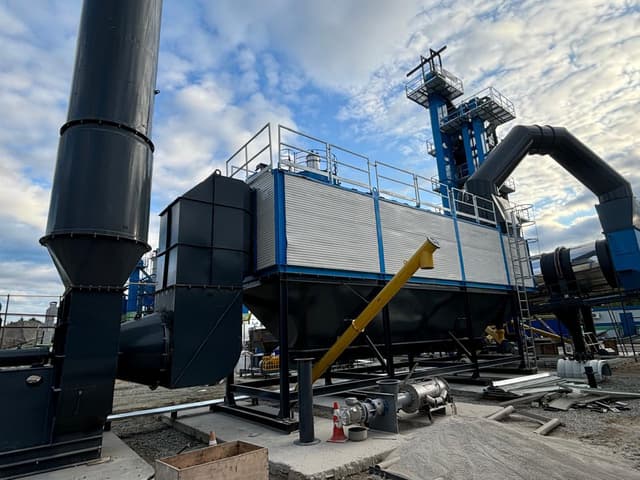
CPCB Compliance for Asphalt Plants...
CPCB compliance for asphalt plants in India is now directly...
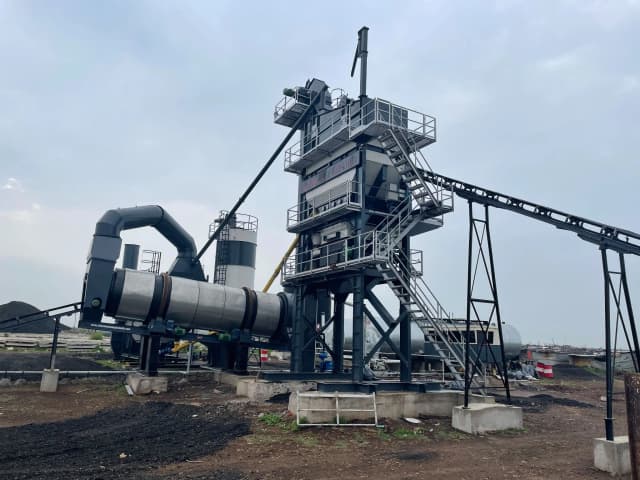
Hot Mix Plant: Batch Mix,...
Compare hot mix plant configurations — batch mix, drum mix,...