

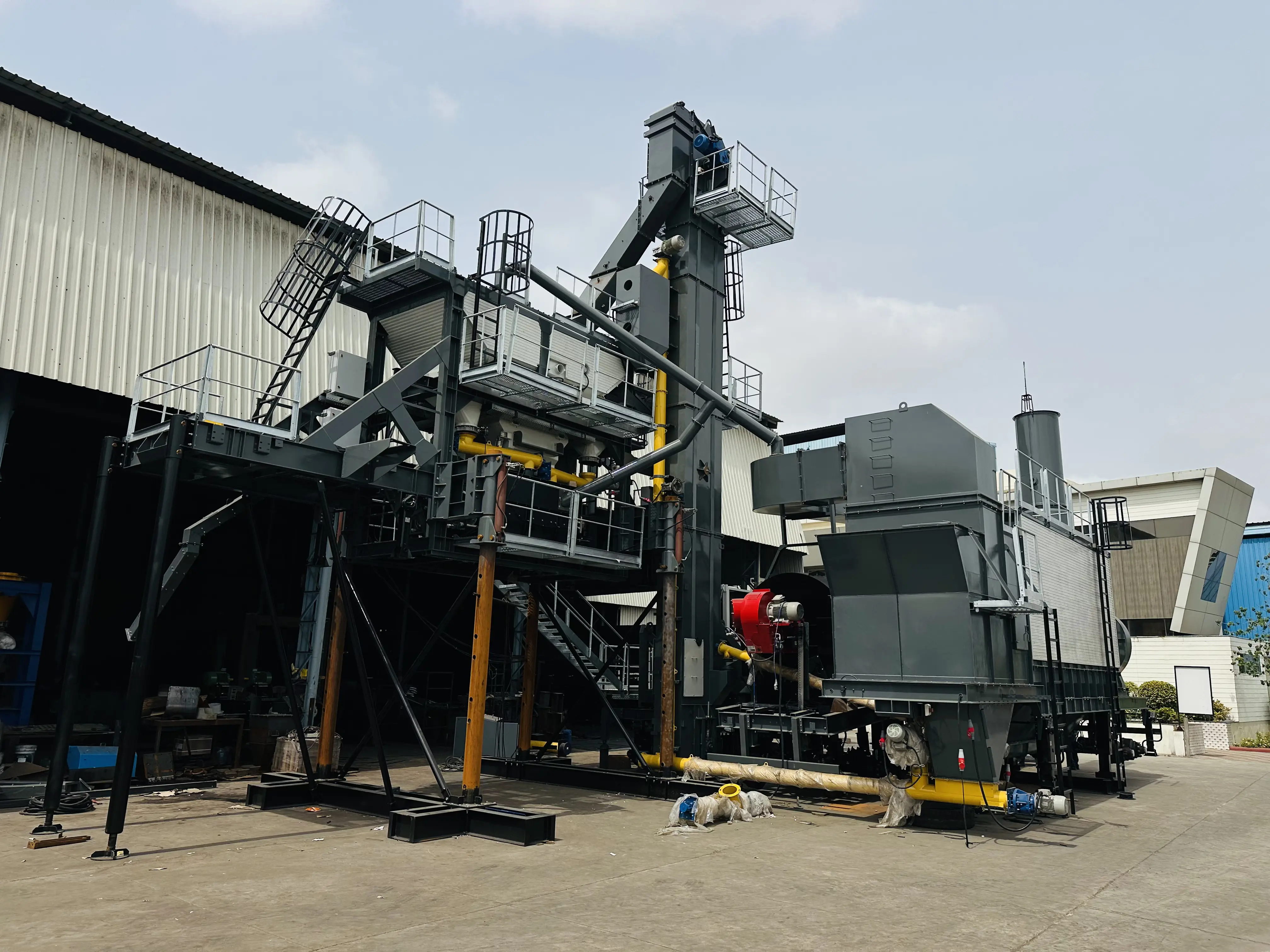
Australian road construction projects leave little room for error. Strict government funding oversight, workplace health and safety regulations, and long supply chains demand equipment that performs predictably from day one. In this environment, we needed a proper strategy for aligning the project timelines and compliance before deploying a MABP 120 Mobile Asphalt Plant (Capacity: 120 Tonnes Per Hour, TPH) in the Pacific region.
Over the past year, tighter funding cycles and a reported drop in bitumen imports following the 2024 winter season have further sharpened this discipline. Contractors are prioritising efficient, compliant operations over improvisation.
Australia's mix of remote project locations, variable weather, and stringent biosecurity requirements means logistical challenges for oversized equipment like mobile asphalt plants. We have to ensure that the plant components are shipped and transported with careful planning and preparation. All the clearances need to be scheduled and completed on time.
The clients in Australia expect a mobile asphalt batching plant to give the desired output, while also meeting emission norms and sustainability (recycled asphalt usage). The design should also accommodate recipe variations without waste.
It is within this context that Atlas Technologies' recent asphalt batching plant export to Australia was executed as a dealer-supplied asphalt plant, keeping in mind the real operational constraints rather than following catalogue assumptions.
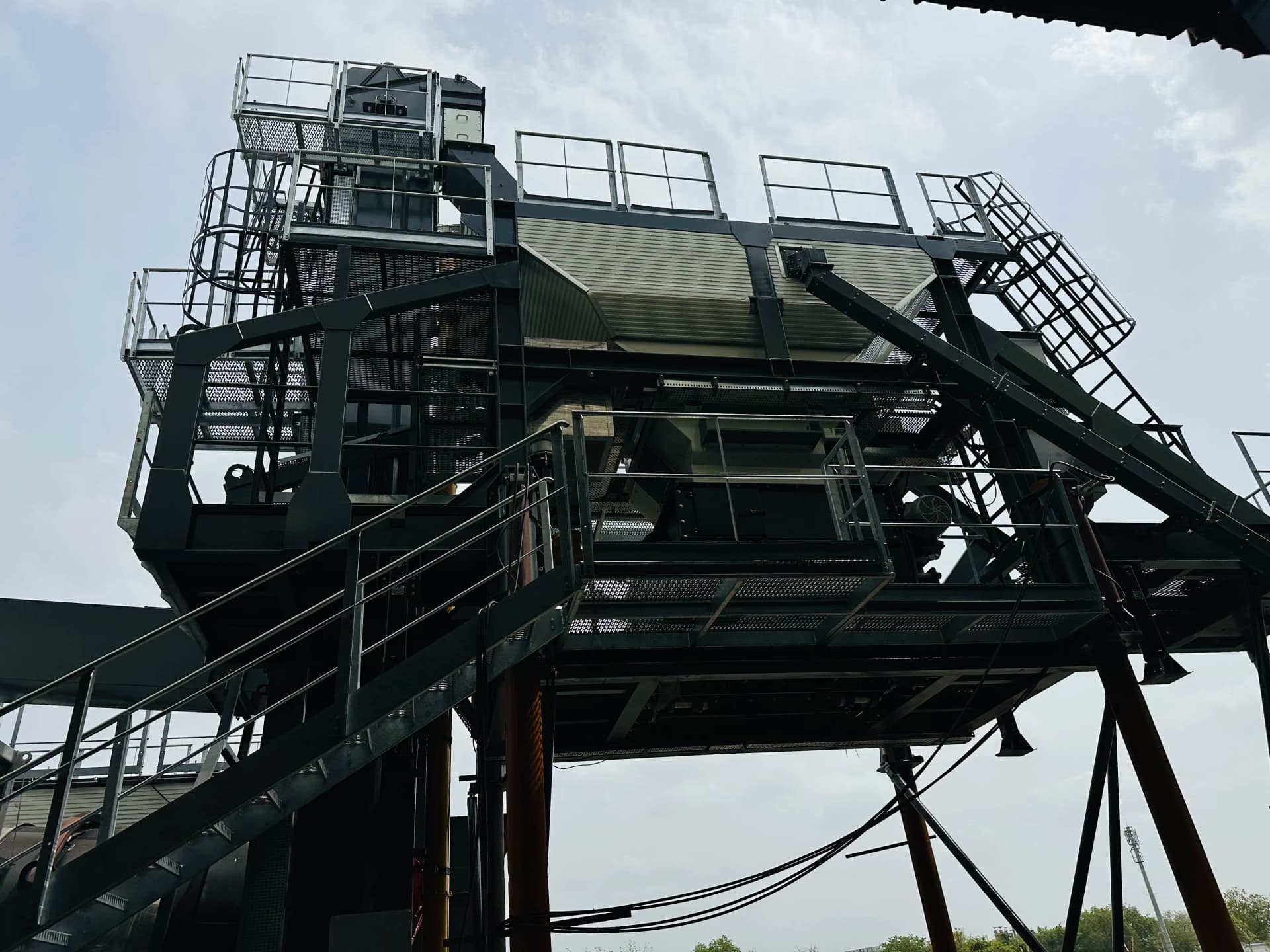
Why the MABP-120 Platform Fits the Project Profile
Australian contractors typically work on medium to large road packages spread across multiple locations (or shifting work fronts). In these projects, asphalt production must remain consistent every day, but the plant also needs to be relocatable. This creates a practical tension between output and mobility.
That is where the MABP 120 mobile asphalt plant makes sense. It delivers enough output to support continuous paving on medium to large packages. That too, without tipping into the operational complexity that comes with very high-capacity plants.
Other reasons for choosing a 120 TPH capacity mobile plant: The site crew can run it steadily through the day. They can shut down cleanly and bring it back online at the next location without losing time stabilising the system again.
From Atlas Technologies' export experience as a mobile asphalt plant manufacturer , plants in this range consistently perform better in disciplined markets like Australia.
Need an Easy-to-Move & Containerized Asphalt Plant?
Discuss how the MABP-120 or other mobile asphalt solutions fit your project profile.
CONTACT US →Dealer-Driven Customisation That Reflected Site Reality
One of the reasons that this installation from India to Australia was successful is that the dealer was constantly involved in finalizing the configuration of the plant. They contributed their on-site experience that benefited our engineers throughout the entire project.
In other words, this was very much a dealer-supplied asphalt plant in practice. The dealer understood how Australian contractors sequence their work, how often plants are asked to move, and where tolerance for adjustment ends once production begins. That input mattered.
Instead of assuming a standard export configuration would “settle on site,” the engineers at Atlas Technologies had the right inputs. They made decisions at the planning stage, mitigating the risk of site-side modification later. That's where most export projects lose time and goodwill, and we avoided that.
For Australian contractors, this matters because mix quality is expected to be right from the start. There is little patience for extended tuning periods, especially when recycled material is part of the mix. Stable plant operation reduces waste, limits rework, and allows crews to focus on paving rather than corrective adjustments. A stable feeding system reduces waste, limits rework, and allows crews to focus on paving rather than correction.
From Atlas Technologies' perspective, this aligns with how export plants are judged. When core systems perform consistently, downstream operations become easier to manage and more predictable in real-world conditions. If the feeder behaves predictably, everything downstream becomes easier to manage.
Mobility Designed Around How Relocation Actually Happens
Mobility is often oversimplified in asphalt plant discussions. In practice, relocation is rarely a clean, single-step process. It involves transport coordination, permit windows, site access constraints, and tight restart timelines.
For this reason, the plant was configured as a mobile asphalt plant with towable components to enable faster relocation between sites without heavy civil preparation. This approach supports Australian contractors who often operate across multiple short-duration projects.
The goal was not just to make the plant movable, but to make relocation predictable. Contractors need to know how long it will take to shut down, move, and resume production, because that timing affects everything else on site.
This configuration supports that predictability. It reduces dependence on specialist lifting equipment and shortens the gap between one production run and the next.
120 TPH Mobile Asphalt Plant by Atlas Technologies
Designed for Easy Relocation & Consistent Mix Quality
Export Execution Focused on Reducing Commissioning Risk
Manufacturing quality alone does not guarantee a successful export. The most fragile phase of any asphalt batching plant export to Australia is the period between delivery and first production.
For this dispatch, packaging, modularisation, and documentation were aligned with the dealer's commissioning plan. Components were grouped to support logical assembly, and handling complexity was reduced where possible.
This preparation matters because delays at this stage are costly and visible. Contractors expect equipment to arrive ready to integrate, not ready to diagnose. Reducing friction during commissioning strengthens confidence in both the dealer and the manufacturer.
Atlas Technologies' Role as an Export-Focused Manufacturer
As a long-established mobile asphalt plant manufacturer based in India, Atlas Technologies has built its export strategy around adaptability rather than one-size-fits-all designs. The MABP-120 dispatch to Australia reinforces this positioning.
The company's role does not end at shipment. By working through experienced dealers, Atlas ensures that configuration, commissioning, and early operation are aligned with local practices. This partnership-driven model has become increasingly important as global markets demand more than standard specifications.
For contractors, this approach reduces uncertainty. They receive equipment that feels aligned with their operating environment, and not something that requires later adjustments.
But Why Dealers for Export?
This project highlights a broader trend in international equipment supply, in which a dealer's involvement is no longer limited to sales and service. In many markets, dealers play a central role in shaping equipment configuration.
This is because, as previously mentioned, dealers understand the working pattern of local contractors in a foreign country much better than a remote manufacturer who is exporting the machinery/equipment.
For civil and road construction machinery and plant manufacturers, this reduces the need for post-delivery intervention. Meanwhile, for the end users (at the construction site), it delivers equipment that fits into existing workflows with minimal disruption.
The MABP-120 project in Australia followed this dealer-supplied asphalt plant model closely, and the outcome reflects its value.
Looking Ahead: What This Dispatch Signals
Demand for mobile asphalt plants that balance output, relocation efficiency, and operational stability is increasing, particularly in markets with strong governance and environmental oversight. The successful dispatch of the MABP-120 to Australia signals how Atlas Technologies' asphalt plant solutions are increasingly positioned as adaptable systems, shaping our export expertise in the Pacific markets.
For construction companies evaluating mobile asphalt solutions, this project reinforces an important lesson. The right plant is not defined by capacity alone. It is defined by how well it fits the realities of the job site it will serve.
And, this focus is what defines Atlas Technologies' role as a trusted road construction plant and machinery manufacturer across international markets. We have exported mobile asphalt plants to over 50 countries across Africa, Southeast Asia, Latin America, and the Pacific.
Author’s Note
Atlas Technologies Pvt. Ltd. is a road construction equipment manufacturer based in Mehsana, Gujarat, India. Founded in 1986, the company designs and manufactures asphalt batch mix plants, drum mix plants, counter flow plants, wet mix macadam plants, concrete batching plants and road machinery for highway contractors, infrastructure developers and export buyers worldwide.
With over 2,500 installations across 50+ countries and 38 years of manufacturing experience, Atlas Technologies serves projects ranging from national highway construction in India to remote island deployments and large-scale export contracts across Africa, Southeast Asia, the Middle East, East Europe and Oceania Countries.
www.atlastechnologiesindia.com

Mr. Nilesh Patel
Managing Director
Mobile Asphalt Plants Configured to Site Conditions
Share your project requirements, and get the right-fit solution as per the climate and compliance of your region.
GET IN TOUCH →Frequently asked
questions.
Dambar Plant vs Drum Mix...
A dambar plant is the commonly used Indian term for...

India Asphalt Pavers Market: Growth,...
India's asphalt pavers market is growing, but equipment decisions shouldn't...

Road Sweeper Machine vs Hydraulic...
Learn the difference between mechanical road sweepers and hydraulic broomers...
Batching Plant: What It Is,...
A batching plant measures, proportions, and processes raw materials according...