

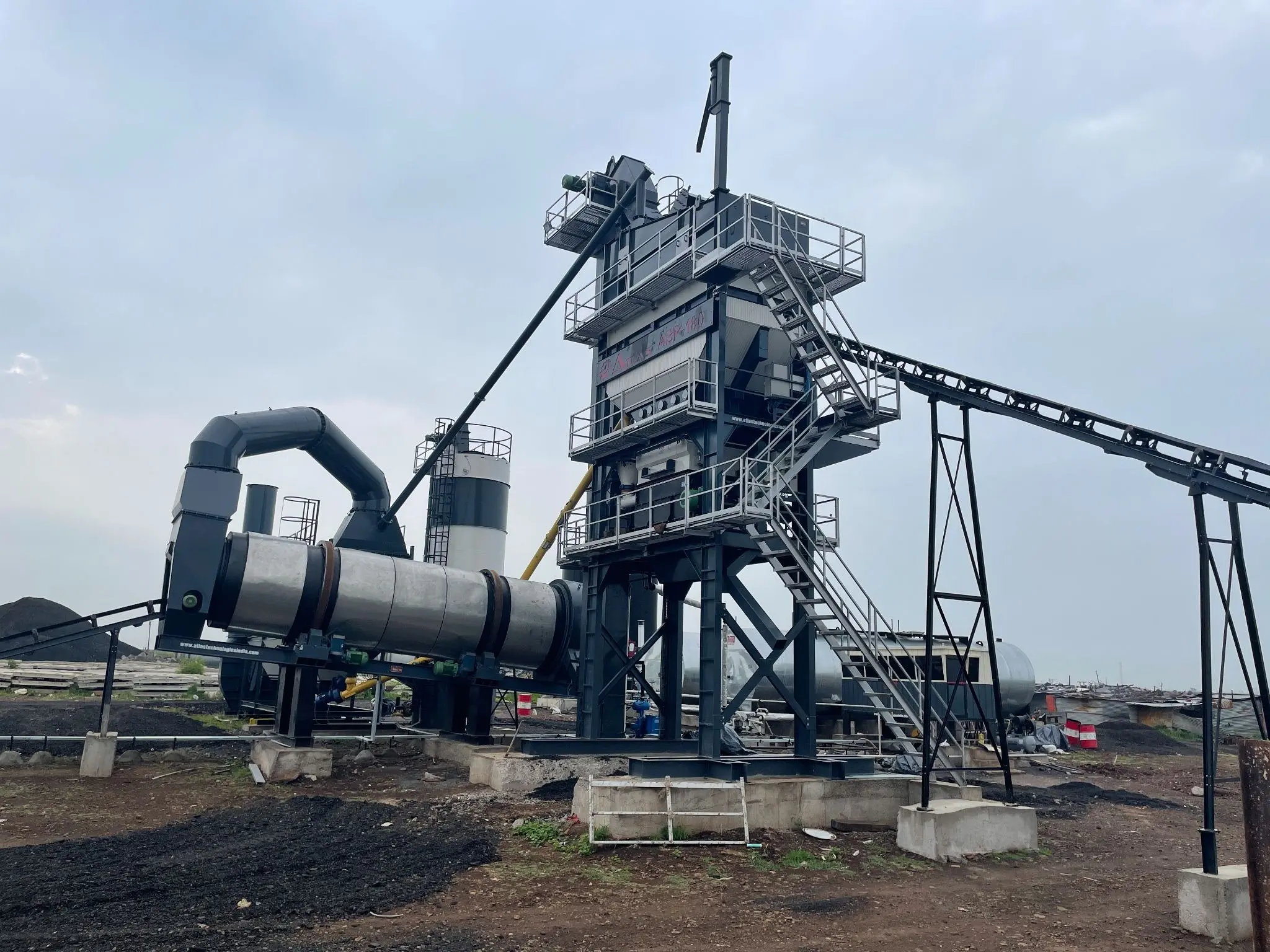
Worldwide investment in highways, expressways, airports, and industrial infrastructure drives demand for reliable asphalt production equipment. Contractors face pressure to deliver consistent pavement quality, reduce fuel consumption, meet deadlines, and comply with stricter environmental standards.
Choosing the right hot mix plant is about more than production capacity. The plant configuration determines how asphalt is produced, how efficiently fuel is used, how easily different mix designs are handled, and how well the equipment supports your project long term.
Whether you are purchasing your first hot mix asphalt plant or expanding your fleet for larger contracts, understanding the differences between Batch Mix, Drum Mix, Counter Flow, and Double Drum plants will help you make an informed investment.
In this guide, we will explain how each configuration works, where it performs best, and the factors to consider before making your decision.
What Is a Hot Mix Plant?
A hot mix plant is a road construction machine that produces asphalt by drying and heating aggregates before mixing them with bitumen and mineral filler in controlled proportions. The finished asphalt mix is then loaded into trucks and transported to the paving site for road laying.
A typical plant consists of:
- Cold aggregate feeder bins
- Drying drum
- Burner system
- Screening and weighing units (for batch plants)
- Mixing unit
- Bitumen storage and pumping system
- Bag Filter System
- PLC-based control panel
Depending on the configuration, mixing occurs either continuously or in individual batches. Modern plants may include RAP systems, fuel-efficient burners, automated controls, and advanced pollution control equipment to improve productivity and meet environmental regulations.
Why Hot Mix Plant Configuration Matters
Every road project has different production requirements. A contractor building rural roads may prioritise continuous output and lower operating costs, while an airport project requires precise batching, detailed production records, and multiple asphalt mix designs.
Selecting the right configuration influences five critical aspects of asphalt production:
- Production method – Continuous production or batch-wise mixing
- Mix flexibility – Ability to produce different asphalt recipes
- Fuel efficiency – Overall thermal performance and operating costs
- RAP compatibility – Efficient use of reclaimed asphalt pavement
- Mobility – Suitability for permanent installations or frequently changing project sites
Evaluating these factors before comparing hot mix plant priceshelps contractors choose equipment that delivers better long-term value rather than just the lowest purchase cost.
Hot Mix Plant Configurations Compared
Although all asphalt plants perform the same basic function, each configuration is engineered for different operational priorities. The table below provides a quick comparison.
| Configuration | Capacity Range | Ideal Projects | Primary Advantage |
|---|---|---|---|
| Drum Mix Plant | 20–200 TPH | Rural roads, district roads, state highways | Continuous production with simple operation |
| Batch Mix Plant | 60–260 TPH | Highways, expressways, airports | Precise batching and multiple mix designs |
| Counter Flow Asphalt Plant | 40–150 TPH | Long-duration highway projects | Better thermal efficiency and reduced fuel consumption |
| Double Drum Asphalt Plant | 40–150 TPH | RAP-intensive projects | Separate drying and mixing for improved binder protection |
The right choice depends on your project specifications, production targets, fuel budget, and future workload, not capacity alone.
Batch Mix Plant: The Choice for Precision and Quality Control
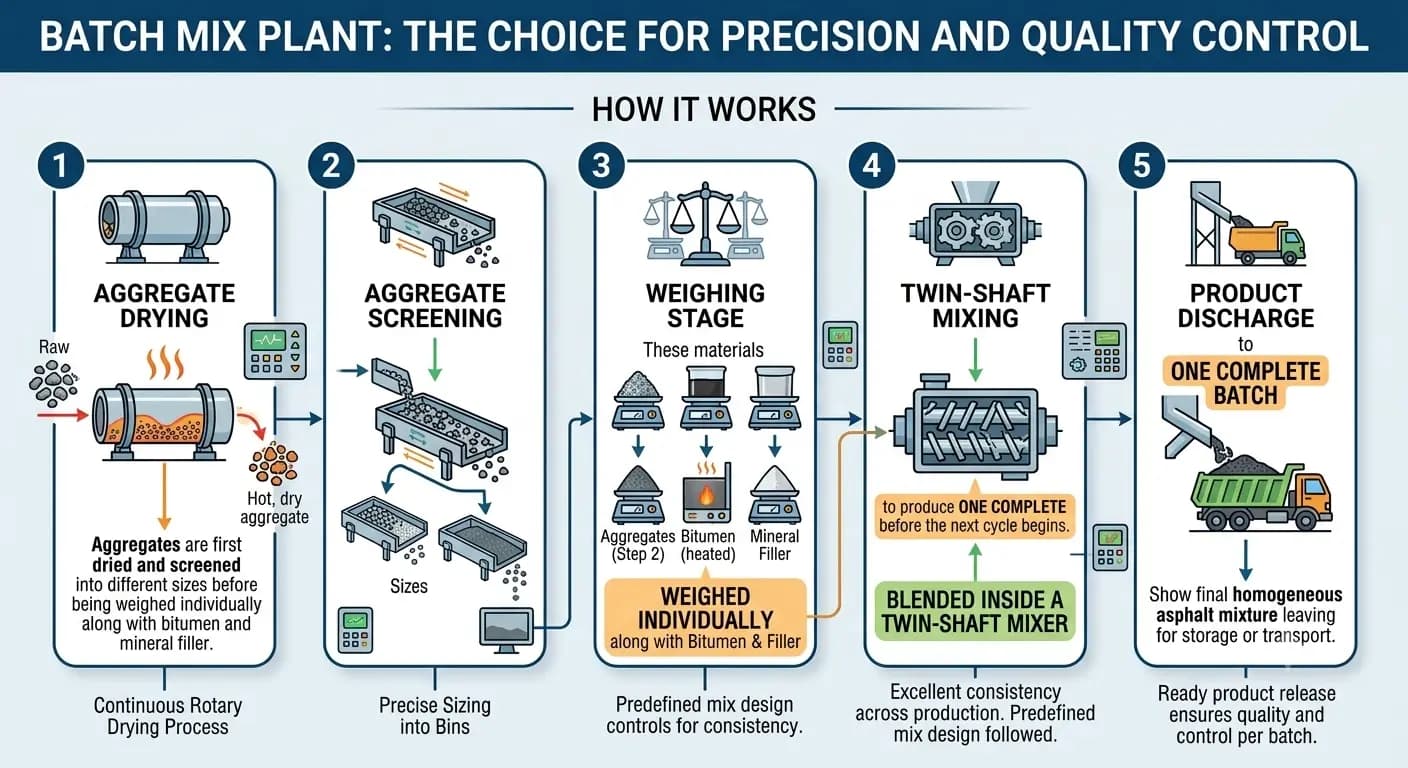
A batch mix plant produces asphalt in individual batches, allowing every production cycle to be measured, monitored, and controlled independently. This level of accuracy makes it the preferred solution for projects where mix consistency and quality documentation are essential.
How It Works
Aggregates are first dried and screened into different sizes before being weighed individually along with bitumen and mineral filler. These materials are then blended inside a twin-shaft mixer to produce one complete batch before the next cycle begins.
Best Applications
- National highways
- Expressways
- Airport runways
- Urban infrastructure
- Projects requiring multiple asphalt mix designs
It is especially suitable when contractors need to alternate between asphalt grades without interrupting production quality. Atlas Technologies manufactures stationary batch plants from 60 TPH to 260 TPH, along with mobile batch plants that combine production accuracy with faster relocation between sites. These models suit contractors executing large infrastructure projects requiring precision and operational reliability.
Drum Mix Plant: Continuous Production for High-Volume Projects
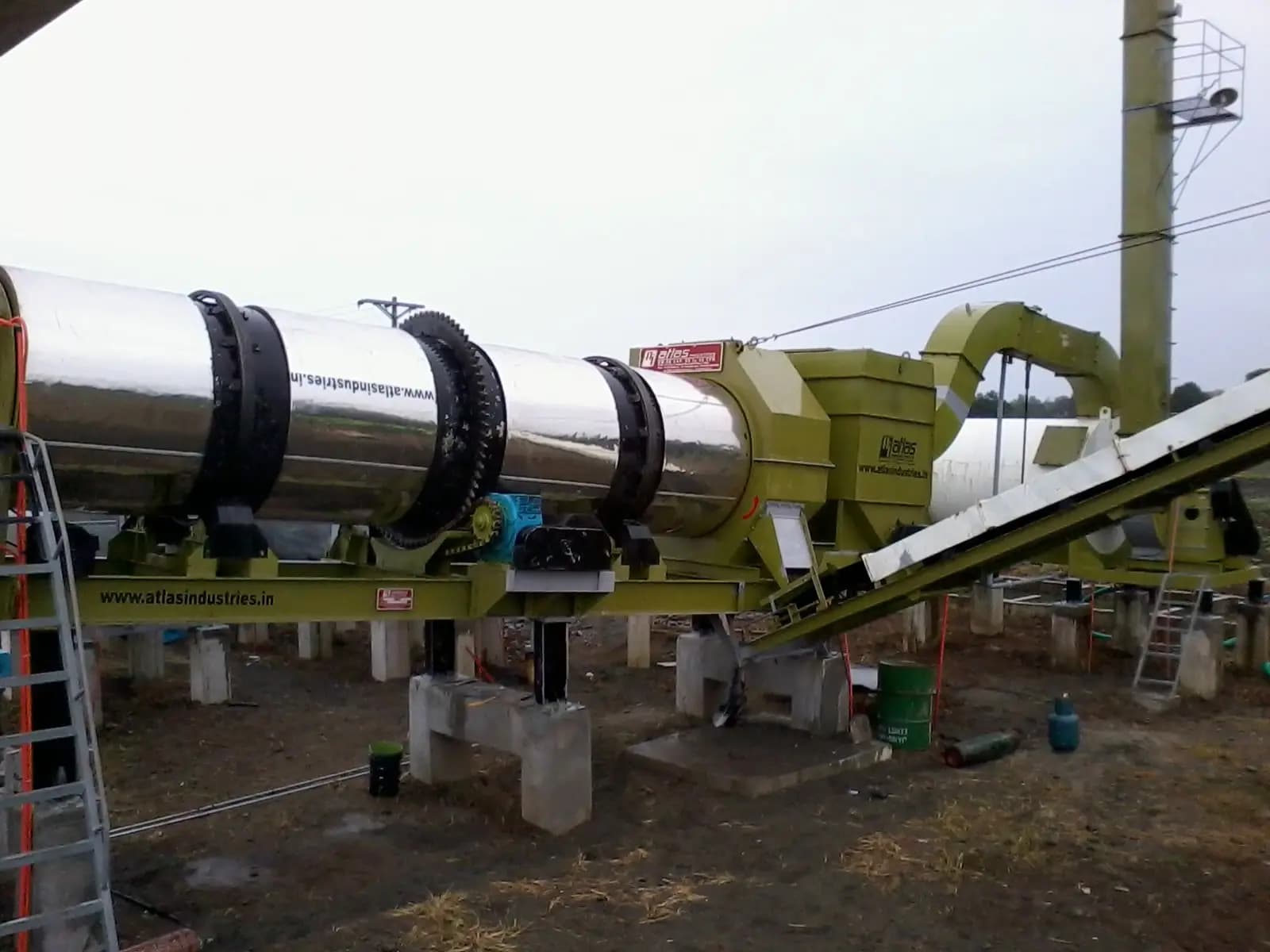
A drum mix plant combines drying, heating, and mixing inside a single rotating drum, enabling uninterrupted asphalt production during the operating shift. The simpler design reduces mechanical complexity while maintaining consistent output for large-volume paving projects.
How It Works
Aggregates enter the rotating drum through the cold feed system, where they are dried and heated before bitumen is added in the mixing zone. The finished asphalt is discharged continuously without waiting for batch cycles.
Best Applications
A drum mix plant is an excellent hot mix plant for road construction projects such as:
- Rural highways
- State road projects
- District roads
- Industrial road networks
- Long stretches requiring continuous asphalt production
Atlas Technologies offers stationary and mobile asphalt drum mix plantswith capacities ranging from 20 TPH to 200 TPH, providing dependable solutions for contractors looking for high productivity with straightforward operation.
Counter Flow Asphalt Plant: Higher Thermal Efficiency with Lower Fuel Consumption
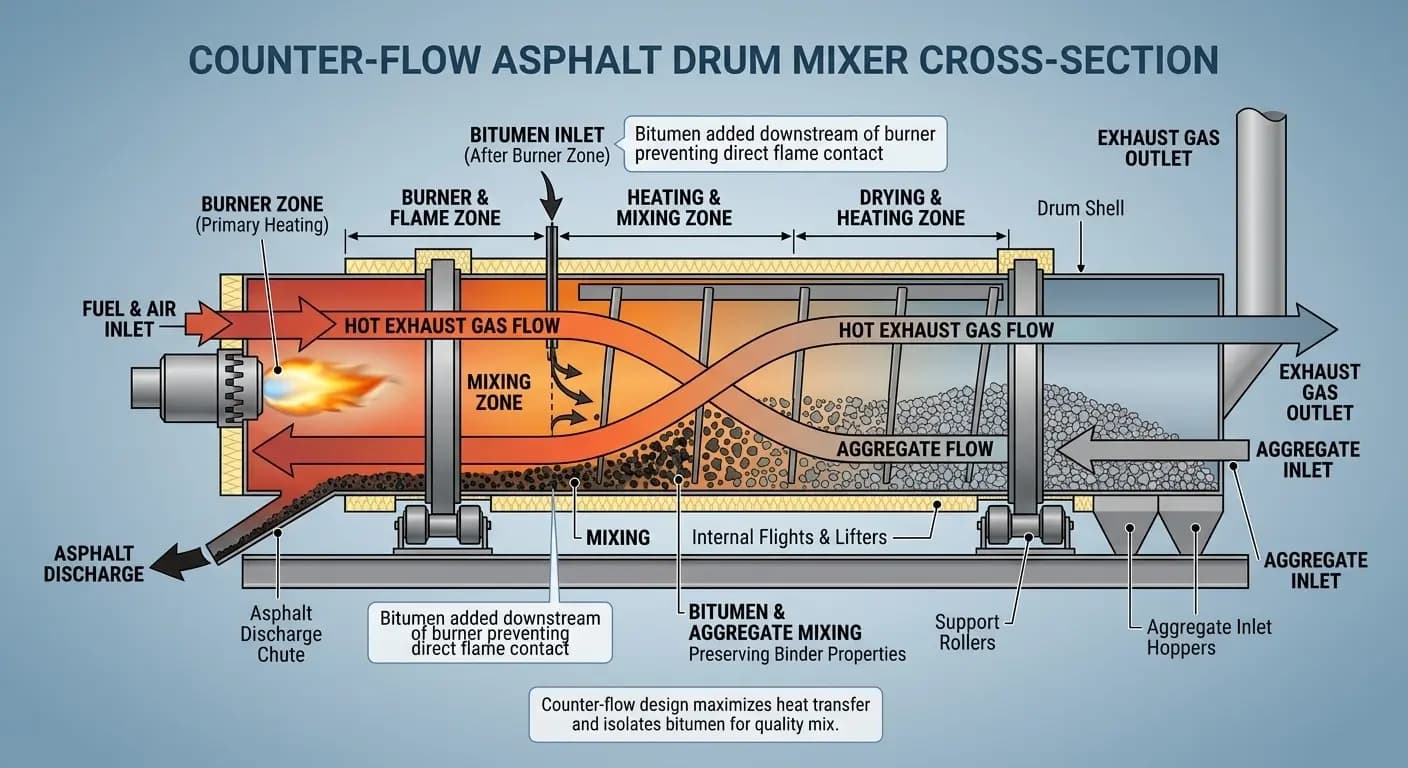
Fuel is one of the highest operating costs in asphalt production. Counter flow technology improves heat utilisation, reduces energy losses, and protects binder quality, making it well suited for contractors focused on lowering lifecycle costs.
How It Works
Unlike conventional parallel-flow systems, aggregates and exhaust gases travel in opposite directions through the drum. This improves heat transfer before exhaust gases exit. Bitumen is introduced after the burner zone, preventing direct flame contact and preserving binder properties.
Best Applications
Counter flow plants are ideal for:
- National highway projects
- Long-term infrastructure contracts
- Urban road construction
- Projects where fuel efficiency is a major consideration
Atlas Technologies manufactures counter flow asphalt plants from 40 TPH to 150 TPH, integrating energy-efficient burners, PLC automation, and advanced pollution control systems for demanding infrastructure projects.
Select the Right Hot Mix Plant Based on Your Capacity, Mobility & Fuel Requirements
As a trusted hot mix plant manufacturer, Atlas Technologies helps contractors identify the most suitable plant configuration for their project, backed by engineering support, commissioning, and dependable after-sales service.
Explore Atlas Technologies’ complete range of:
- Stationary Asphalt Batch Plants
- Mobile Asphalt Batch Plants
- Asphalt Drum Mix Plants
- Counter Flow Asphalt Plants
- Double Drum Asphalt Plants
Double Drum Asphalt Plant: The Smart Choice for RAP-Based Asphalt Production
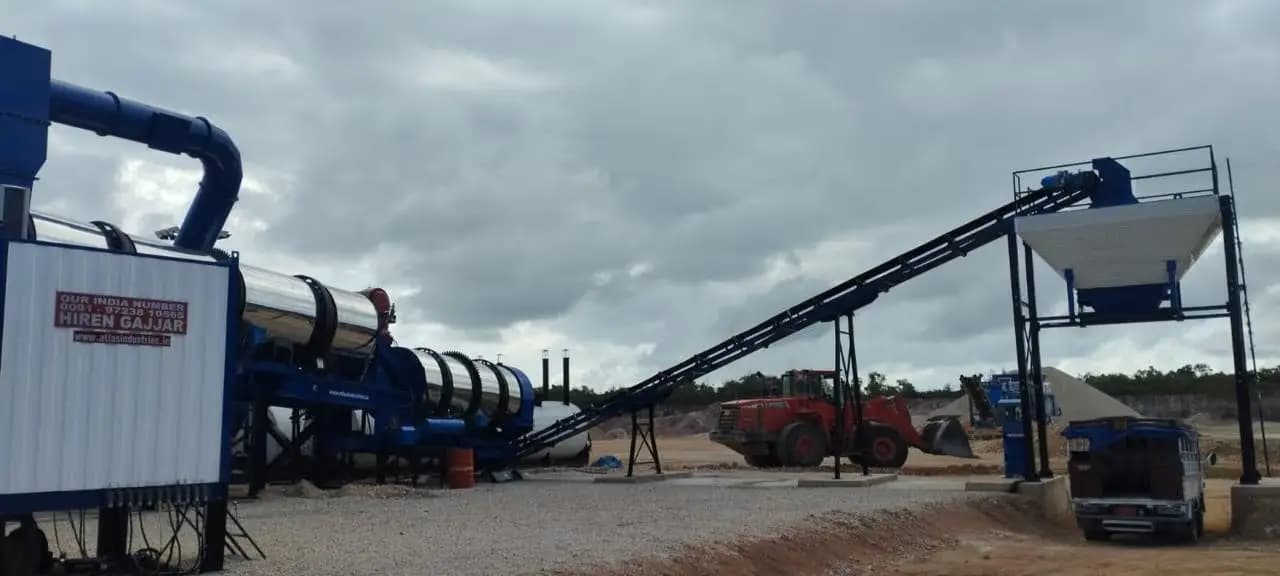
As road authorities and contractors increasingly adopt sustainable construction practices, the use of Reclaimed Asphalt Pavement (RAP) has become an effective way to reduce material costs without compromising pavement performance. However, successful RAP utilisation depends on how the reclaimed material is heated and mixed.
A double drum asphalt plant is specifically designed to address this challenge by separating the drying and mixing processes.
How It Works
Unlike conventional systems, a double drum plant uses two independent drums. Fresh aggregates are heated in the first drum, while the second drum mixes aggregates, RAP, and bitumen under controlled temperatures.
Because the reclaimed material is never exposed to direct burner flame, the aged binder retains its properties, producing a more consistent asphalt mix and reducing material loss.
When Is a Double Drum Plant the Right Choice?
This configuration is particularly suitable for:
- Highway rehabilitation projects
- Road resurfacing contracts
- Contractors using RAP regularly
- Projects focused on reducing raw material consumption
Atlas Technologies manufactures double-drum asphalt plants from 40 TPH to 150 TPH, providing contractors with an efficient solution for projects where recycled asphalt reduces lifecycle costs.
How to Choose the Right Asphalt Plant Configuration
Now that you understand how each configuration works, the next step is identifying which one best matches your business and project requirements.
Rather than comparing equipment specifications alone, answer these practical questions before making your investment.
1. What Production Capacity Do You Actually Need?
Estimate your daily asphalt requirement based on project volume, working days, and operating hours. Selecting a plant with insufficient capacity may delay project completion, while an oversized plant increases capital investment and operating expenses.
2. Will You Produce More Than One Asphalt Mix?
Projects involving highways, airports, or urban roads often require multiple asphalt grades. If your contracts require frequent changes between mix designs, a batch mix plant offers the flexibility and control needed.
3. Will the Plant Stay at One Site or Move Frequently?
A stationary asphalt plant is generally better suited for long-term projects operating from one location. Mobile asphalt plants are preferred when contractors frequently move between projects.
4. How Important Is Fuel Efficiency?
Fuel remains one of the highest operating costs in asphalt production. Counter flow plants improve heat utilisation and reduce fuel consumption without sacrificing production capacity.
5. Do You Plan to Use Reclaimed Asphalt Pavement (RAP)?
If recycled asphalt is a regular part of your production, choosing a RAP-compatible configuration like a double-drum or advanced batch plant helps maximise material recovery while maintaining asphalt quality.
Whether you're expanding production capacity or investing in your first asphalt mixing plant, explore the complete Atlas Technologies asphalt plant range or read our guide on how to choose the right asphalt plant for project-specific guidance.
Why Contractors Choose Atlas Technologies
Choosing an asphalt plant is a long-term investment. The manufacturer's experience and support capabilities are just as important as the equipment itself.
For more than 35 years, Atlas Technologies has supplied asphalt plants and road construction equipment to contractors across 50+ countries, with over 2,500 installations supporting highway, airport, industrial, and infrastructure projects worldwide.
Working with Atlas Technologies means access to:
- Multiple asphalt plant configurations for different project requirements
- Stationary and mobile solutions across a wide production range
- Engineering consultation to match plant specifications with project needs
- PLC and SCADA-based automation for improved production control
- Energy-efficient and RAP-compatible technologies
- Installation, commissioning, operator training, and after-sales support
Whether you're expanding production capacity or investing in your first asphalt mixing plant, explore the complete Atlas Technologies asphalt plant range or read our guide on how to choose the right asphalt plant for project-specific guidance.
Choose the Right Configuration with Confidence
There is no single asphalt plant configuration that suits every project.
Batch mix plants deliver superior process control and mix flexibility. Drum mix plants maximise continuous production for high-volume paving. Counter flow plants reduce fuel consumption, while double-drum plants provide better RAP handling for sustainable asphalt production.
The right decision depends on your project type, expected production volume, mobility requirements, fuel efficiency goals, and future business plans. Evaluating these factors before purchase ensures your investment delivers value beyond the first project.
We Help You Configure a Hot Mix Plant as Per Your Operational & Budget Requirements
Our experts can help you compare configurations, recommend the appropriate production capacity, and suggest a solution that matches your budget and operational requirements.
Let’s discuss your project, request a customised quotation, or download detailed product brochures for our complete range of asphalt plants.
Author’s Note
Atlas Technologies Pvt. Ltd. is a road construction equipment manufacturer based in Mehsana, Gujarat, India. Founded in 1986, the company designs and manufactures asphalt batch mix plants, drum mix plants, counter flow plants, wet mix macadam plants, concrete batching plants and road machinery for highway contractors, infrastructure developers and export buyers worldwide.
With over 2,500 installations across 50+ countries and 38 years of manufacturing experience, Atlas Technologies serves projects ranging from national highway construction in India to remote island deployments and large-scale export contracts across Africa, Southeast Asia, the Middle East, East Europe and Oceania Countries.
www.atlastechnologiesindia.com

Mr. Nilesh Patel
Managing Director
Frequently asked
questions.
Dambar Plant vs Drum Mix...
A dambar plant is the commonly used Indian term for...
India Asphalt Pavers Market: Growth,...
India's asphalt pavers market is growing, but equipment decisions shouldn't...

Road Sweeper Machine vs Hydraulic...
Learn the difference between mechanical road sweepers and hydraulic broomers...
Batching Plant: What It Is,...
A batching plant measures, proportions, and processes raw materials according...